Navratri Day 7 2026: Maa Kalaratri Puja Vidhi, Mantra & Bhog

Discover Navratri Day 7 2026 significance, Maa Kalaratri puja vidhi, powerful mantra, traditional bhog, vrat katha and worship rituals.
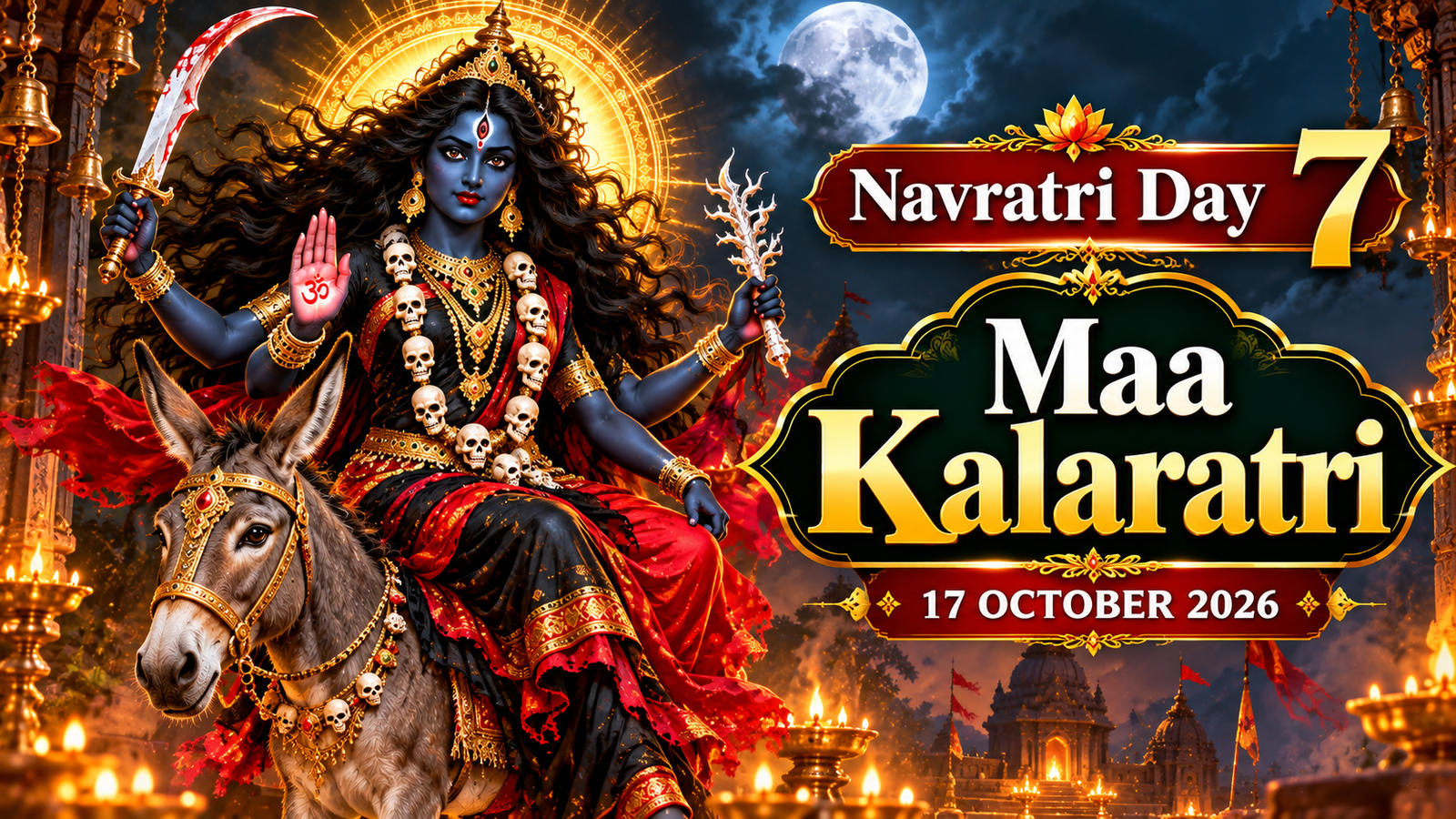
Table of Contents
ToggleMaa Kalaratri: Significance, Mantra, Puja Vidhi, Bhog and Vrat Katha
Navratri Day 7 | Saturday, 17 October 2026
Shardiya Navratri is a sacred celebration of devotion, courage and the victory of good over evil. On the seventh day, devotees worship Maa Kalaratri, the seventh form of Goddess Durga. Her powerful and fearsome appearance represents the destruction of darkness, ignorance and evil. Despite her fierce form, she is regarded as a compassionate mother who protects her devotees and guides them towards courage and spiritual strength.
Navratri Day 7 2026: Quick Facts
| Detail | Information |
|---|---|
| Festival | Shardiya Navratri 2026 |
| Seventh day | Saturday, 17 October 2026 |
| Goddess worshipped | Maa Kalaratri |
| Form of the Goddess | Seventh form of Navdurga |
| Popularly associated colour | Grey, according to some popular Navratri colour lists |
| Common traditional offering | Jaggery (gur) and sweets made with jaggery |
| Commonly recited mantra | Om Devi Kalaratryai Namah |
| Spiritual theme | Courage, protection and the triumph of light over darkness |
Important calendar note: Saptami Tithi extends into the morning of 18 October in 2026. Regional Panchangs and family traditions may therefore differ regarding certain observances. For exact puja timings, consult a reliable local Panchang for your city.
Who Is Maa Kalaratri?
Maa Kalaratri is the seventh manifestation of Goddess Durga worshipped during the nine days of Navratri. Her name combines two Sanskrit words: Kala, associated with time or darkness, and Ratri, meaning night. Her name is commonly understood as representing the power that confronts and overcomes darkness.
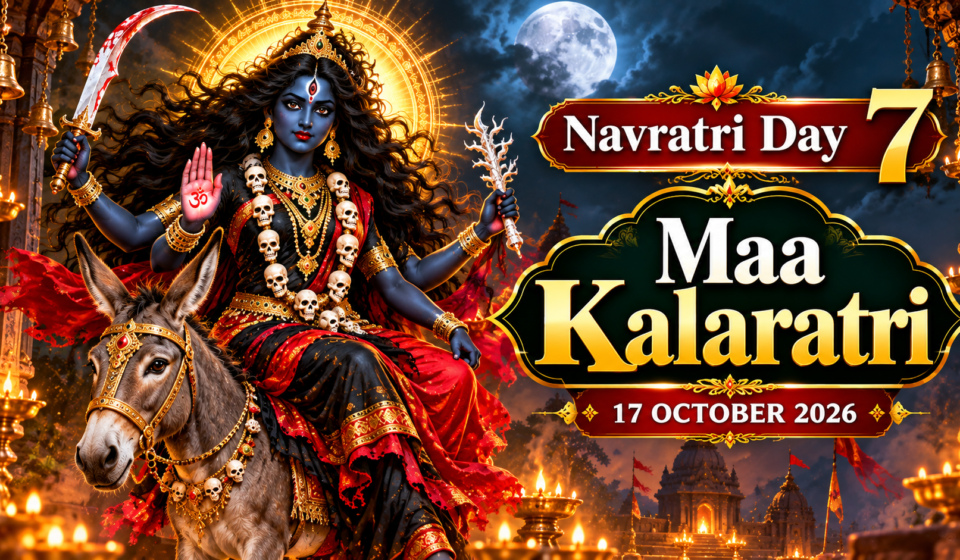
In traditional depictions, Maa Kalaratri has a dark complexion, dishevelled hair and three eyes. She is often shown riding a donkey and carrying weapons in her hands, while her remaining hands display gestures of blessing and protection. Her imagery conveys extraordinary power and fearlessness.
Although her appearance may seem terrifying, devotees regard her as a protective and benevolent mother. She is also known as Shubhankari, a name associated with bringing auspiciousness and well-being.
Religious and Spiritual Significance of Maa Kalaratri
The seventh day of Navratri is dedicated to worshipping the fierce yet protective form of the Divine Mother. In Hindu devotional traditions, Maa Kalaratri represents the strength required to overcome obstacles, destructive tendencies and spiritual ignorance.
1. Symbol of Fearlessness
Her powerful form encourages devotees to face difficult circumstances with faith and determination rather than allowing fear to control their decisions.
2. Destruction of Darkness
Darkness is also a spiritual metaphor for ignorance, anger, arrogance and harmful intentions. Worship of Maa Kalaratri encourages devotees to recognise and overcome these inner obstacles.
3. Divine Protection
Devotees pray to the Goddess for protection, peace of mind and the strength to navigate challenges. These blessings are matters of religious faith and personal devotion.
4. The Meaning of Shubhankari
The name Shubhankari expresses the belief that the Goddess who appears fearsome can also bring auspiciousness. Her fierce form is understood as a force that protects rather than harms her sincere devotees.
Maa Kalaratri Mantra and Its Meaning
Devotees commonly recite the following mantra while worshipping Maa Kalaratri on the seventh day of Navratri.
Maa Kalaratri Mantra
ॐ देवी कालरात्र्यै नमः॥
Transliteration: Om Devi Kalaratryai Namah
Simple meaning: Salutations to Goddess Kalaratri, the divine Mother who represents the power to overcome darkness and fear.
How to Chant the Mantra
- Sit comfortably in a clean and peaceful place.
- Place an image or idol of Maa Kalaratri before you.
- Take a moment to calm your mind and focus on the Goddess.
- Chant the mantra with devotion and a steady rhythm.
- You may repeat it 11, 21 or 108 times, according to your tradition and convenience.
- Conclude your worship with a prayer for courage, wisdom and the well-being of your family.
Sincerity and concentration are more important than completing a particular number of repetitions. Follow your family's established religious practice if it differs from this general guide.
Maa Kalaratri Puja Vidhi for Navratri Day 7
The following is a simple home-worship procedure. Ritual details may vary according to region, family tradition and the form of worship followed.
Step 1: Clean the Puja Area
Begin by cleaning the place of worship. Bathe and wear clean clothes. If your family has established a Navratri altar or Kalash, prepare it according to your usual tradition.
Step 2: Light a Diya
Light a diya safely before the Goddess. If you maintain an Akhand Jyoti, follow the safety precautions and customary practices associated with it.
Step 3: Offer Flowers and Basic Puja Items
Offer flowers, roli, akshat and water as appropriate to your family tradition. Red flowers are used in many devotional practices. Offerings should be made respectfully and according to your custom.
Step 4: Chant Maa Kalaratri's Mantra
Recite “Om Devi Kalaratryai Namah” with devotion. You may also read a suitable Durga stotra, Durga Chalisa or other devotional text that your family regularly follows.
Step 5: Offer Bhog
Offer jaggery or a sweet prepared with jaggery, if this is part of your tradition. Place the offering before the Goddess and pray with gratitude.
Step 6: Perform Aarti
Conclude the worship with aarti and a prayer for peace, courage, good health and harmony in the family. Distribute the prasad respectfully among family members.
Maa Kalaratri Bhog: What Should You Offer?
Jaggery, known as gur in Hindi, is a commonly mentioned traditional offering associated with Maa Kalaratri. Some devotees prepare sweets using jaggery and offer them as prasad.
Popular Offering Ideas
- Plain jaggery pieces
- Jaggery-based sweets prepared at home
- Fresh seasonal fruit
- Other traditional prasad used by your family
Keep the offering clean and suitable for the people who will consume it. Practices regarding ingredients and fasting foods differ across families and regions, so follow the rules of your own observance.
Remember that the offering is an expression of devotion and gratitude. No particular food should be presented as a guaranteed means of obtaining a specific worldly result.
Navratri Day 7 Colour 2026: What Should You Wear?
Grey is associated with the seventh day in some popular Navratri colour lists for 2026. It is often interpreted as a symbol of balance and composure amid life's uncertainties.
However, Navratri colour charts are not identical across all regions and traditions. Grey should therefore be treated as a popular customary association rather than a universal religious requirement.
If you wish to follow this colour tradition, you can wear grey clothing while performing puja or attending a devotional gathering. Wearing another colour does not prevent you from participating in worship with sincerity.
Maa Kalaratri Vrat Katha: The Victory of Divine Power
Stories associated with the Divine Mother describe how the Goddess manifests different forms to protect the universe and restore the balance between good and evil. Maa Kalaratri is one of the most powerful forms in this tradition.
In a widely circulated devotional account, the demon Raktabija possesses a formidable boon: each drop of his blood that falls to the ground gives rise to another demon like him. As the battle continues, the multiplication of demons makes him extraordinarily difficult to defeat.
The Goddess responds with a powerful form capable of preventing his blood from falling to the ground, ultimately bringing the battle to an end. Different retellings associate aspects of this episode with the Goddess's fierce manifestations, including Kali and other forms of Durga.
The story is remembered as a representation of divine determination in the face of seemingly overwhelming evil. It conveys the idea that harmful forces cannot be allowed to multiply unchecked and that courage and wisdom must work together to restore order.
Devotees worship Maa Kalaratri on Navratri Day 7 to remember this divine strength and to seek the courage to confront fear, negativity and difficulties in their own lives.
Note: This is a popular devotional retelling, not a verbatim translation of a single scripture. Narratives and the attribution of particular deeds can vary among Hindu texts and traditions.
Five Spiritual Lessons from Maa Kalaratri
1. Courage Begins with Facing Fear
Difficulties become easier to address when we acknowledge them honestly and take practical steps instead of allowing fear to paralyse us.
2. Inner Darkness Must Be Recognised
Anger, jealousy, arrogance and resentment can harm our relationships. Spiritual reflection encourages us to recognise these tendencies and work towards positive change.
3. Strength Should Protect, Not Intimidate
Maa Kalaratri's fierce imagery can remind us that genuine strength is most valuable when used to protect the vulnerable and stand against injustice.
4. Faith Can Provide Emotional Strength
For many devotees, prayer offers a moment of reflection, hope and reassurance during uncertain times. Faith can accompany practical action rather than replace it.
5. Goodness Requires Determination
The victory of good over evil is not merely a festival theme. It can also inspire us to act honestly, fulfil our responsibilities and make choices that benefit our families and communities.
Frequently Asked Questions About Maa Kalaratri
1. When is Navratri Day 7 in 2026?
Navratri Day 7 is commonly observed on Saturday, 17 October 2026, in the nine-day Navdurga sequence. Saptami Tithi continues into the morning of 18 October, so certain regional observances may differ.
2. Which Goddess is worshipped on the seventh day of Navratri?
Maa Kalaratri, the seventh form of Goddess Durga in the Navdurga tradition, is worshipped on the seventh day.
3. What is the mantra of Maa Kalaratri?
A commonly recited mantra is “ॐ देवी कालरात्र्यै नमः॥”, transliterated as “Om Devi Kalaratryai Namah”.
4. What bhog is offered to Maa Kalaratri?
Jaggery and sweets made with jaggery are commonly mentioned as offerings. Devotees may also offer fruit and other prasad according to their family traditions.
5. Which colour is associated with Navratri Day 7 in 2026?
Grey appears in some popular colour lists for Day 7 in 2026. Colour associations vary, however, and wearing grey is not a universal requirement.
6. Why is Maa Kalaratri also called Shubhankari?
Shubhankari is a name associated with auspiciousness and well-being. It expresses the devotional understanding that the Goddess's fierce appearance serves a protective and benevolent purpose.
7. Can Maa Kalaratri be worshipped at home?
Yes. Devotees can perform a simple home puja with a clean worship area, a diya, flowers, a mantra and a traditional offering. Follow your family's customs and observe fire safety when using lamps.
8. Is fasting compulsory on Navratri Day 7?
Fasting practices vary. Some devotees observe a fast, while others perform puja without fasting. Follow your personal health needs, family tradition and religious guidance rather than assuming that everyone must observe the same rules.
Conclusion: Seek Courage and Wisdom from Maa Kalaratri
Maa Kalaratri represents a powerful dimension of the Divine Mother: the courage to confront darkness and the strength to protect what is good. Her worship on Navratri Day 7 encourages devotees to look beyond outward appearances and understand the deeper purpose of divine power.
As you celebrate Navratri on 17 October 2026, take a moment to pray, reflect on your actions and renew your commitment to truth, kindness and courage. Whether you perform an elaborate ritual or a simple prayer at home, let the occasion inspire you to face life's challenges with faith and determination.
जय माँ कालरात्रि!
May your life be filled with courage, wisdom, peace and positivity.
Share this article: Send this guide to family and friends who are observing Navratri, and share your favourite Maa Kalaratri mantra or devotional tradition in the comments.
Further Reading and References
Editorial note: This article presents commonly followed Hindu devotional traditions and popular religious interpretations. Rituals, mantras, bhog and colour associations may vary by region, family tradition and Panchang. Readers should consult a trusted local priest or Panchang for tradition-specific observances and exact timings.
Related