
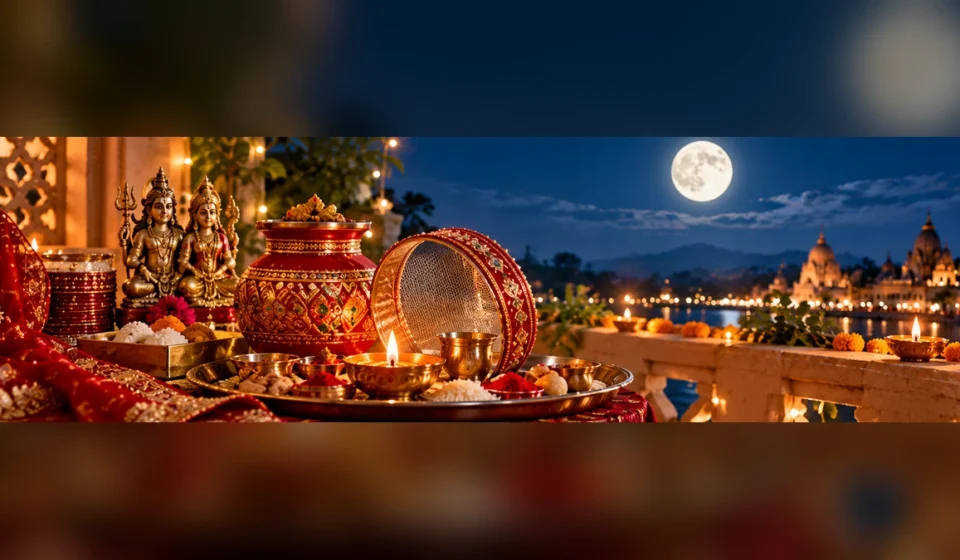
Karwa Chauth 2026: Date, Puja Muhurat, Moonrise & Vrat Vidhi

Karwa Chauth 2026 falls on October 29. Check the date, puja muhurat, moonrise time, Sargi, vrat vidhi, puja samagri and festival significance.Copy
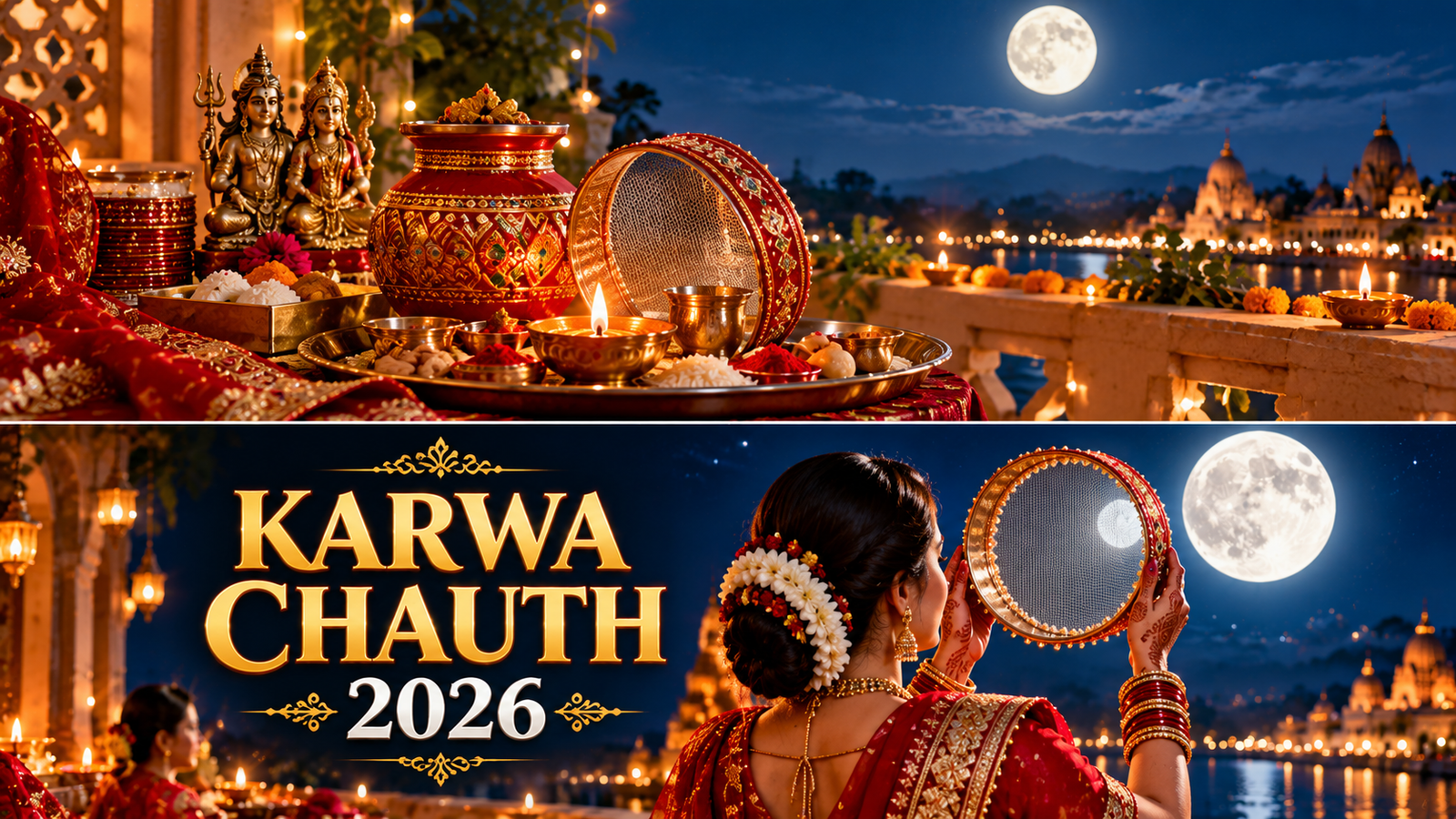
Table of Contents
ToggleKarwa Chauth 2026: Date, Puja Muhurat, Moonrise Time, Vrat Vidhi and Significance
Karwa Chauth is one of the most cherished Hindu festivals, celebrated with devotion, traditional rituals, beautiful attire and prayers for marital happiness. Married women traditionally observe a fast from sunrise until the Moon is sighted, praying for their husbands' well-being and long life. The festival also brings families together through the traditions of Sargi, evening puja, the Karwa Chauth vrat katha and the moon-sighting ritual.
If you are looking for Karwa Chauth 2026 date, puja muhurat, moonrise time, Sargi rules and complete vrat vidhi, this guide explains the important details and customary practices for the festival.
- Date: Thursday, 29 October 2026
- Festival: Karwa Chauth Vrat
- Tithi: Krishna Paksha Chaturthi
- Lucknow puja muhurat: 5:26 PM–6:43 PM (IST)
- Expected moonrise in Lucknow: Around 8:06 PM (IST)
- Main rituals: Sargi, Gauri-Shiva worship, vrat katha, Moon worship and arghya
Important: These are location-specific reference timings for Lucknow. Check the Panchang for your own city before observing the fast and performing the puja.
1. When Is Karwa Chauth in 2026?
Karwa Chauth will be celebrated on Thursday, 29 October 2026, in India. It is observed on the Chaturthi, or fourth lunar day, during Krishna Paksha in the Hindu lunar calendar. In North Indian calendar tradition, the festival is associated with Kartik Krishna Chaturthi.
Devotees observe the festival according to the lunar date and their local religious calendar. Although the festival date is the same across much of India in 2026, puja timings and the expected time of moonrise vary from city to city.
2. Karwa Chauth 2026 Puja Muhurat and Moonrise Time
The evening puja is an important part of the celebration. Families prepare the puja area, worship Goddess Parvati and Lord Shiva according to their tradition, listen to the vrat katha and wait for the Moon to appear.
| Event | Lucknow timing, 29 October 2026 |
|---|---|
| Karwa Chauth date | Thursday, 29 October |
| Chaturthi Tithi begins | Approximately 1:06 AM |
| Chaturthi Tithi ends | Approximately 10:09 PM |
| Puja muhurat | 5:26 PM–6:43 PM |
| Expected moonrise | Around 8:06 PM |
Please note: Panchang calculations and published timings can differ slightly. Moonrise is an astronomical estimate; buildings, trees, haze or clouds can delay the actual sighting. Use a trusted city-specific Panchang for your final ritual schedule.
3. Significance of Karwa Chauth
Karwa Chauth represents devotion, love, commitment and prayers for family well-being. Traditionally, married women observe the fast for the long life, good health and prosperity of their husbands. Many couples also see the day as an opportunity to celebrate companionship and strengthen their relationship.
The word Karwa refers to a small pot, traditionally made of clay, while Chauth means the fourth lunar day. The karwa is associated with the water offering made during the ritual.
Worship of Goddess Parvati and Lord Shiva
Goddess Parvati is revered as an embodiment of devotion and marital auspiciousness, while Lord Shiva represents divine partnership. Lord Ganesha is also worshipped in many households before the main puja. Rituals and the deities included can vary by region and family tradition.
A celebration of relationships
Although traditional observance centres on married women, modern celebrations may include husbands participating in the fast, exchanging gifts or sharing the day's rituals. The spirit of the occasion is often expressed through care, mutual respect and family togetherness.
4. What Is Sargi? Meaning, Food and Tradition
Sargi is a pre-dawn meal traditionally prepared or given by the mother-in-law to the daughter-in-law. It is eaten before the fast begins at sunrise. In many families, this custom is an important expression of affection, blessings and family bonding.
Common foods included in Sargi
- Fresh fruits such as apples, bananas and pomegranates
- Nuts and dried fruits
- Roti, paratha or other home-cooked foods
- Curd, milk or other dairy foods, where suitable
- Water and other permitted drinks before the fast begins
- Traditional sweets or homemade dishes
The Sargi menu is not identical in every household. Some families follow specific customary foods, while others adapt the meal to personal preference and health needs. Those observing a fast should eat and hydrate sensibly before sunrise, within their own tradition.
5. Karwa Chauth Puja Samagri List
Preparing the puja items in advance can make the evening rituals more peaceful. The following list covers commonly used items; individual customs may require additional or different offerings.
- Karwa or a small pot containing water
- Plate or thali for puja
- Diya, cotton wicks and ghee or oil
- Roli, kumkum, haldi and akshat (rice grains)
- Flowers and a garland, if customary
- Fruits, sweets and other traditional offerings
- Images or idols of Goddess Parvati, Lord Shiva and Lord Ganesha
- Chalni or sieve for the moon-sighting ritual
- A small vessel for offering arghya to the Moon
- Red chunri, bangles or other customary shringar items
- Karwa Chauth vrat katha or a printed copy of the family prayer
6. Karwa Chauth 2026 Vrat Vidhi: Step-by-Step Rituals
Step 1: Wake up early and have Sargi
Wake up before sunrise and have Sargi if this is part of your family tradition. Complete your pre-fast meal and drink sufficient water before the fast starts.
Step 2: Make a Sankalp
After bathing and getting ready, devotees may take a personal sankalp, or devotional resolve, to observe the fast according to their family tradition. Wear traditional clothing if desired and prepare the puja area.
Step 3: Prepare the puja thali
Arrange the karwa, diya, roli, rice, flowers, sweets and other required items. Keep the vrat katha ready and ensure that the puja space is clean.
Step 4: Perform the evening puja
During the locally applicable puja muhurat, worship Goddess Parvati, Lord Shiva and Lord Ganesha according to your tradition. Offer flowers, light the diya and pray for well-being and harmony in the family.
Step 5: Listen to or read the vrat katha
Read the Karwa Chauth story or listen to it with family members. In some communities, women sit together in a circle, exchange their puja thalis and sing traditional devotional songs.
Step 6: Wait for moonrise
After the evening puja, wait for the Moon to become visible. Keep the sieve and vessel for arghya ready. Remember that the actual sighting may occur later than the published moonrise time if the horizon is obstructed.
Step 7: Worship the Moon and conclude the fast
When the Moon is sighted, follow your family custom for offering water or arghya, viewing the Moon through a sieve and completing the fast. Many households conclude the ritual when the husband offers water or food to his wife, but practices differ.
7. Moon Worship: Why Is the Moon Important?
Moon worship is the defining moment of Karwa Chauth for many devotees. The Moon is associated in Hindu tradition with calmness, time and the rhythms of life. After observing the fast throughout the day, devotees offer prayers and water to the Moon before completing their vrat.
In a commonly followed ritual, the devotee views the Moon through a sieve and then looks at her husband through the same sieve. The husband may offer water or a morsel of food to help her break the fast. The exact sequence varies across families and regions.
For practical planning, check your city's moonrise time on the festival day. A time published for Delhi or Lucknow should not automatically be used for another city.
8. Karwa Chauth Vrat Katha: The Story Behind the Fast
Several traditional stories are associated with Karwa Chauth. One of the best-known is the story of Veeravati, a devoted woman who observes a fast for her husband's well-being. According to a popular version, her brothers become concerned when she struggles with the fast and arrange a deceptive sighting of the Moon. Believing the Moon has risen, she breaks her fast too early. Misfortune follows, and she eventually learns the importance of completing the vrat according to its prescribed observance. Through devotion and prayer, the story reaches a hopeful conclusion.
Versions of the story differ by region and oral tradition. It is best to read the version followed in your family or community rather than assume that every retelling is identical.
What does the story teach?
- Faith and devotion are central themes of the vrat.
- Patience and following one's chosen religious observance are emphasised.
- Family relationships, care and commitment are recurring themes.
- The story is a traditional religious narrative, not a historical record that can be independently verified in every detail.
9. Karwa Chauth Mantras and Prayers
Many families follow specific prayers taught by elders or prescribed by their priest. A commonly recited prayer to Goddess Parvati is:
ॐ सर्वमङ्गलमाङ्गल्ये शिवे सर्वार्थसाधिके।
शरण्ये त्र्यम्बके गौरि नारायणि नमोऽस्तु ते॥
This is a well-known devotional verse praising the Divine Mother. Devotees may recite it according to their tradition, with faith and concentration.
You may also offer a simple personal prayer for the health, happiness and well-being of your family. There is no need to add unfamiliar rituals if your household follows an established custom.
10. Fasting Tips and Important Precautions
Traditional Karwa Chauth fasting may involve abstaining from both food and water until moonrise. However, a strict fast is not suitable for everyone, and personal health needs should be taken seriously.
- Eat a balanced pre-dawn meal if it is part of your observance.
- Drink sufficient fluids before the fast begins, unless your clinician has advised otherwise.
- Avoid unnecessary strenuous activity, especially in hot weather.
- People who are pregnant, breastfeeding, have diabetes or kidney disease, take medicines that require food or water, or have another relevant medical condition should consult a qualified healthcare professional before undertaking a strict fast.
- If you experience faintness, confusion, severe weakness or other concerning symptoms, prioritise your health and seek medical advice promptly.
- Do not stop or change prescribed medicines to maintain a fast without medical guidance.
- When ending the fast, consider starting gently with water and a light meal rather than eating a very large meal immediately.
Religious observance and health needs can be balanced respectfully. If a strict fast is unsafe for you, discuss a suitable alternative with your healthcare professional and family or religious guide.
11. How to Celebrate Karwa Chauth Meaningfully
Karwa Chauth can be an opportunity to honour both tradition and companionship. Beyond the rituals, couples can make the occasion meaningful through thoughtful gestures and shared time.
- Prepare the puja items together and help elderly family members with arrangements.
- Share family stories and learn the traditions followed by previous generations.
- Exchange a handwritten note or a small thoughtful gift.
- Take photographs of the traditional attire and decorated puja thali.
- Make space for each person's health, comfort and personal choice in how the fast is observed.
12. Frequently Asked Questions About Karwa Chauth 2026
Q1. When is Karwa Chauth in 2026?
Karwa Chauth falls on Thursday, 29 October 2026, in India.
Q2. What is the Karwa Chauth puja muhurat in Lucknow?
Drik Panchang lists the Lucknow puja muhurat as approximately 5:26 PM to 6:43 PM on 29 October 2026. Verify the timing against your preferred local Panchang.
Q3. What time will the Moon rise in Lucknow on Karwa Chauth?
The expected moonrise in Lucknow is around 8:06 PM on 29 October 2026. Visibility may be delayed by clouds or local obstructions.
Q4. What is Sargi in Karwa Chauth?
Sargi is a traditional pre-dawn meal often prepared or given by the mother-in-law to the daughter-in-law. It is eaten before the fast begins at sunrise.
Q5. Can unmarried women observe Karwa Chauth?
Some unmarried women observe Karwa Chauth according to family or regional customs, often with prayers for a desired life partner. Practices are not universal.
Q6. Is Karwa Chauth fasting always without water?
Many traditional observances are nirjala, meaning without food or water, from sunrise until moonrise. Practices vary, and people with health concerns should seek medical guidance before attempting a strict fast.
Q7. Why is a sieve used during Karwa Chauth?
In a widely followed custom, the devotee views the Moon through a sieve before looking at her husband and completing the fast. The ritual sequence varies by family and region.
Q8. Are Karwa Chauth timings the same across India?
No. Puja muhurat, sunrise and moonrise depend on location and Panchang calculations. Always check the timings for your own city.
Conclusion
Karwa Chauth 2026 will be observed on Thursday, 29 October. The festival brings together prayer, traditional customs, family bonds and expressions of love. From Sargi in the early morning to the evening puja, vrat katha and Moon worship, each part of the day carries special meaning for those who observe it.
Plan your puja using a reliable local Panchang, prepare the required items in advance and observe the fast in a way that respects both your tradition and your health. May Karwa Chauth bring peace, happiness and harmony to every family celebrating the occasion.
References and Further Reading
- Drik Panchang — Karwa Chauth 2026 date and timings for Lucknow
- GaneshaSpeaks — Karwa Chauth traditions and festival information
- Incredible India — Official tourism information
Editorial note: Festival timings are calendar-specific and may be revised or differ across Panchang sources. Confirm local timings before publication and on the day of observance.
Related
