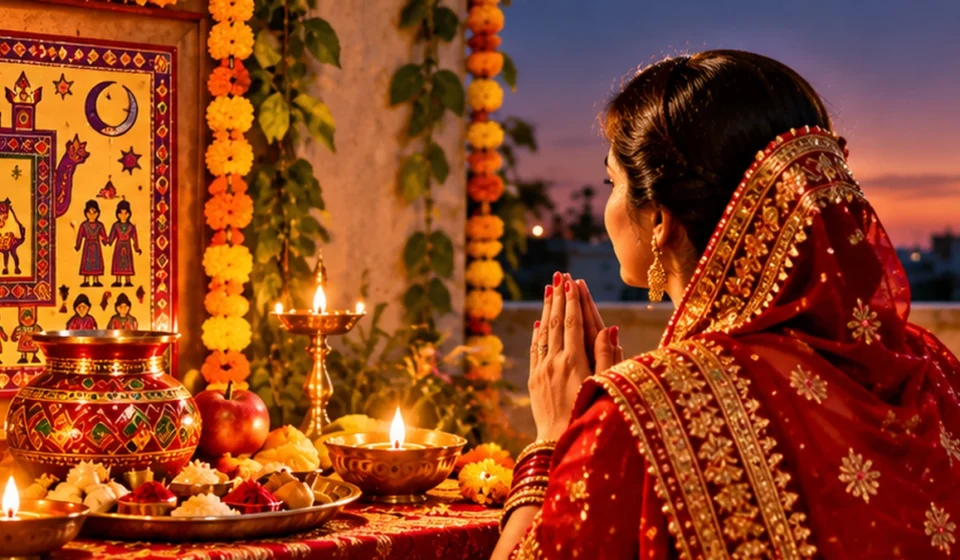

Ahoi Ashtami 2026 falls on November 1. Explore the date, puja muhurat, star-sighting time, vrat vidhi, puja samagri, Ahoi Mata vrat katha and fasting traditions.
Ahoi Ashtami 2026: Date, Puja Muhurat, Significance, Vrat Vidhi and Vrat Katha
Ahoi Ashtami is a cherished Hindu festival observed by many mothers with devotion and prayers for the health, happiness, long life and prosperity of their children. The day is dedicated to Ahoi Mata, and its traditions include fasting, drawing or worshipping the image of the goddess, listening to the vrat katha and offering prayers during the evening.
In many North Indian households, Ahoi Ashtami is observed with great faith and family participation. Mothers prepare the puja area, arrange traditional offerings and gather in the evening to worship Ahoi Mata. The festival is also known as Ahoi Aathe in some regions.
If you are looking for Ahoi Ashtami 2026 date, puja muhurat, star-sighting time, vrat vidhi, puja samagri and the traditional vrat katha, this complete guide explains the festival and its customary observances.
- Date: Sunday, 1 November 2026
- Festival: Ahoi Ashtami Vrat
- Tithi: Krishna Paksha Ashtami
- Lucknow puja muhurat: Approximately 5:24 PM–6:41 PM
- Lucknow star-sighting time: Approximately 5:48 PM
- Main deity: Ahoi Mata
- Main observances: Fasting, evening puja, vrat katha and star-sighting ritual
Timings are approximate and based on a published Lucknow calendar. Please confirm them with a reliable city-specific Panchang before observing the vrat.
1. When Is Ahoi Ashtami in 2026?
Ahoi Ashtami will be observed on Sunday, 1 November 2026. It falls on Krishna Paksha Ashtami, the eighth lunar day of the waning phase of the Moon.
In the Purnimanta calendar followed in much of North India, the observance is associated with Kartik Krishna Ashtami. In Amanta calendar traditions, the same lunar observance is associated with Ashwin Krishna Ashtami.
Ahoi Ashtami generally falls about four days after Karwa Chauth and approximately eight days before Diwali. The festival is particularly significant in North Indian communities.
Although the festival date is shared across much of India, the local puja window and astronomical timings for sunset, star visibility and moonrise vary by location.
2. Ahoi Ashtami 2026 Puja Muhurat and Star-Sighting Time
The evening is central to the Ahoi Ashtami observance. Devotees worship Ahoi Mata and traditionally complete the fast after sighting stars. Some families follow customs involving the Moon instead, so the family’s established tradition and local Panchang should guide the observance.
| Festival detail | Timing or information |
|---|---|
| Date | Sunday, 1 November 2026 |
| Lucknow puja muhurat | Approximately 5:24 PM–6:41 PM |
| Lucknow star-sighting time | Approximately 5:48 PM |
| Ashtami Tithi begins | Approximately 2:51–2:52 PM on 1 November |
| Ashtami Tithi ends | Approximately 1:10–1:11 PM on 2 November |
Important: These are approximate reference timings, not universal timings for every city. The puja muhurat depends on local sunset and Panchang calculations. Star visibility can be affected by clouds, haze, buildings and city lights. Verify the final timings for your own location.
3. Significance of Ahoi Ashtami
Ahoi Ashtami is traditionally associated with maternal love, devotion and prayers for children’s well-being. Mothers observe the vrat seeking blessings for their children’s health, happiness, safety and future prosperity.
In many families, the observance includes a day-long fast followed by an evening puja dedicated to Ahoi Mata. The ritual is often accompanied by a traditional story that conveys themes of faith, responsibility, repentance and divine grace.
Ahoi Mata: The central deity
Ahoi Mata is worshipped as a protective mother figure. Her image is traditionally drawn on a wall or displayed on a puja surface. Depending on the region and family custom, the image may include stars, children and other symbolic elements.
A festival for all children
While some older descriptions focus particularly on sons, many families today observe Ahoi Ashtami for the well-being of all their children, regardless of gender. Its central message is parental love, care and prayer for the next generation.
Faith and family traditions
The festival also provides an opportunity for family members to share stories, prepare offerings together and pass traditional customs to younger generations. Ritual details may vary across communities, and those differences are part of India’s diverse religious heritage.
4. Ahoi Ashtami Puja Samagri List
Preparing the puja items in advance can make the evening observance more peaceful. The following list includes commonly used items, although individual families may have additional requirements.
- Image or drawing of Ahoi Mata
- Clean puja chowki or a designated worship surface
- Roli or kumkum
- Akshat, or unbroken rice grains
- Flowers and a garland, if customary
- Diya, cotton wicks and ghee or oil
- Incense sticks, if used in the household tradition
- Water in a small vessel
- Fruits and traditional sweets
- Ritual offerings such as grains, according to family custom
- Traditional earthen pot or karwa, if required by the local observance
- Ahoi Ashtami vrat katha or prayer book
- A plate or thali for arranging the offerings
Some traditions use a specific number of grains, beads or symbolic figures. If your family follows a particular regional custom, prepare the items according to that practice rather than assuming every household follows the same procedure.
5. Ahoi Ashtami 2026 Vrat Vidhi: Step-by-Step Guide
Step 1: Begin the day with a devotional resolve
Devotees who choose to fast traditionally begin the day with a personal sankalp, or resolve, to observe the vrat according to their family practice. The exact starting time and fasting rules vary.
Step 2: Prepare the puja area
Clean the worship area and arrange the image of Ahoi Mata. Some families draw the goddess on a wall; others use a printed image or a traditional picture. Decorate the area simply with flowers and other customary items.
Step 3: Arrange the puja thali
Place the diya, roli, rice, flowers, water and offerings on a clean plate. Keep the vrat katha ready so that it can be read or recited during the evening observance.
Step 4: Worship Ahoi Mata
During the local evening puja muhurat, offer prayers to Ahoi Mata. Light the diya, present flowers and other customary offerings, and pray for the health, happiness and well-being of your children.
Step 5: Listen to or read the vrat katha
The traditional Ahoi Mata vrat katha is an important part of the festival. Family members may gather to hear the story, participate in prayers and follow the customs passed down through generations.
Step 6: Perform the evening star-sighting ritual
In many North Indian traditions, the fast is concluded after stars become visible. Devotees offer water or perform a customary prayer while looking towards the evening sky. The exact ritual sequence differs among families.
Step 7: Conclude the vrat according to family custom
After completing the prescribed prayer and star-sighting ritual, devotees break the fast according to their tradition. Some families follow additional offerings or prayers before eating.
Because the details differ regionally, follow your family’s established practice and a reliable local Panchang.
6. Ahoi Mata Vrat Katha: The Traditional Story
One popular Ahoi Ashtami story tells of a mother who goes into the forest to collect soil or materials for household work before a festival. While digging, she accidentally harms a young animal associated in some versions with a lion or wild creature. In other retellings, the incident is described differently.
After the incident, misfortune is said to befall her family. In a widely circulated version, her children die, and the grieving mother seeks a way to atone for what happened. Through repentance, devotion and the blessings of the divine, she is eventually granted relief.
The story is retold in different forms across communities. Its central themes are often understood as the importance of compassion towards living beings, accountability for one’s actions, sincere repentance and faith in divine grace.
Why is the vrat katha recited?
- It connects the observance with the devotional tradition of Ahoi Mata.
- It reminds devotees of compassion and responsibility towards living beings.
- It expresses the deep concern parents feel for their children’s well-being.
- It passes religious stories and customs from one generation to another.
The vrat katha is a traditional religious narrative, and different regional versions should not be treated as one single historically verified account.
7. Ahoi Ashtami Prayers and Devotional Observances
Many families follow prayers taught by elders or prescribed by their religious tradition. Devotees may offer flowers, light a diya and pray in their own words for their children’s health, safety, happiness and good fortune.
A simple personal prayer may express gratitude for one’s family and ask for wisdom, strength and compassion in raising children. Families may also recite their customary devotional verses or read the Ahoi Mata vrat katha.
There is no need to introduce unfamiliar rituals if your household already follows an established tradition. The intention, devotion and family custom are important parts of the observance.
8. Ahoi Ashtami: Regional Traditions and Customs
Ahoi Ashtami is especially popular in North India, but the details of its observance vary from one community to another.
Drawing Ahoi Mata
Some households draw the image of Ahoi Mata directly on a wall, often including symbolic figures associated with children. Other families use a printed image or a framed picture.
Family puja gatherings
Women in a family or neighbourhood may gather for the evening puja, listen to the vrat katha and share traditional offerings. In other homes, the observance is more private.
Star-sighting traditions
Many families conclude the fast after sighting stars. Some communities follow a moon-related observance or other regional practice. This is one reason it is important to understand the custom followed in your own family.
9. Fasting Rules and Health Precautions
Traditional Ahoi Ashtami observance may involve abstaining from food and, in some households, water for much of the day. A strict fast is not suitable for everyone, and health should not be put at risk to follow a ritual.
- Eat a balanced meal and drink sufficient fluids before the fast if permitted by your tradition.
- Avoid strenuous activity, especially in hot weather.
- People who are pregnant, breastfeeding, have diabetes or kidney disease, take medicines that require food or water, or have other relevant medical conditions should consult a qualified healthcare professional before undertaking a strict fast.
- Do not stop or change prescribed medication to maintain a fast without medical guidance.
- If you experience fainting, confusion, severe weakness or other concerning symptoms, prioritise your health and seek medical advice promptly.
- When breaking the fast, consider starting with water and a light meal rather than eating a very large meal immediately.
Religious observance can be approached respectfully while taking personal health needs into account. If fasting is unsafe for you, discuss an appropriate alternative with your healthcare professional and family or religious guide.
10. How to Make Ahoi Ashtami Meaningful for the Family
Ahoi Ashtami can be an opportunity to celebrate family bonds and reflect on the responsibilities of caring for children.
- Teach children about the festival’s customs and stories in an age-appropriate way.
- Prepare the puja area together and explain the meaning of its traditional symbols.
- Use the occasion to discuss kindness towards animals and care for the natural world.
- Spend time together as a family and share stories from previous generations.
- Respect the different ways families observe the festival.
- Make sure that fasting is a personal and safe choice rather than a source of pressure.
11. Frequently Asked Questions About Ahoi Ashtami 2026
Q1. When is Ahoi Ashtami in 2026?
Ahoi Ashtami will be observed on Sunday, 1 November 2026.
Q2. What is the Ahoi Ashtami puja muhurat in Lucknow?
A published Lucknow calendar gives an approximate puja window of 5:24 PM to 6:41 PM on 1 November 2026. Check your preferred local Panchang for confirmation.
Q3. What is the star-sighting time in Lucknow?
The expected star-sighting time is approximately 5:48 PM. Actual visibility depends on weather, haze, buildings and local conditions.
Q4. Why is Ahoi Ashtami celebrated?
Ahoi Ashtami is traditionally observed by mothers who pray for their children’s health, happiness, safety and prosperity.
Q5. Who is worshipped on Ahoi Ashtami?
The principal deity is Ahoi Mata, who is worshipped in connection with children’s well-being and family welfare.
Q6. What is the Ahoi Ashtami vrat katha?
The vrat katha is a traditional religious story associated with Ahoi Mata. Popular versions emphasise devotion, repentance, compassion and blessings for children.
Q7. Is Ahoi Ashtami observed for sons or daughters?
Although some older customs emphasised sons, many families today observe the festival for the well-being of all their children, regardless of gender.
Q8. When is the Ahoi Ashtami fast broken?
In many traditions, the fast is concluded after the evening star-sighting ritual. Some families follow a moon-related custom or other regional practice.
Q9. Is Ahoi Ashtami observed throughout India?
The festival is especially prominent in North India. Its customs, popularity and ritual details vary across regions and communities.
Q10. Are Ahoi Ashtami timings the same in every city?
No. Puja timings and star-sighting estimates depend on location, sunset and the Panchang method used. Always check timings for your own city.
Conclusion
Ahoi Ashtami 2026 will be observed on Sunday, 1 November. The festival holds a special place in many families because it brings together prayer, devotion, traditional stories and concern for children’s well-being.
From preparing the puja samagri to worshipping Ahoi Mata and reciting the vrat katha, each custom reflects a long-standing religious tradition. Plan the evening using a reliable local Panchang, follow your family’s customs and make health and safety a priority while observing the fast.
May Ahoi Mata bless every family with happiness, peace, wisdom and well-being.
References and Further Reading
- Drik Panchang — Ahoi Ashtami date and puja timings
- MyPanchang — Ahoi Ashtami calendar and timings
- Incredible India — Official tourism information
Editorial note: Festival timings may differ across cities and Panchang sources. Confirm local timings before publication and on the day of observance.