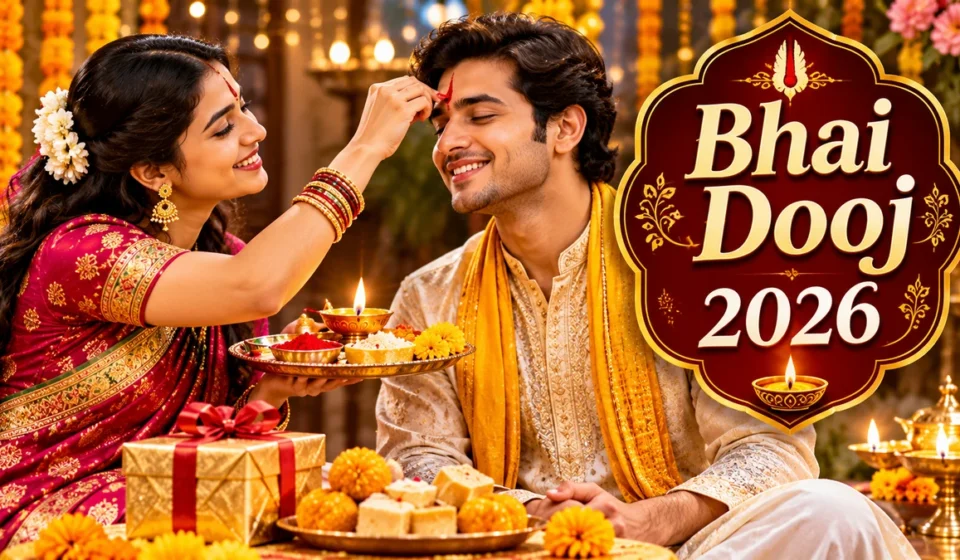
Bhai Dooj 2026: Date, Tilak Muhurat, Puja Vidhi & Significance

Table of Contents
ToggleBhai Dooj 2026: Date, Shubh Tilak Muhurat, Story, Rituals and Significance
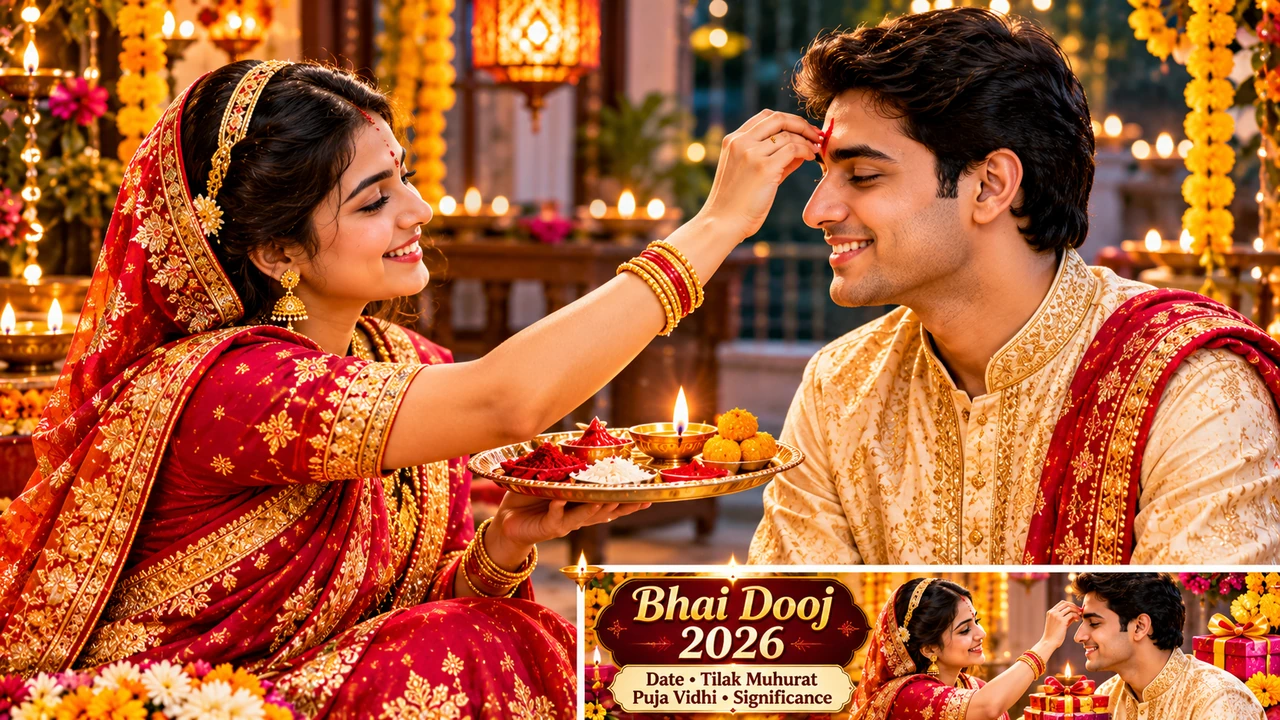
Bhai Dooj 2026 falls on November 11. Check the tilak muhurat, Yama-Yamuna story, puja vidhi, rituals, significance and regional traditions.
Bhai Dooj 2026: Date, Shubh Tilak Muhurat, Story, Puja Vidhi and Significance
Bhai Dooj is a beautiful Hindu festival celebrating the affectionate and lifelong bond between brothers and sisters. Observed on Kartik Shukla Dwitiya, the festival is marked by sisters applying a ceremonial tilak on their brothers' foreheads, praying for their happiness, health and long life. Brothers express their love and appreciation through gifts and promises of support. Bhai Dooj 2026 will be celebrated on Wednesday, 11 November, bringing the Diwali festivities to a close with a message of family love and togetherness.
When Is Bhai Dooj 2026? Date and Shubh Tilak Muhurat
Date: Wednesday, 11 November 2026
Hindu Tithi: Kartik Shukla Dwitiya
Lucknow Aparahna Tilak Muhurat: 12:56 PM to 3:07 PM
Duration: 2 hours 11 minutes
Festival names: Bhai Dooj, Bhaiya Dooj, Yama Dwitiya
According to the published Drik Panchang calculation for Lucknow, the Dwitiya Tithi begins at approximately 2:00 PM on 10 November and ends at approximately 3:53 PM on 11 November 2026. The traditional tilak ceremony is performed during the Aparahna period on the festival day.
The Aparahna period is the afternoon portion of the Hindu daytime calculation. It is considered the appropriate period for the Bhai Dooj tilak ceremony in the commonly followed tradition.
Other city reference: In Bengaluru, the published Aparahna tilak window is approximately 1:13 PM to 3:32 PM. Timings differ because each city's sunrise and sunset are different.
Panchang calculations can vary slightly between sources. These are city-specific reference timings, not a universal all-India muhurat. Follow your family's tradition and local Panchang.
What Is Bhai Dooj?
Bhai Dooj is one of the important festivals celebrated during the Hindu month of Kartik. It falls on the second lunar day, or Dwitiya, of the bright fortnight following Diwali.
The festival celebrates the special relationship between brothers and sisters. Sisters perform a traditional tilak ceremony and pray for their brothers' well-being, while brothers offer gifts and reaffirm their affection and responsibility towards their sisters.
Unlike festivals centred primarily on elaborate rituals, Bhai Dooj is deeply personal. It brings siblings together, encourages family visits and creates an opportunity to express gratitude, affection and mutual respect.
The festival is also known as Yama Dwitiya because of its association with the traditional story of Lord Yama and his sister Yamuna.
The Story of Bhai Dooj: The Beautiful Bond of Yama and Yamuna
According to a popular Hindu legend, Yamuna, the sacred river goddess, was the sister of Yama, the deity associated with death and justice.
Yamuna loved her brother dearly and repeatedly wished that he would visit her home. However, Yama was occupied with his divine responsibilities and could not visit her for a long time.
Eventually, on Kartik Shukla Dwitiya, Yama visited his sister. Yamuna welcomed him warmly, applied a ceremonial tilak on his forehead, offered him delicious food and expressed her affection through prayers and hospitality.
Yama was deeply pleased by his sister's love and hospitality. He blessed her and declared, according to the popular account, that brothers who visit their sisters on this auspicious day and receive their blessings would be blessed with well-being and protection from untimely death.
It is believed that this tradition gave the festival its association with Yama Dwitiya and established the custom of sisters welcoming their brothers and performing the tilak ceremony.
Why Is Bhai Dooj Celebrated After Diwali?
Bhai Dooj falls on Kartik Shukla Dwitiya, two lunar days after the Amavasya of Diwali. It traditionally marks the concluding celebration in the sequence of Diwali festivities.
Diwali celebrates the victory of light over darkness, while Bhai Dooj brings attention to the warmth of family relationships. After the celebrations of Lakshmi Puja, Govardhan Puja and other regional observances, siblings come together to celebrate their bond.
In 2026, the festival sequence has an unusual date arrangement because of the lunar tithi calculations. Naraka Chaturdashi and Diwali are both observed on 8 November, Govardhan Puja on 10 November, and Bhai Dooj on 11 November.
Bhai Dooj Puja Samagri 2026
Families may arrange the following items for the traditional tilak ceremony:
- Roli or kumkum for the tilak
- Akshat or unbroken rice grains
- Chandan or sandalwood paste, according to family custom
- Fresh flowers
- A decorated thali or puja plate
- Diya and cotton wicks
- Incense sticks
- Sweets and fruits
- Coconut, where customary
- Water in a clean vessel
- Traditional food prepared for the brother
- A small gift or token of affection
Bhai Dooj Puja Vidhi: Step-by-Step Rituals
1. Prepare the puja thali
Arrange roli, rice grains, flowers, sweets, a diya and other customary items in a clean decorated thali. Keep the tilak materials ready before the ceremony begins.
2. Welcome the brother
The sister welcomes her brother with affection. In many families, the brother visits his sister's home for the ceremony. Where distance makes a visit difficult, families may follow their own way of celebrating.
3. Perform the tilak ceremony
The sister applies a tilak of roli or kumkum on her brother's forehead and places akshat over it. This gesture symbolises prayers for his well-being and prosperity.
4. Perform aarti
The sister performs aarti for her brother and prays for his good health, happiness and long life. The exact sequence differs between regions and family traditions.
5. Offer sweets and food
The sister offers sweets and traditional food to her brother. Sharing a meal is an important part of the celebration in many households.
6. Exchange gifts and blessings
The brother gives his sister a gift or token of affection. Both siblings exchange blessings and reaffirm their commitment to supporting each other.
Regional Names and Traditions of Bhai Dooj
The festival is celebrated across India under different names. While the central theme remains the same, the rituals and food traditions vary by region.
Bhai Dooj in Uttar Pradesh and Bihar
In Uttar Pradesh and Bihar, sisters perform the tilak ceremony, pray for their brothers and offer sweets. Families often gather for a festive meal. In some places, the observance includes traditional prayers and customs associated with Yama Dwitiya.
Bhau Beej in Maharashtra and Goa
In Maharashtra and Goa, the festival is known as Bhau Beej or Bhau Bij. Sisters welcome their brothers, apply tilak and prepare special dishes. Brothers give gifts and blessings in return.
Bhai Phonta in West Bengal
In West Bengal, the festival is called Bhai Phonta. Sisters apply a ceremonial phonta on their brothers' foreheads, often accompanied by prayers, sweets and family gatherings. The ceremony is an important family occasion.
Bhai Tika in Nepal
In Nepal, the festival is celebrated as Bhai Tika during Tihar. Sisters apply a colourful multi-coloured tika to their brothers and pray for their long life and prosperity. Garland, sweets and traditional rituals form part of the celebration.
Bhai Dooj in Other Parts of India
In several other regions, the festival is celebrated with local names and customs. Despite the differences, the central message remains the same: love, protection, gratitude and lifelong companionship between siblings.
What Is the Significance of Bhai Dooj?
Bhai Dooj has a deeper meaning beyond the exchange of tilak and gifts.
- Celebration of sibling love: It recognises the unique emotional bond between brothers and sisters.
- Prayers for well-being: Sisters pray for their brothers' health, happiness and long life.
- Family togetherness: The occasion encourages relatives to reconnect and spend meaningful time together.
- Mutual respect: It reminds siblings that affection and responsibility should be shared.
- Gratitude: The festival creates an opportunity to appreciate the people who have supported us throughout life.
- Continuity of tradition: Regional customs preserve cultural and family heritage across generations.
How to Celebrate an Eco-Friendly Bhai Dooj
Celebrations can be joyful without creating unnecessary waste. Consider these simple ideas:
- Use reusable puja thalis and natural flowers.
- Choose locally prepared sweets and seasonal fruits.
- Avoid excessive plastic gift wrapping.
- Prefer useful, thoughtful gifts over disposable items.
- Share food with neighbours or people in need.
- Keep the celebration focused on family time and affection.
Bhai Dooj 2026: Frequently Asked Questions
1. When is Bhai Dooj in 2026?
Bhai Dooj will be celebrated on Wednesday, 11 November 2026.
2. What is the Bhai Dooj tilak muhurat in Lucknow?
The published Lucknow Aparahna tilak muhurat is 12:56 PM to 3:07 PM on 11 November 2026.
3. What is the Bhai Dooj tilak muhurat in Bengaluru?
The published Bengaluru Aparahna reference is approximately 1:13 PM to 3:32 PM on 11 November 2026. Confirm the timing with a local Panchang.
4. Why is Bhai Dooj also called Yama Dwitiya?
The festival is associated with the traditional story of Yama visiting his sister Yamuna on Kartik Shukla Dwitiya. The name Yama Dwitiya refers to this sacred occasion.
5. What is the difference between Bhai Dooj and Raksha Bandhan?
Both festivals celebrate sibling relationships, but their rituals differ. Raksha Bandhan is marked by the tying of a rakhi, while Bhai Dooj is centred on the sister applying tilak and performing aarti for her brother.
6. Is Bhai Dooj celebrated only by brothers and sisters?
The traditional observance centres on brothers and sisters. However, the broader message of love, protection and family affection can be celebrated by all siblings and loved ones.
7. What gift should a brother give his sister on Bhai Dooj?
A thoughtful gift is more meaningful than an expensive one. Clothing, books, jewellery, flowers, a personalised keepsake or a shared experience can all be appropriate.
8. Is Bhai Dooj the last festival of Diwali?
In the commonly followed five-day Diwali sequence, Bhai Dooj marks the concluding day. The exact regional festival calendar may include additional observances.
Conclusion: A Celebration of Love That Lasts a Lifetime
Bhai Dooj is a beautiful reminder that relationships are among life's greatest blessings. The tilak, aarti, sweets and gifts are meaningful expressions of a bond that grows through years of shared memories, care and companionship.
Whether siblings live in the same home or in different parts of the world, the spirit of Bhai Dooj remains unchanged. It encourages us to stay connected, express gratitude and stand by one another through every stage of life.
May this Bhai Dooj bring happiness, good health, prosperity and lasting affection to every family.
Happy Bhai Dooj 2026!
References and Further Reading
- Drik Panchang – Bhai Dooj 2026 date and Lucknow Aparahna muhurat.
- Traditional Hindu accounts associated with Yama and Yamuna.
- Regional Bhai Dooj, Bhau Beej, Bhai Phonta and Bhai Tika traditions.
Editorial note: The date and Lucknow muhurat are based on the cited Panchang reference. The Bengaluru time is provided as a separate city-specific reference. Local timings can differ. Readers should follow their local Panchang and family tradition.
Author: Arvind Kumar Sinha
Website: Explore With Arvind
Related