Chhath Puja 2026: Date, 4-Day Calendar, Arghya Timings & Rituals

Table of Contents
ToggleChhath Puja 2026: Dates, Nahay Khay, Kharna, Sandhya Arghya and Usha Arghya
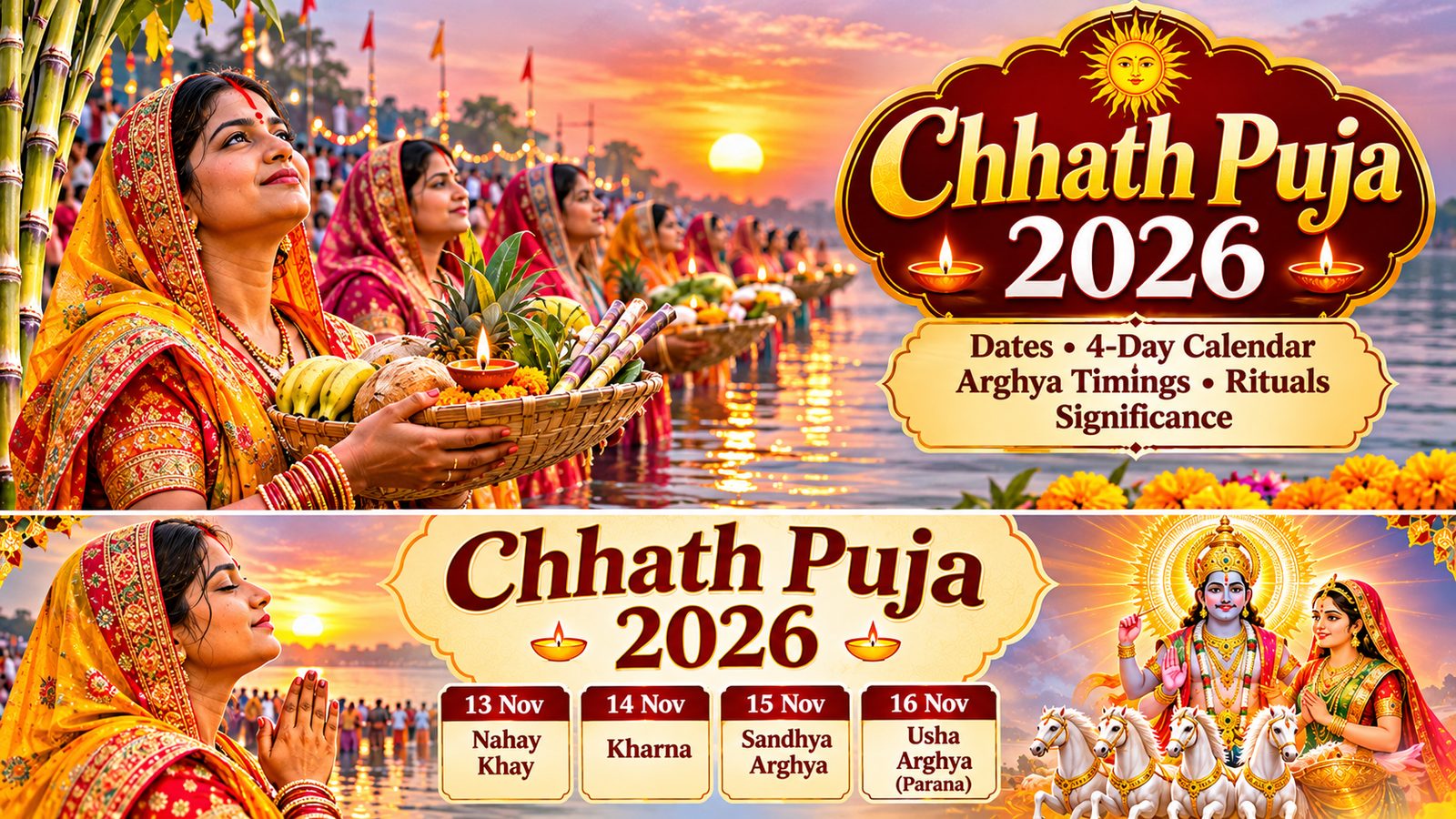
Chhath Puja 2026 runs from November 13–16. Check the four-day calendar, Nahay Khay, Kharna, Sandhya Arghya, Usha Arghya, rituals and significance.
Chhath Puja 2026: Dates, Nahay Khay, Kharna, Sandhya Arghya and Usha Arghya
Chhath Puja is one of the most sacred and distinctive Hindu festivals dedicated to Surya Dev, the Sun God, and Chhathi Maiya. Celebrated with extraordinary devotion in Bihar, Jharkhand, eastern Uttar Pradesh and several other parts of India, this four-day festival expresses gratitude towards the Sun for sustaining life on Earth. Devotees observe disciplined rituals, prepare traditional offerings, maintain cleanliness and offer Arghya to the setting and rising Sun. Chhath Puja 2026 will be celebrated from 13 to 16 November.
Chhath Puja 2026: Date and Four-Day Calendar
Festival begins: Friday, 13 November 2026
Festival concludes: Monday, 16 November 2026
Sandhya Arghya: Sunday, 15 November 2026
Usha Arghya: Monday, 16 November 2026
| Day | Date | Ritual | Significance |
|---|---|---|---|
| First | 13 November | Nahay Khay | Purification and beginning of the observance |
| Second | 14 November | Kharna | Fasting and preparation for the main vrat |
| Third | 15 November | Sandhya Arghya | Offering prayers to the setting Sun |
| Fourth | 16 November | Usha Arghya and Parana | Offering prayers to the rising Sun and concluding the fast |
The main Chhath observance takes place on Kartik Shukla Shashthi, when devotees offer Arghya to the setting Sun. The following morning, prayers are offered to the rising Sun before the fast is concluded.
Chhath Puja 2026: Sandhya and Usha Arghya Timings
The most important moments of Chhath Puja are the evening offering to the setting Sun and the morning offering to the rising Sun. These are determined by the local sunset and sunrise.
Lucknow
- Sandhya Arghya: 5:15 PM, Sunday, 15 November
- Usha Arghya: 6:26 AM, Monday, 16 November
Patna
- Sandhya Arghya: 5:00 PM, Sunday, 15 November
- Usha Arghya: 6:07 AM, Monday, 16 November
New Delhi
- Sandhya Arghya: 5:28 PM, Sunday, 15 November
- Usha Arghya: 6:44 AM, Monday, 16 November
Bengaluru
- Sandhya Arghya: 5:49 PM, Sunday, 15 November
- Usha Arghya: 6:18 AM, Monday, 16 November
All timings are approximate local solar sunset and sunrise references. Other cities have different timings. Arrive at the ghat well before the offering and follow local arrangements and family traditions.
What Is Chhath Puja?
Chhath Puja is a traditional Hindu festival dedicated primarily to the worship of Surya Dev and Chhathi Maiya. It is observed with fasting, prayer, discipline and offerings made near rivers, ponds, lakes and other water bodies.
The Sun is regarded as the source of light, energy and life. Plants, animals and human beings depend on sunlight, and the festival expresses gratitude for this natural blessing.
Unlike many festivals in which worship is performed before an idol inside a temple, Chhath Puja is widely performed in the open, facing the Sun. Devotees stand in water or near the water's edge and offer Arghya with deep devotion.
Chhath is also known for its simplicity, purity and emphasis on discipline. The preparation of prasad, cleanliness of the home and worship area, and observance of the vrat are treated with great care.
Who Are Surya Dev and Chhathi Maiya?
Surya Dev – The Sun God
Surya Dev occupies an important position in Hindu tradition. He is regarded as the visible source of energy and life, illuminating the world and sustaining the natural order.
Devotees worship the Sun for health, vitality, prosperity and well-being. The offering of Arghya during Chhath is an expression of gratitude and reverence towards this life-giving force.
Chhathi Maiya
Chhathi Maiya is deeply revered during Chhath Puja. She is worshipped as a protective and benevolent divine mother, and devotees pray to her for the happiness, health and prosperity of their families.
In popular belief and regional traditions, she is associated with protection of children, family welfare and blessings for motherhood.
The Religious and Traditional Significance of Chhath Puja
Chhath Puja is associated with several traditional stories and beliefs.
1. The worship of Surya Dev
The festival honours Surya Dev as the giver of light, energy and life. Devotees express gratitude to the Sun for sustaining nature and human existence.
2. The story of Draupadi and the Pandavas
Some regional traditions connect Sun worship with the Mahabharata. Draupadi and the Pandavas are remembered in stories involving devotion to Surya Dev and prayers for strength and prosperity during difficult times. The details of these accounts vary across oral traditions.
3. The story of Karna
Karna, one of the central characters of the Mahabharata, was the son of Surya Dev. He is traditionally remembered for his generosity, discipline and devotion. Some popular accounts associate him with Sun worship and practices involving offerings to the Sun.
4. The story of King Priyavrat
Another popular account links Chhathi Maiya with the story of King Priyavrat and Queen Malini, who were troubled by the absence of a child. According to the traditional story, divine blessings brought them happiness, and Chhathi Maiya came to be worshipped for the well-being of children and families.
These narratives belong to devotional and regional traditions, and their versions may differ.
The Four Days of Chhath Puja 2026: Complete Rituals
Day 1: Nahay Khay – Friday, 13 November 2026
Nahay Khay marks the beginning of Chhath Puja. The day is associated with purification, cleanliness and preparation for the upcoming vrat.
Devotees traditionally take a bath, often at a river or another clean water source, and prepare the home and kitchen carefully. The food is cooked with attention to cleanliness and simplicity.
A traditional meal may include:
- Kaddu or lauki sabzi
- Rice
- Chana dal
- Other simple vegetarian preparations according to family tradition
The meal is generally prepared without onion and garlic in households following this custom.
Day 2: Kharna – Saturday, 14 November 2026
Kharna is the second day of the festival. Devotees maintain a fast during the day and perform worship in the evening.
After the evening prayer, the vrat is traditionally broken with a simple offering of prasad. Common preparations include:
- Rice kheer, often prepared with jaggery
- Roti or chapati
- Banana
- Other traditional offerings according to family custom
After Kharna, many devotees begin the main extended fast, which continues through Sandhya Arghya and Usha Arghya.
Some devotees observe a strict nirjala fast, while others follow different practices according to health, age, family tradition and guidance. Fasting should never be undertaken in a way that puts a person's health at risk.
Day 3: Sandhya Arghya – Sunday, 15 November 2026
Sandhya Arghya is one of the most visually beautiful and spiritually significant moments of Chhath Puja.
Devotees prepare baskets of fruits, thekua, sugarcane and other traditional offerings. Families gather at rivers, ponds, lakes and designated ghats.
As the Sun approaches the horizon, devotees stand in the water or near the water's edge and offer Arghya to Surya Dev. Prayers are also offered to Chhathi Maiya for family welfare, health and prosperity.
The atmosphere is filled with devotional songs, traditional folk music, the fragrance of incense and the warm glow of lamps.
Day 4: Usha Arghya and Parana – Monday, 16 November 2026
The final morning begins before sunrise. Devotees gather again at the water's edge and prepare for the offering to the rising Sun.
As the first rays of sunlight appear, devotees offer Usha Arghya to Surya Dev. This ritual symbolises hope, renewal, gratitude and the continuation of life.
After the morning worship and prayers, devotees conclude their fast through Parana, following their family and community customs.
Chhath Puja Samagri: Essential Items
The following items are commonly used in Chhath Puja. The exact list varies by region and family tradition.
- Bamboo baskets or soop
- Daura or traditional bamboo containers
- Sugarcane
- Coconuts
- Bananas
- Seasonal fruits
- Thekua
- Rice laddus or other traditional sweets
- Ginger and turmeric, where customary
- Betel leaves and nuts
- Diya and cotton wicks
- Ghee
- Flowers
- Clean water for offerings
- Traditional prasad ingredients
Thekua: The Famous Prasad of Chhath Puja
Thekua is one of the most recognisable traditional offerings associated with Chhath Puja. It is a sweet preparation generally made with wheat flour, jaggery or sugar, ghee and sometimes dry fruits or coconut.
The dough is shaped using traditional moulds and fried until golden brown. Its preparation is associated with family traditions and is often undertaken with great care.
Thekua is offered as prasad and later distributed among family members, neighbours and devotees.
Other offerings commonly include fruits, sugarcane, coconut, rice preparations and seasonal produce.
Why Is Arghya Offered to Both the Setting and Rising Sun?
One of the distinctive features of Chhath Puja is the offering of Arghya to the setting Sun on the evening of Shashthi and to the rising Sun on the following morning.
The evening offering expresses gratitude for the day that has passed and acknowledges the Sun's contribution to life. The morning offering celebrates the return of light and the beginning of a new day.
This practice carries a beautiful philosophical message: gratitude should be expressed not only when something begins or succeeds, but also when a journey reaches its end.
It also symbolises hope, continuity, balance and respect for the natural cycle of the universe.
Chhath Puja Celebrations Across India
Bihar
Bihar is one of the most prominent centres of Chhath celebrations. Patna, Gaya, Muzaffarpur, Bhagalpur and many other cities and villages witness large gatherings at rivers and designated ghats. Families prepare prasad and participate in community arrangements.
Jharkhand
Chhath is celebrated with devotion across Jharkhand. Rivers, ponds, lakes and specially prepared water bodies become important centres of worship.
Eastern Uttar Pradesh
Chhath has a strong cultural presence in eastern Uttar Pradesh, including Varanasi, Gorakhpur, Deoria, Ballia and nearby districts. Families and community groups organise celebrations along riverbanks and ponds.
Delhi and Other Metropolitan Cities
Chhath is celebrated in Delhi, Mumbai, Bengaluru, Kolkata, Pune, Hyderabad and other cities by communities who have carried the tradition beyond their home states.
Public ghats and community celebrations help people living away from their native places participate in the festival.
Chhath Puja and Environmental Responsibility
Chhath Puja has a strong connection with rivers, ponds and other natural water bodies. It provides an opportunity to reflect on our responsibility towards the environment.
- Use natural and biodegradable materials wherever possible.
- Avoid plastic decorations and disposable items near water bodies.
- Do not throw non-biodegradable waste into rivers or ponds.
- Keep the ghats clean before and after the rituals.
- Use designated public ghats and follow local safety instructions.
- Respect other devotees and avoid overcrowding.
- Protect aquatic life and avoid polluting water with offerings or packaging.
Worshipping the Sun and nature should also inspire us to protect the natural resources on which life depends.
Safety and Well-Being During Chhath Puja
Chhath involves extensive preparation, fasting and gatherings near water bodies. A few practical precautions can make the observance safer:
- Use designated ghats and follow instructions issued by local authorities.
- Avoid entering deep or fast-flowing water.
- Keep children under close adult supervision near the water.
- Use safe lighting and avoid exposed electrical wiring near water.
- Wear suitable footwear on slippery riverbanks.
- Keep drinking water available for people who are not observing a strict fast.
- People with medical conditions, pregnant women, older adults and those taking regular medication should seek appropriate medical guidance before undertaking strict fasting.
Chhath Puja 2026: Frequently Asked Questions
1. When is Chhath Puja in 2026?
Chhath Puja will be celebrated from Friday, 13 November to Monday, 16 November 2026.
2. When is Sandhya Arghya in 2026?
Sandhya Arghya will be offered on Sunday, 15 November 2026, at local sunset.
3. When is Usha Arghya in 2026?
Usha Arghya will be offered on Monday, 16 November 2026, at local sunrise.
4. What are the four days of Chhath Puja?
The four days are Nahay Khay, Kharna, Sandhya Arghya and Usha Arghya with Parana.
5. What is the Sandhya Arghya time in Lucknow?
The local sunset reference for Lucknow on 15 November 2026 is approximately 5:15 PM.
6. What is the Usha Arghya time in Lucknow?
The local sunrise reference for Lucknow on 16 November 2026 is approximately 6:26 AM.
7. What is Kharna in Chhath Puja?
Kharna is the second day of Chhath. Devotees fast during the day and perform evening worship before taking traditional prasad.
8. What is the main prasad of Chhath Puja?
Thekua is among the most famous offerings. Fruits, sugarcane, coconut, rice preparations and other traditional foods are also offered.
9. Why do devotees offer Arghya to the setting Sun?
The evening offering expresses gratitude towards the Sun and acknowledges its role in sustaining life. The following morning's offering symbolises hope and renewal.
10. Is Chhath Puja celebrated outside Bihar?
Yes. Chhath is celebrated across Jharkhand, Uttar Pradesh, Delhi, West Bengal, Maharashtra, Karnataka and many other regions of India and abroad.
Conclusion: A Festival of Faith, Gratitude and Harmony with Nature
Chhath Puja is much more than a religious observance. It is a celebration of nature, discipline, family devotion and gratitude towards the forces that sustain life.
From the first day of Nahay Khay to the final morning of Usha Arghya, every ritual reflects purity, patience and faith. The sight of devotees standing together at the water's edge and offering prayers to the setting and rising Sun represents one of India's most beautiful cultural traditions.
May Surya Dev and Chhathi Maiya bless every family with happiness, health, peace and prosperity.
जय छठी मैया! जय सूर्य देव!
References and Further Reading
- Chhath Utsav – Four-day Chhath Puja calendar and ritual descriptions.
- Drik Panchang – Hindu calendar and local Panchang calculations.
- City-specific sunrise and sunset references for Chhath Arghya 2026.
- Regional traditions and customary practices associated with Surya worship.
Editorial note: Festival dates are based on the 2026 Chhath calendar. Arghya timings are local sunset and sunrise references and differ by city. Rituals, fasting practices and food preparations vary between families and communities. Readers should follow local arrangements and their established traditions.
Author: Arvind Kumar Sinha
Website: Explore With Arvind
Related