
Table of Contents
ToggleTulsi Vivah 2026: Date, Muhurat, Story, Rituals and Significance
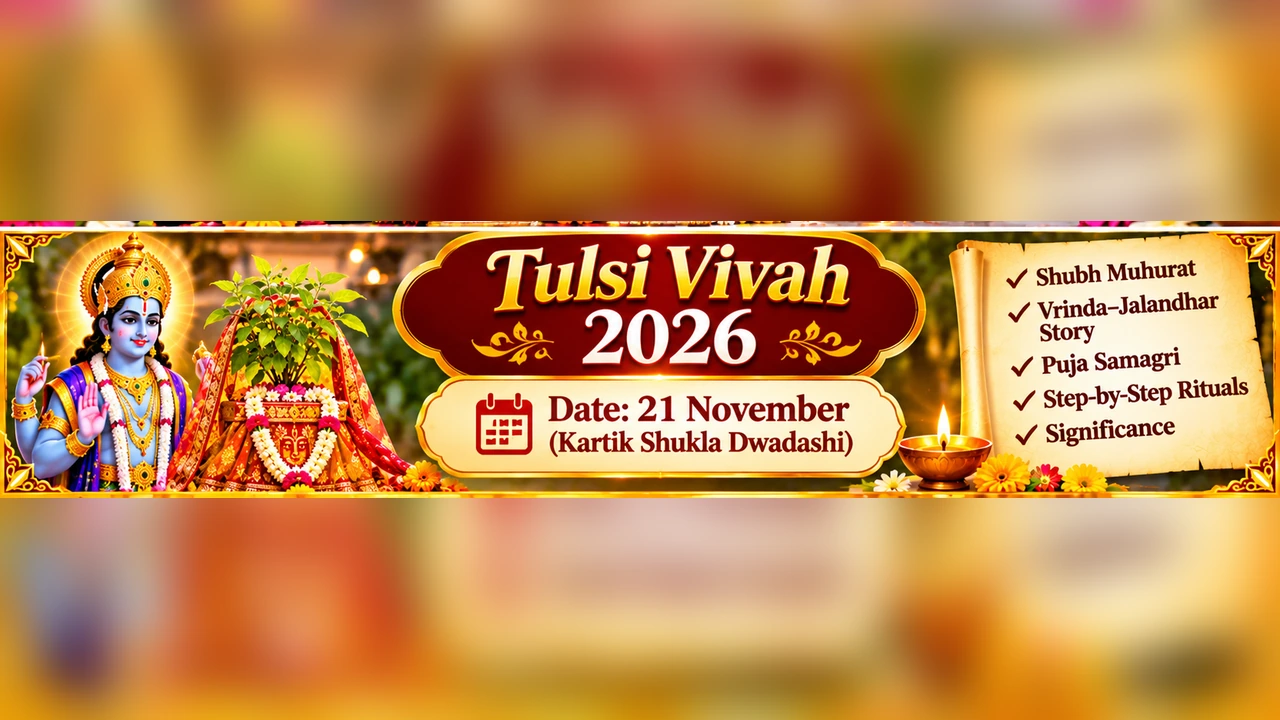
Tulsi Vivah 2026 falls on November 21. Discover the shubh muhurat, Vrinda-Jalandhar story, puja vidhi, samagri, rituals and significance.
Tulsi Vivah 2026: Date, Shubh Muhurat, Vrat Katha, Puja Vidhi and Significance
Tulsi Vivah is one of the most beautiful and spiritually significant Hindu celebrations. It commemorates the ceremonial marriage of Goddess Tulsi with Lord Vishnu, traditionally represented by the sacred Shaligram stone. Celebrated with wedding rituals, devotional songs, flowers, lamps and festive offerings, the occasion symbolises devotion, purity, marital harmony and divine blessings. Tulsi Vivah 2026 will be observed on Saturday, 21 November, according to the commonly followed Kartik Shukla Dwadashi calendar. Many families, however, perform the ceremony on the evening of Dev Uthani Ekadashi itself.
Tulsi Vivah 2026: Date and Shubh Muhurat
Date: Saturday, 21 November 2026
Hindu Tithi: Kartik Shukla Dwadashi
Dwadashi begins: 6:32 AM, 21 November
Dwadashi ends: 4:57 AM, 22 November
Bengaluru Pradosh period: 5:50 PM–8:20 PM
Traditional ceremony: Evening, around Godhuli and Pradosh Kaal
Tulsi Vivah is traditionally performed during the evening. In many households, the ceremony takes place around sunset, when lamps are lit and the Tulsi plant is decorated as a bride.
For Bengaluru, the published Pradosh reference on 21 November is approximately 5:50 PM to 8:20 PM. The exact suitable time may vary according to the local Panchang and family tradition.
Lucknow reference: The local sunset is approximately 5:14 PM, with the Godhuli period around 5:14 PM to 5:40 PM.
These are city-specific reference timings, not a universal muhurat. Families observing Tulsi Vivah on Ekadashi evening may follow a different date and time. Confirm the local Panchang before performing the ceremony.
Why Are There Different Dates for Tulsi Vivah?
One common question every year is whether Tulsi Vivah should be celebrated on Dev Uthani Ekadashi or Kartik Shukla Dwadashi.
The difference arises because regional customs and religious traditions do not all follow the same observance date.
1. Ekadashi observance – 20 November 2026
Many families perform Tulsi Vivah on the evening of Dev Uthani Ekadashi, immediately after the traditional awakening of Lord Vishnu. This practice is followed in several North Indian households.
2. Dwadashi observance – 21 November 2026
Many Panchangs identify Kartik Shukla Dwadashi as the principal date for Tulsi Vivah. The tithi prevails from the morning of 21 November until the early hours of 22 November.
3. Observance up to Kartik Purnima
In some regional traditions, particularly in parts of western India, families may perform Tulsi Vivah on another suitable day between Dev Uthani Ekadashi and Kartik Purnima.
Follow the date observed by your family, temple or religious tradition. Both Ekadashi and Dwadashi observances are established customs, and regional practices may differ.
What Is Tulsi Vivah?
Tulsi Vivah is the symbolic wedding ceremony of the sacred Tulsi plant, revered as Goddess Tulsi or Vrinda, with Lord Vishnu. In the traditional ceremony, the groom is represented by a Shaligram stone, an image of Lord Vishnu or an image of Lord Krishna.
The Tulsi plant is considered especially sacred in Hindu households. It is commonly grown in a courtyard or in a decorated Tulsi Vrindavan, where families offer prayers and light lamps.
On Tulsi Vivah, the plant is decorated like a bride. A small wedding mandap is prepared, traditional wedding rituals are performed, and devotional songs are sung. The ceremony may include symbolic kanyadaan, mangalsutra, garlands and other customs, depending on the family tradition.
The occasion is associated with the conclusion of Chaturmas and the beginning of the auspicious wedding season in many Hindu communities.
Who Is Goddess Tulsi?
Goddess Tulsi occupies a special place in Hindu religious and devotional traditions. The Tulsi plant is revered as a manifestation of divine purity and devotion.
In Vaishnava tradition, Tulsi is particularly dear to Lord Vishnu and Lord Krishna. Tulsi leaves are commonly offered during Vishnu worship and are regarded as an important devotional offering.
Many Hindu families maintain a Tulsi plant at home and offer daily prayers. The plant is associated with spiritual purity, devotion, well-being and auspiciousness.
The Story of Tulsi Vivah: Vrinda and Jalandhar
One of the best-known stories associated with Tulsi Vivah is the legend of Vrinda and Jalandhar. The story is narrated in different forms in traditional religious literature and popular devotional accounts.
According to a popular version, Vrinda was a deeply devoted woman and the wife of Jalandhar, a powerful asura king. Her devotion and spiritual virtue were believed to protect Jalandhar, making him extraordinarily difficult to defeat.
As Jalandhar's power increased, he challenged the divine order and became a threat to the gods. The devas sought Lord Vishnu's help to restore balance.
In the popular narrative, Lord Vishnu assumed the form of Jalandhar and approached Vrinda. When Vrinda realised that her devotion had been deceived, she was overcome with grief and anger. She cursed Lord Vishnu to become stone.
According to this tradition, Lord Vishnu accepted the curse and became associated with the sacred Shaligram stone. Vrinda's devotion was honoured, and she was transformed into the sacred Tulsi plant.
Lord Vishnu later blessed Tulsi with a special place in his worship. The ceremonial marriage of Tulsi and Shaligram came to be celebrated as Tulsi Vivah.
Why Is Tulsi Married to Lord Vishnu?
The ceremonial marriage of Tulsi and Lord Vishnu symbolises the divine union of devotion and divinity.
In Vaishnava belief, Tulsi is especially dear to Lord Vishnu. The Shaligram stone represents Vishnu in the traditional wedding ceremony, and the union is celebrated with the same affection and reverence as a sacred marriage.
For devotees, Tulsi Vivah is an occasion to pray for peace, harmony, prosperity and happiness in family life.
Tulsi Vivah Puja Samagri 2026
The following items are commonly arranged for the ceremony. Families may add or omit items according to their regional customs.
- A healthy Tulsi plant in a pot or Tulsi Vrindavan
- Shaligram stone or an image of Lord Vishnu or Krishna
- Red or yellow cloth for decorating Tulsi
- Small decorative wedding clothes and ornaments
- Flowers and garlands
- Sugarcane for the symbolic wedding mandap, where customary
- Roli, kumkum, turmeric and sandalwood paste
- Akshat or unbroken rice grains
- Incense sticks and camphor
- Ghee diya and cotton wicks
- Fruits and seasonal offerings
- Betel leaves and nuts
- Coconut and sweets
- Mangal sutra or symbolic wedding thread, where customary
- Wedding invitation or decorative paper items, where customary
- Prasad and traditional sweets
Tulsi Vivah Puja Vidhi: Step-by-Step Wedding Rituals
1. Clean and decorate the worship area
Clean the courtyard or place where the Tulsi plant is kept. Decorate the area with rangoli, flowers, lamps and traditional festive decorations.
2. Prepare the Tulsi Vrindavan
Clean the Tulsi pot or Vrindavan. Decorate it with flowers, a small cloth and traditional ornaments. In many households, the plant is dressed like a bride using a red or yellow cloth.
3. Prepare the groom's place
Place the Shaligram stone or image of Lord Vishnu near the Tulsi plant. Decorate the area with flowers and prepare a small mandap.
4. Perform Ganesh and Vishnu prayers
Begin with prayers according to family tradition. Offer flowers, sandalwood paste, roli and akshat. Remember Lord Ganesha and seek the blessings of Lord Vishnu.
5. Perform the symbolic wedding ceremony
Conduct the traditional wedding rituals followed by the family. Some households perform symbolic kanyadaan, exchange of garlands, mangalsutra rituals and the tying of a sacred thread.
6. Offer flowers and traditional wedding offerings
Offer flowers, fruits, sweets and other customary items to Goddess Tulsi and Lord Vishnu. Tulsi leaves may be offered to Vishnu or Shaligram according to the established practice.
7. Sing devotional songs and perform aarti
Sing Tulsi Vivah bhajans, Vishnu bhajans and traditional wedding songs. Conclude the ceremony with aarti and prayers for family well-being.
8. Distribute prasad
Distribute sweets and prasad among family members, neighbours and guests. In many households, the ceremony is followed by a small family gathering or festive meal.
Tulsi Vivah Mantras
Devotees may chant the following Vishnu mantra during the ceremony:
Om Namo Bhagavate Vasudevaya.
A traditional Tulsi invocation is:
कृष्णभक्तिप्रदे देवि सत्यवत्यै नमो नमः॥
Devotees may also recite Vishnu Sahasranama, Tulsi Stotra or devotional songs according to their family tradition.
Why Is Tulsi Considered So Sacred in Hinduism?
Tulsi is deeply revered in Hindu households for its religious, cultural and devotional importance.
- Association with Lord Vishnu: Tulsi is considered especially dear to Lord Vishnu and Lord Krishna.
- Symbol of devotion: The plant represents faith, dedication and spiritual purity.
- Daily worship: Many families offer water, flowers and lamps to Tulsi every day.
- Household tradition: Tulsi Vrindavan is a familiar feature of traditional Hindu homes.
- Environmental value: Growing and caring for plants can encourage respect for nature and greenery.
Tulsi is also known for its traditional uses in Indian household wellness practices. Such traditional use should not be confused with medical treatment or a substitute for professional healthcare.
Tulsi Vivah and the Beginning of the Wedding Season
In many Hindu communities, Tulsi Vivah marks the end of Chaturmas and the return of the auspicious wedding season.
During Chaturmas, several communities traditionally avoid weddings and certain other ceremonies. After Dev Uthani Ekadashi and Tulsi Vivah, auspicious ceremonies resume according to the local Panchang and family tradition.
This makes Tulsi Vivah an important occasion for families planning weddings, engagements and other celebrations in the coming months.
How Is Tulsi Vivah Celebrated Across India?
Maharashtra
Tulsi Vivah is especially popular in Maharashtra. Many households decorate their Tulsi Vrindavan and perform a traditional wedding ceremony with Shaligram or an image of Lord Vishnu. Sugarcane, flowers and festive sweets are often included.
Gujarat
In Gujarat, Tulsi Vivah is observed with devotional rituals, household ceremonies and temple celebrations. Families decorate the Tulsi plant and offer prayers for prosperity and harmony.
Uttar Pradesh and Bihar
In Uttar Pradesh and Bihar, many families perform Tulsi Vivah around Dev Uthani Ekadashi or Dwadashi. The ceremony may include traditional wedding songs, lamps, flowers and prayers to Lord Vishnu.
Rajasthan and Madhya Pradesh
Families in Rajasthan and Madhya Pradesh celebrate Tulsi Vivah with local customs, devotional songs and symbolic wedding rituals. The precise date and ceremony may differ by family tradition.
South India
In parts of South India, Tulsi is worshipped as a sacred household plant and the ceremony is associated with the Kartika month. Local temple calendars and Vaishnava traditions guide the observance.
How to Celebrate an Eco-Friendly Tulsi Vivah
Tulsi Vivah can be celebrated beautifully while remaining mindful of nature.
- Use reusable decorations and traditional cloth rather than disposable plastic.
- Avoid applying chemical colours, paints or glitter to the Tulsi plant.
- Use natural flowers and biodegradable materials.
- Do not damage branches or leaves while decorating the plant.
- Keep lamps and candles at a safe distance from leaves and cloth decorations.
- Reuse the mandap decorations where possible.
- Compost suitable organic offerings after the ceremony rather than leaving waste in public spaces.
Tulsi Vivah 2026: Frequently Asked Questions
1. When is Tulsi Vivah in 2026?
Tulsi Vivah is commonly observed on Saturday, 21 November 2026, on Kartik Shukla Dwadashi. Many families perform the ceremony on the evening of Dev Uthani Ekadashi, 20 November.
2. What is the Tulsi Vivah muhurat in Bengaluru?
The published Bengaluru Pradosh reference for 21 November is 5:50 PM to 8:20 PM. The ceremony is traditionally performed in the evening.
3. What is the Tulsi Vivah tithi in 2026?
Kartik Shukla Dwadashi begins at approximately 6:32 AM on 21 November and ends at approximately 4:57 AM on 22 November.
4. Whom does Goddess Tulsi marry?
Goddess Tulsi is ceremonially married to Lord Vishnu, commonly represented by the Shaligram stone or an image of Lord Krishna or Vishnu.
5. What is the story behind Tulsi Vivah?
The popular legend describes Vrinda, the devoted wife of Jalandhar, whose spiritual virtue protected him. Following the events of the story, Vrinda became associated with the sacred Tulsi plant and Lord Vishnu with the Shaligram stone.
6. Why is Tulsi Vivah celebrated?
The festival honours the divine union of Tulsi and Vishnu. It is associated with devotion, purity, family harmony and the end of Chaturmas.
7. Is Tulsi Vivah performed on Ekadashi or Dwadashi?
Both customs are followed. Many families perform the ceremony on Ekadashi evening, while many Panchangs and communities observe it on Kartik Shukla Dwadashi.
8. Can Tulsi Vivah be performed at home?
Yes. Many families perform the ceremony at home using a Tulsi plant and Shaligram or an image of Lord Vishnu, following their customary rituals.
9. What is the significance of Shaligram in Tulsi Vivah?
Shaligram is traditionally revered as a representation of Lord Vishnu. It serves as the groom in the symbolic marriage ceremony.
Conclusion: A Sacred Celebration of Devotion and Divine Love
Tulsi Vivah is a beautiful expression of Hindu devotion and household tradition. Through the symbolic wedding of Goddess Tulsi and Lord Vishnu, devotees celebrate purity, faith, marital harmony and the beginning of an auspicious period.
The decorated Tulsi Vrindavan, glowing diyas, devotional songs and traditional wedding rituals make this festival a memorable occasion for families across India.
May Goddess Tulsi and Lord Vishnu bless every home with peace, happiness, prosperity and spiritual strength.
तुलसी विवाह की हार्दिक शुभकामनाएँ।
References and Further Reading
- Drik Panchang – Tulasi Vivah 2026 date and tithi.
- Astrolal – Bengaluru Tulsi Vivah 2026 and Pradosh timings.
- Traditional Hindu accounts of Vrinda, Jalandhar, Tulsi and Shaligram.
- Regional customs associated with Dev Uthani Ekadashi and Kartik Shukla Dwadashi.
Editorial note: Tulsi Vivah dates and rituals differ among regional and family traditions. This article uses 21 November 2026 as the commonly followed Dwadashi observance and separately explains the Ekadashi-evening custom. Bengaluru timings are city-specific. Readers should confirm the appropriate date and muhurat with their local Panchang or family priest.
Author: Arvind Kumar Sinha
Website: Explore With Arvind
