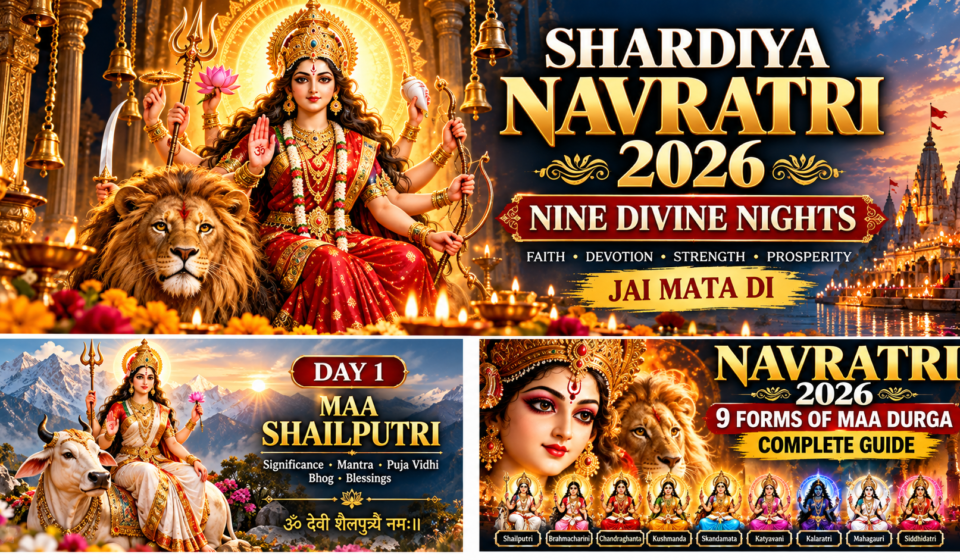
Shardiya Navratri 2026: 9 Forms of Maa Durga, Dates, Mantras & Puja Guide

Celebrate Shardiya Navratri 2026 with our complete guide to Maa Durga's nine forms, puja rituals, mantras, traditional offerings, festival dates and spiritual significance.
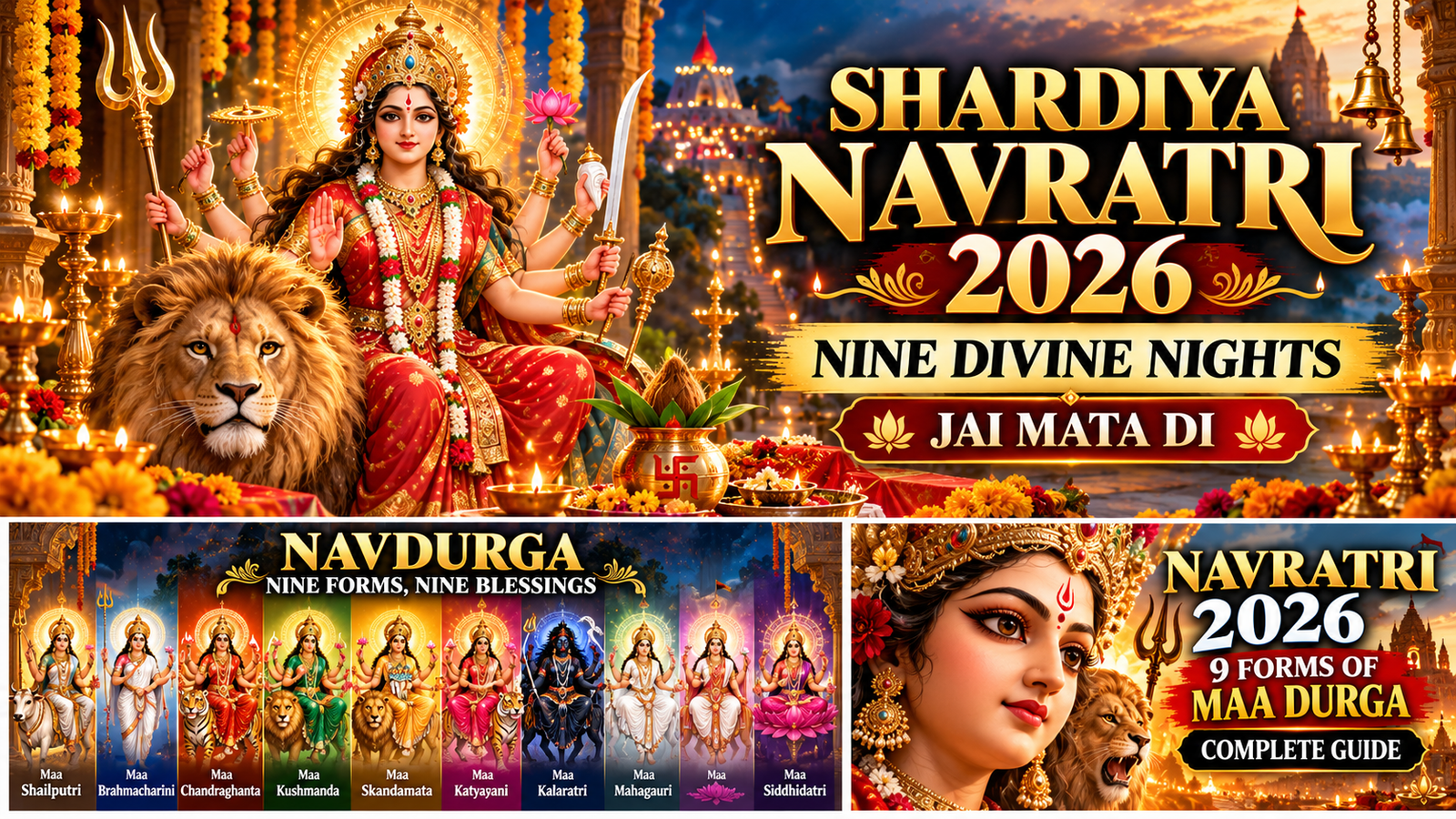
FESTIVALS • SANATAN CULTURE • SPIRITUALITY
Table of Contents
ToggleShardiya Navratri 2026: The Complete Guide to Nine Divine Nights of Maa Durga
The air is filled with the fragrance of incense, the sound of devotional songs and the warmth of countless diyas. Across India, devotees are welcoming one of the most sacred festivals of the Hindu calendar: Shardiya Navratri 2026.
Dedicated to Goddess Durga and her nine divine manifestations, Navratri is a celebration of faith, courage, devotion and the victory of good over evil. Homes and temples become centres of prayer, families gather for worship, and communities celebrate through devotional music, traditional rituals, Garba and Dandiya.
But Navratri is much more than a festival of lights, colours and celebrations. Each form of Maa Durga carries a spiritual message, encouraging devotees to cultivate strength, discipline, compassion, wisdom and inner peace.
In this guide, discover the significance of Shardiya Navratri 2026, the nine forms of Maa Durga, traditional puja practices, mantras, offerings, fasting customs and important dates.
1. What Is Shardiya Navratri and Why Is It Celebrated?
The word Navratri combines two Sanskrit words: nava, meaning nine, and ratri, meaning night. The festival is observed over nine nights dedicated to the worship of the Divine Mother in her various manifestations.
Shardiya Navratri takes place during the Hindu lunar month of Ashwin, usually in September or October. It is among the most widely celebrated Navratri festivals in India.
The festival is closely associated with the victory of Goddess Durga over Mahishasura, the powerful demon whose arrogance and destructive actions threatened the balance of the world. The Goddess's victory symbolises the triumph of righteousness over evil and divine power over arrogance.
In many traditions, the period is also connected with Lord Rama's worship of Goddess Durga before his battle with Ravana. Vijayadashami, observed after Navratri, celebrates the victory of good over evil in these related traditions.
The spiritual message of Navratri
Navratri encourages devotees to look beyond external celebrations and reflect on the qualities they wish to develop within themselves.
- Strength: Facing life's difficulties with courage.
- Discipline: Maintaining focus and self-control.
- Compassion: Treating others with kindness.
- Wisdom: Choosing truth and righteousness.
- Devotion: Cultivating gratitude and faith.
Whether celebrated through elaborate temple rituals or a simple diya lit at home, the essence of Navratri lies in devotion and the pursuit of a more balanced and meaningful life.
2. Shardiya Navratri 2026: Dates and Important Observances
Shardiya Navratri begins on Sunday, 11 October 2026, with Ashwin Shukla Pratipada, Ghatasthapana and the worship of Maa Shailputri. The festival period leads into the celebrations associated with Maha Ashtami, Maha Navami and Vijayadashami.
Important festival dates
- 11 October 2026: Navratri begins; Ghatasthapana and Maa Shailputri Puja.
- 18–19 October: Ashtami observances fall around this period.
- 19–20 October: Navami observances fall around this period.
- 20 October 2026: Vijayadashami/Dussehra is listed on the Lucknow festival calendar.
Panchang note: In 2026, Saptami is observed across two sunrise-based calendar days in some Panchang calculations. Ashtami, Navami, Sandhi Puja and Kanya Puja timings can therefore differ according to location and tradition. Confirm the exact observance with a reliable local Panchang or your family priest.
Ghatasthapana and Kalash Sthapana
Ghatasthapana marks the formal beginning of Navratri worship. A sacred kalash is established in the puja area, symbolising divine presence, auspiciousness and prosperity.
For Lucknow on 11 October 2026, Drik Panchang lists sunrise at approximately 6:03 AM and Pratipada tithi until approximately 9:30 PM. A published city-wise muhurat listing gives a Ghatasthapana window of approximately 6:03 AM to 9:56 AM. These timings are specific to the date and city; they are provided here for reference, not as a future muhurat.
For the exact local Panchang, consult Drik Panchang for Lucknow.
3. Day 1: Worship of Maa Shailputri
The first day of Shardiya Navratri is dedicated to Maa Shailputri, the first of the nine forms of Goddess Durga. Her name is commonly understood as the daughter of the mountains: Shaila means mountain and putri means daughter.
Maa Shailputri is traditionally depicted riding a bull and holding a trident and a lotus. She represents purity, strength, stability and a firm spiritual foundation.
As the first form worshipped during Navratri, she reminds devotees that every meaningful journey begins with strong foundations. Her worship is associated with courage, steadiness and devotion.
How devotees worship Maa Shailputri
- Clean the puja area and prepare the altar.
- Light a diya and offer flowers according to family tradition.
- Offer fruits, sweets or other suitable prasad.
- Recite a Maa Shailputri mantra or Durga prayer.
- Spend a few moments in quiet prayer and gratitude.
Maa Shailputri mantra
ॐ देवी शैलपुत्र्यै नमः॥
Transliteration: Om Devi Shailaputryai Namah.
Meaning: Salutations to Goddess Shailputri.
Devotees may chant this mantra with concentration and sincerity. The number of repetitions can follow personal preference or family tradition; a specific count is not necessary for every household.
4. The Nine Forms of Maa Durga: Navdurga Explained
The nine forms of the Goddess are collectively known as Navdurga. Each form represents a distinct aspect of divine feminine energy and offers a different spiritual lesson.
| Form | Traditional significance | Spiritual message |
|---|---|---|
| Maa Shailputri | Strength and purity | Begin with a firm foundation. |
| Maa Brahmacharini | Devotion and austerity | Practice patience and discipline. |
| Maa Chandraghanta | Courage and protection | Face challenges with confidence. |
| Maa Kushmanda | Creative energy | Recognise the power of creation and hope. |
| Maa Skandamata | Motherhood and compassion | Nurture others with love. |
| Maa Katyayani | Strength and determination | Stand firmly for what is right. |
| Maa Kalaratri | Protection from darkness | Meet fear with courage. |
| Maa Mahagauri | Purity and peace | Seek clarity and inner calm. |
| Maa Siddhidatri | Spiritual fulfilment | Remain humble while seeking wisdom. |
Maa Brahmacharini
The second form represents devotion, perseverance and self-discipline. Her story encourages devotees to remain committed to their spiritual goals even when the path demands patience.
Maa Chandraghanta
Associated with courage and protection, Maa Chandraghanta symbolises the readiness to confront injustice and difficulty with determination.
Maa Kushmanda
Maa Kushmanda represents creative energy and the power associated with the creation of the universe. Her worship is linked with hope, vitality and the light that dispels darkness.
Maa Skandamata
Maa Skandamata is revered as the mother of Skanda, also known as Kartikeya. She represents maternal love, compassion and protection.
Maa Katyayani
Maa Katyayani embodies strength and the courage to overcome obstacles. Her worship reminds devotees to act with conviction and righteousness.
Maa Kalaratri
Maa Kalaratri is a powerful form associated with the destruction of darkness, fear and negative forces. Her fierce appearance represents protection rather than harm to the sincere devotee.
Maa Mahagauri
Maa Mahagauri is associated with purity, serenity and spiritual renewal. Her form encourages devotees to seek peace and let go of resentment.
Maa Siddhidatri
Maa Siddhidatri represents spiritual accomplishment and divine grace. Her worship encourages humility, wisdom and gratitude for life's blessings.
The order of the nine forms is traditional, but the exact calendar date assigned to a particular form should be checked against the local Panchang, especially in a year when tithis span or repeat across calendar days.
5. Navratri Puja Vidhi: Simple Worship at Home
Navratri puja does not have to be elaborate to be meaningful. Families may follow their own regional customs, household traditions and guidance from their priest.
Common puja samagri
- Clean puja platform and cloth.
- Image or idol of Maa Durga.
- Kalash, clean water and coconut, where required.
- Mango leaves, sacred thread and grains, according to tradition.
- Roli, kumkum, turmeric and akshat.
- Fresh flowers and a garland.
- Diya, ghee or oil and cotton wicks.
- Incense or dhoop.
- Fruits, sweets and suitable bhog.
- Puja thali and a prayer book, if desired.
Simple steps for daily Navratri worship
- Prepare the space: Clean the puja area and arrange the required items.
- Begin with prayer: Offer a respectful prayer according to your household tradition.
- Light the diya: Light a lamp safely in the designated puja area.
- Offer flowers: Offer flowers, kumkum, akshat and other customary items.
- Chant a mantra: Recite a Devi mantra, Durga Chalisa or another familiar prayer.
- Offer bhog: Present fruits or food prepared according to your tradition.
- Perform aarti: Conclude with aarti and a prayer for peace and well-being.
These are general practices, not a substitute for a specific Ghatasthapana procedure. Follow a reliable local Panchang for muhurat-sensitive rituals.
6. Navratri Mantras for Devotion and Prayer
Mantra chanting is an important part of Navratri for many devotees. A mantra can provide a point of concentration during prayer and encourage a calm, reflective state of mind.
Durga mantra
ॐ दुं दुर्गायै नमः॥
Transliteration: Om Dum Durgayai Namah.
A traditional salutation to Goddess Durga, recited by devotees seeking the Goddess's blessings and protection.
Universal salutation to the Divine Mother
सर्वमङ्गलमाङ्गल्ये शिवे सर्वार्थसाधिके।
शरण्ये त्र्यम्बके गौरी नारायणि नमोऽस्तु ते॥
This well-known Devi prayer praises the Divine Mother as auspicious, compassionate and worthy of reverence.
Devotees can choose a prayer familiar to their family or tradition. Sincere devotion and respectful practice matter more than trying to follow a single format.
7. Traditional Bhog and Prasad During Navratri
Offering bhog is a way of expressing gratitude and devotion to the Goddess. Foods vary by region, family tradition, fasting practice and the form of the Goddess being worshipped.
Common offerings may include:
- Fresh seasonal fruits.
- Milk, curd or other suitable dairy offerings.
- Halwa, kheer or traditional sweets.
- Coconut and dry fruits.
- Food prepared without ingredients excluded by the family's fasting tradition.
Some households associate particular offerings with particular forms of Maa Durga. These customs are not completely uniform across India. Follow the tradition observed in your home or region rather than assuming every offering is universal.
After the offering, prasad is shared with family members and devotees as a symbol of gratitude and divine blessing.
8. Navratri Fasting: Traditions and Practical Considerations
Many devotees observe a fast during Navratri. Some fast on all nine days, while others observe selected days or follow a modified diet. Practices differ by region, family and personal circumstances.
Depending on tradition, fasting meals may include fruits, milk, potatoes, sabudana, kuttu flour, singhare ka atta and sendha namak. The ingredients permitted can vary, so check the rules followed in your household.
Tips for observing a fast thoughtfully
- Plan meals rather than skipping food without preparation.
- Drink adequate fluids when your fasting practice permits.
- Choose balanced meals during permitted eating periods.
- Avoid overexertion if you feel weak or dizzy.
- Adapt religious fasting to your health needs and medical advice.
Fasting is a personal religious practice. People with medical conditions, those taking medication, pregnant individuals and anyone for whom fasting may be unsafe should seek appropriate medical guidance and choose a suitable form of observance.
The deeper purpose of the festival is devotion, self-reflection and spiritual discipline—not putting one's health at risk.
9. Navratri Colours and Their Significance
Wearing a particular colour on each day of Navratri has become a popular festive tradition. Colours are often associated with the weekday on which Navratri begins, and their symbolism may differ across regions and community practices.
Commonly published colour calendars for 2026 list orange, white, red, royal blue, yellow, green, grey, purple and peacock green across the nine-day sequence. Because the 2026 tithi calendar has a repeated Saptami, the mapping of colours to dates may differ between published calendars.
If you are choosing an outfit for a particular puja, follow a trusted calendar used in your region. Remember that wearing the prescribed colour is a festive custom; sincere worship is not dependent on having a particular outfit.
10. Maha Ashtami, Maha Navami and Vijayadashami
Maha Ashtami
Maha Ashtami is an important day of Navratri worship. Devotees may perform special puja, recite Devi prayers and offer bhog. In several traditions, Kanya Puja is performed on Ashtami.
Maha Navami
Maha Navami marks the concluding phase of Navratri worship in many traditions. Devotees honour Maa Siddhidatri as the ninth form of Navdurga and may perform Kanya Puja, Havan or other customary rituals.
What is Kanya Puja?
Kanya Puja, also called Kanjak Puja in some regions, is a tradition in which young girls are honoured as symbolic representations of divine feminine energy. Families may offer food, gifts or other tokens of respect according to their custom.
Participation should always be respectful and voluntary, with appropriate attention to the comfort, dignity and safety of children.
Vijayadashami or Dussehra
Vijayadashami celebrates the victory of good over evil. It is associated with Goddess Durga's victory over Mahishasura and, in another major tradition, Lord Rama's victory over Ravana.
The festival is celebrated in different ways across India, including Ramlila performances, processions, community gatherings and the immersion of Durga idols in regions where that custom is followed.
11. Navratri Across India: One Festival, Many Traditions
Navratri is celebrated in different ways throughout the country, reflecting India's rich regional and cultural diversity.
- Gujarat: Garba and Dandiya Raas bring communities together through music and dance.
- West Bengal: Durga Puja features elaborate pandals, artistic idols and community celebrations.
- Uttar Pradesh: Devotees observe puja, fasting, Ramlila and local temple traditions.
- Himachal Pradesh: Regional temple traditions and fairs form part of the broader festive period.
- South India: Some communities arrange Golu displays of dolls and figurines representing religious and cultural themes.
These traditions differ in their rituals and timing, but devotion to the Divine Mother and the celebration of righteousness connect them.
12. How to Make Navratri More Meaningful
Navratri offers an opportunity to combine religious observance with small acts of kindness and self-improvement.
- Set aside a few quiet moments for prayer or meditation.
- Read a devotional text or learn about one form of Maa Durga each day.
- Help someone in need or support a community initiative.
- Reduce unnecessary waste during decorations and celebrations.
- Share festival traditions with children in a thoughtful, age-appropriate way.
- Make time for gratitude, family and reflection.
The spirit of Navratri can continue beyond the festival when its values are reflected in our everyday actions.
Frequently Asked Questions About Shardiya Navratri 2026
When does Shardiya Navratri 2026 begin?
Shardiya Navratri begins on Sunday, 11 October 2026, with Ashwin Shukla Pratipada, Ghatasthapana and Maa Shailputri Puja.
Which Goddess is worshipped on the first day?
Maa Shailputri, the first form of Navdurga, is worshipped on the first day of Shardiya Navratri.
What is the mantra of Maa Shailputri?
A commonly recited mantra is: ॐ देवी शैलपुत्र्यै नमः॥ (Om Devi Shailaputryai Namah).
What is Ghatasthapana?
Ghatasthapana, also called Kalash Sthapana, is a ritual that marks the beginning of Navratri worship. A sacred kalash is established according to the devotee's tradition.
What are the nine forms of Maa Durga?
The nine forms are Maa Shailputri, Maa Brahmacharini, Maa Chandraghanta, Maa Kushmanda, Maa Skandamata, Maa Katyayani, Maa Kalaratri, Maa Mahagauri and Maa Siddhidatri.
When is Vijayadashami in 2026?
Vijayadashami is listed for Tuesday, 20 October 2026. Regional observances and ritual timings should be confirmed with a local Panchang.
Is fasting compulsory during Navratri?
Fasting is a personal religious observance. Some devotees fast throughout the festival, others on selected days, and others worship without fasting. Practices vary by family and tradition.
Which colour should I wear during Navratri?
A popular tradition assigns a colour to each day. The colours commonly listed for the 2026 sequence are orange, white, red, royal blue, yellow, green, grey, purple and peacock green. Check your local calendar for the date-specific colour.
Conclusion: May Maa Durga Bless Every Home
Shardiya Navratri is a celebration of faith, courage, devotion and the eternal triumph of good over evil. Through the worship of Navdurga, devotees are reminded of the many qualities that help create a more balanced and compassionate life.
As the sacred days unfold, may Maa Durga bless every home with peace, strength, wisdom and happiness. May her divine presence inspire us to face challenges with courage, help others with compassion and remain steadfast in our values.
जय माता दी! शुभ शारदीय नवरात्रि 2026!
Share your devotion: Which form of Maa Durga inspires you the most? Share your thoughts and Navratri wishes with us in the comments.
Sources and Further Reading
Related