
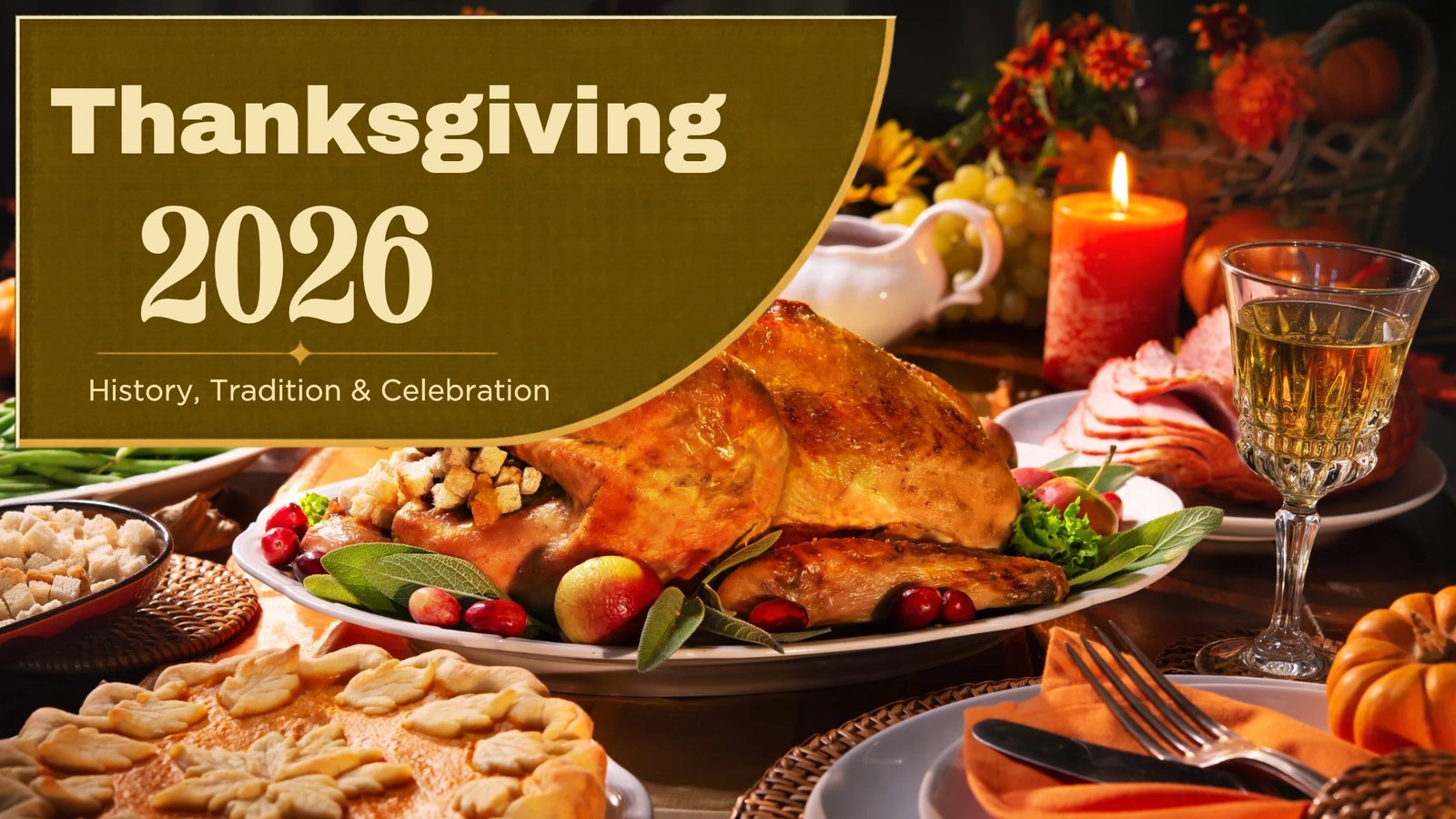
Thanksgiving 2026 falls on November 26. Discover its fascinating history, traditional food, Macy's Parade, American celebrations and the true meaning of gratitude.
Table of Contents
ToggleThanksgiving 2026: Date, History, Traditions, Traditional Food and How the World Celebrates Gratitude
Thanksgiving 2026 will be celebrated on Thursday, 26 November, across the United States. It is one of America's most cherished annual celebrations, bringing families and friends together for a day of gratitude, traditional food, reunions and reflection.
For millions of Americans, Thanksgiving means a beautifully prepared turkey dinner, pumpkin pie, family gatherings, spectacular parades, American football and the beginning of the Christmas shopping season. But behind these familiar traditions lies a fascinating history that stretches back more than four centuries.
What really happened at the famous 1621 harvest gathering? Was it truly the first Thanksgiving? Why does America celebrate it in November? What is the significance of the turkey, and how did a harvest celebration become one of the biggest cultural events in the country?
There is also a lesser-known side to this story: the perspective of the Wampanoag people, whose history is inseparable from the traditional Thanksgiving narrative.
In this comprehensive guide, let's explore the history, traditions, food, celebrations and evolving meaning of Thanksgiving 2026, and discover why a day dedicated to gratitude continues to inspire people around the world.
When Is Thanksgiving 2026?
Thanksgiving Day 2026 falls on Thursday, 26 November 2026, in the United States.
Unlike festivals that follow a fixed calendar date, American Thanksgiving is observed every year on the fourth Thursday of November.
| Important Information | Details |
|---|---|
| Festival | Thanksgiving Day |
| Date in 2026 | Thursday, 26 November 2026 |
| Country | United States of America |
| Occasion | National holiday and family celebration |
| Traditional Meal | Roast turkey, stuffing, potatoes, vegetables and pumpkin pie |
| Following Shopping Event | Black Friday, 27 November 2026 |
Thanksgiving is a federal public holiday in the United States. Government offices and many businesses close, while families travel across the country to spend time together.
What Is Thanksgiving and Why Is It Celebrated?
Thanksgiving is a traditional American holiday dedicated to expressing gratitude for the blessings, opportunities and experiences of life.
Historically associated with harvest celebrations and religious thanksgiving services, the modern festival has developed into a national occasion centred on family, friendship, food and generosity.
On Thanksgiving Day, millions of Americans gather around dining tables, share traditional meals, watch parades and sporting events, and reflect on the things they are grateful for.
For many families, it is one of the few occasions during the year when relatives living in different cities and states make a special effort to reunite.
Although Thanksgiving is primarily an American holiday, its central message of gratitude is universal. People everywhere can relate to the idea of appreciating family, health, friendship, food, nature and the opportunities life provides.
The Fascinating History of Thanksgiving: What Happened in 1621?
The story most commonly associated with Thanksgiving begins in 1621 in Plymouth, present-day Massachusetts.
In 1620, a group of English settlers travelled across the Atlantic aboard the Mayflower and established a settlement in the region. Their first winter was extremely difficult. Disease, hunger and harsh weather caused many deaths.
The settlers were unfamiliar with the local environment and struggled to produce enough food for survival.
The Wampanoag people, an Indigenous nation whose homeland included the region, had lived there for thousands of years. They possessed extensive knowledge of the land, agriculture, fishing and local resources.
Relations between the English settlers and the Wampanoag involved diplomacy, negotiations and political considerations. Their interactions were not simply a story of friendship, as popular illustrations sometimes suggest.
In 1621, after a successful harvest, the English settlers organised a three-day celebration. Wampanoag leader Ousamequin, also known as Massasoit, and approximately 90 Wampanoag men joined the gathering.
The event is widely remembered as the First Thanksgiving, although the people present did not necessarily describe it by that name.
The gathering was an important moment in the early relationship between the settlers and the Wampanoag, but it should not be confused with the modern national holiday. The relationship later deteriorated as colonial expansion, land disputes and conflict transformed the region.
The Other Side of the Thanksgiving Story: The Wampanoag Perspective
One important aspect of Thanksgiving history is often missing from the simplified story told in popular culture.
The Wampanoag people were not merely guests at a harvest dinner. They were an established nation with their own culture, political structures, agricultural practices and traditions of giving thanks long before the English settlers arrived.
Their decision to interact with the English settlers was shaped by diplomacy, strategic interests and the difficult circumstances of the time.
In the decades that followed, colonial expansion placed increasing pressure on Indigenous lands and communities. Relationships deteriorated, eventually leading to devastating conflict.
For this reason, some Indigenous people view Thanksgiving through a different historical lens.
Since 1970, Indigenous activists and supporters have gathered in Plymouth, Massachusetts, on Thanksgiving Day for a National Day of Mourning. It honours Indigenous ancestors, remembers historical injustice and raises awareness of continuing Indigenous concerns.
Understanding this perspective does not require dismissing the modern celebration of gratitude. Instead, it allows us to appreciate a more complete and honest history.
For a deeper understanding, explore the Smithsonian National Museum of the American Indian's educational resource on the history of the First Thanksgiving and Wampanoag perspectives.
How Did Thanksgiving Become an Official American National Holiday?
The 1621 harvest gathering was not the beginning of an annual national holiday. Thanksgiving developed gradually over several generations.
George Washington and the 1789 Proclamation
On 3 October 1789, President George Washington issued a proclamation recommending a national day of thanksgiving and prayer.
He designated Thursday, 26 November 1789, as a day for Americans to express gratitude for the successful establishment of the new government and the blessings enjoyed by the nation.
This was the first Thanksgiving celebrated under the new United States Constitution.
Abraham Lincoln and the National Celebration of 1863
Thanksgiving became a more firmly established national tradition during the presidency of Abraham Lincoln.
In the middle of the American Civil War, journalist and magazine editor Sarah Josepha Hale campaigned for a national Thanksgiving celebration. Her efforts helped persuade Lincoln to issue a proclamation in October 1863.
Lincoln designated the last Thursday of November as a day of thanksgiving and praise.
His decision gave the celebration a deeper national meaning during a period of immense suffering and division.
Why Is Thanksgiving Celebrated on the Fourth Thursday of November?
For many years, Thanksgiving was traditionally observed on the last Thursday of November.
In 1939, President Franklin D. Roosevelt moved the celebration earlier to extend the Christmas shopping season and support economic activity during the Great Depression.
The change created confusion because some states followed the new date while others continued celebrating on the traditional Thursday.
To end the disagreement, Congress passed legislation in 1941 establishing Thanksgiving as the fourth Thursday of November. This remains the rule today.
The US National Archives preserves the historical records and legislative documents explaining how Thanksgiving became an official national holiday.
Thanksgiving Traditions: How Americans Celebrate the Day
Thanksgiving is celebrated differently by individual families, but several traditions have become closely associated with the occasion.
1. Family Reunions and Thanksgiving Dinner
For many Americans, the most important part of Thanksgiving is spending time with family.
People travel long distances to return home, meet relatives and share a meal. Grandparents, parents, children and extended family members often gather around one dining table.
Some families follow traditions passed down through generations, while others create their own celebrations with friends and neighbours.
2. The Macy's Thanksgiving Day Parade
One of the most spectacular Thanksgiving traditions is the famous Macy's Thanksgiving Day Parade in New York City.
The parade began in 1924 and has grown into a major annual entertainment event.
It features enormous character balloons, colourful floats, marching bands, dance performances, celebrity appearances and musical acts.
Some of the most recognisable characters from popular entertainment have appeared as giant balloons in the parade over the decades.
For millions of viewers, watching the parade on television has become an essential part of Thanksgiving morning.
3. American Football on Thanksgiving
American football is another major part of the holiday experience.
The tradition of playing football on Thanksgiving dates back to the nineteenth century. Professional football games have become an important part of the modern celebration.
Many families watch games together after their Thanksgiving meal, making sports and entertainment part of the holiday atmosphere.
4. Thanksgiving Turkey Pardon
One of the most unusual American presidential traditions involves the Thanksgiving turkey pardon.
Each year, a turkey is ceremonially pardoned by the President of the United States and spared from becoming part of the holiday dinner.
The tradition has developed into a light-hearted annual event that attracts considerable media attention.
5. Giving Back to the Community
Thanksgiving is also associated with generosity and charitable activities.
Many people volunteer at community kitchens, donate food, distribute essential supplies and support organisations working with disadvantaged families.
Food banks and charitable groups often organise special campaigns to ensure that people facing financial difficulties can enjoy a meal during the holiday season.
This spirit of sharing reflects one of Thanksgiving's most meaningful values: gratitude should inspire generosity.
What Is a Traditional Thanksgiving Dinner?
Food is at the heart of Thanksgiving celebrations. The traditional dinner is often an elaborate meal prepared over several hours, with the turkey serving as its centrepiece.
However, the food served at the 1621 harvest gathering was probably very different from the modern Thanksgiving menu. Historical records do not provide a complete menu of that original feast.
Today's traditional dinner has developed through centuries of changing American food culture.
1. Roast Turkey
Turkey is perhaps the most recognisable symbol of Thanksgiving.
It is commonly roasted and served as the centrepiece of the family dinner. Some households prefer deep-fried turkey, smoked turkey or alternative preparations.
The bird is often seasoned with herbs, spices and butter to create a flavourful meal.
2. Stuffing or Dressing
Stuffing is a popular Thanksgiving side dish made using bread, herbs, vegetables and seasonings.
Recipes vary by region and family tradition. Some include sausage, celery, onions, nuts or dried fruits.
3. Mashed Potatoes and Gravy
Creamy mashed potatoes served with gravy are among the most familiar Thanksgiving accompaniments.
The gravy is often prepared using turkey drippings and other ingredients, creating a rich sauce that complements the main meal.
4. Cranberry Sauce
Cranberry sauce adds a sweet and slightly tangy flavour to the Thanksgiving table.
It is commonly served alongside turkey and helps balance the richness of the meal.
5. Sweet Potatoes
Sweet potatoes are prepared in several ways, including baking, roasting and mashing. Some American families serve sweet potato casserole with a sweet topping.
6. Pumpkin Pie
Pumpkin pie is one of the most iconic Thanksgiving desserts.
Prepared with pumpkin, spices and a pastry crust, it is traditionally served with whipped cream.
Other popular desserts include apple pie, pecan pie and sweet potato pie.
Thanksgiving Food: What Did People Eat in 1621?
One of the most interesting questions about Thanksgiving concerns the food served at the famous 1621 harvest gathering.
Contrary to many popular paintings and school illustrations, there is no complete menu preserved from the event.
Historical accounts suggest that the gathering included wild fowl and venison. Food available in the region would also have included fish, shellfish, corn, squash, beans and seasonal produce.
It is important to remember that the Wampanoag already had sophisticated food traditions based on farming, fishing, hunting and gathering.
Modern Thanksgiving dishes such as pumpkin pie, mashed potatoes and cranberry sauce developed as part of later American culinary traditions and should not automatically be assumed to have been served in 1621.
This difference between historical food and modern tradition makes Thanksgiving an interesting example of how festivals evolve over time.
Thanksgiving Around the World: Is It Celebrated Outside America?
Although American Thanksgiving is the most internationally recognised version, harvest festivals and days of gratitude exist in many parts of the world.
Canada
Canada celebrates Thanksgiving on the second Monday of October. It is associated with harvest celebrations, family meals and gratitude for the year's blessings.
Canadian Thanksgiving is separate from the American holiday and follows a different historical and calendar tradition.
Germany
Germany observes Erntedankfest, a harvest thanksgiving celebration generally held in autumn. Churches and communities organise services, decorations and events to express gratitude for the harvest.
Japan
Japan observes Labour Thanksgiving Day, known as Kinro Kansha no Hi, on 23 November. The modern national holiday is associated with labour, production and appreciation for the contributions of workers.
South Korea
Chuseok is one of South Korea's most important traditional holidays. Families gather, honour ancestors and share traditional food during the autumn harvest season.
India
India has many regional harvest festivals that celebrate nature, agriculture and gratitude.
- Pongal: A major harvest festival celebrated in Tamil Nadu.
- Baisakhi: Celebrated particularly in Punjab and parts of northern India.
- Onam: Kerala's famous harvest and cultural festival.
- Makar Sankranti: A harvest-associated festival celebrated in different forms across India.
- Bihu: Assam's traditional festival marking agricultural seasons and community celebrations.
Although these festivals have distinct religious, regional and cultural meanings, they share an important idea: gratitude for nature, food, family and the work that sustains life.
Thanksgiving and Black Friday: How Did They Become Connected?
Thanksgiving and Black Friday are now closely connected in American culture.
Thanksgiving is celebrated on Thursday, 26 November 2026, while Black Friday follows on Friday, 27 November.
Historically, Black Friday marked the beginning of the Christmas shopping season. Retailers introduced special promotions to attract customers after Thanksgiving.
Over time, the event expanded into one of the biggest shopping periods in the world.
Today, many retailers start their promotional campaigns well before Thanksgiving and continue them through the weekend and Cyber Monday.
Read our detailed guide to Black Friday 2026 for its history, shopping trends, online deals and tips to identify genuine discounts.
Thanksgiving Travel: Why Is It One of America's Busiest Travel Periods?
Thanksgiving is one of the busiest travel periods in the United States because millions of people travel to reunite with family and friends.
Airports, highways, railway stations and bus terminals experience heavy passenger traffic around the holiday.
Many people travel several hundred or even thousands of kilometres to reach their hometowns.
Popular travel patterns include:
- Flying from major cities to family homes in smaller towns.
- Long-distance road trips across neighbouring states.
- Visiting relatives and friends for extended holiday weekends.
- Taking short leisure trips before the Christmas season.
Travellers planning a Thanksgiving journey should book early, monitor weather conditions, allow additional travel time and check airline or transport schedules before departure.
How Can People in India Celebrate Thanksgiving?
Thanksgiving is not a traditional Indian public holiday, but its message of gratitude can be appreciated by anyone.
In fact, Indian culture already has many traditions centred on gratitude, family relationships, respect for nature and sharing food.
If you are in India and want to experience the spirit of Thanksgiving, you can organise a simple celebration with family and friends.
Ideas for a Thanksgiving Celebration at Home
- Organise a special family dinner and invite close friends.
- Prepare a meal featuring traditional Indian dishes alongside a few Thanksgiving-inspired recipes.
- Ask every family member to share three things they are grateful for.
- Donate food, clothes or essential items to people who need support.
- Visit an old-age home or community organisation and spend time helping others.
- Prepare a gratitude message for friends and relatives.
- Take time to appreciate the people who have supported you throughout the year.
You do not need a turkey or an elaborate dinner to celebrate Thanksgiving. The most important ingredient is gratitude.
10 Interesting Facts About Thanksgiving
Here are ten interesting facts that make Thanksgiving even more fascinating.
- The first famous harvest gathering: The 1621 Plymouth harvest celebration lasted three days.
- Wampanoag participation: Approximately 90 Wampanoag men joined the English settlers at the 1621 gathering.
- George Washington's proclamation: He designated 26 November 1789 as a national day of thanksgiving.
- Abraham Lincoln's contribution: His 1863 proclamation helped establish Thanksgiving as a national annual observance.
- Sarah Josepha Hale: Her long campaign played an important role in promoting a national Thanksgiving holiday.
- Thanksgiving date controversy: President Franklin D. Roosevelt's 1939 date change created confusion across several states.
- Modern calendar rule: Congress established the fourth Thursday of November as Thanksgiving in 1941.
- Macy's Parade: The famous New York parade began in 1924.
- Turkey tradition: Turkey became the best-known centrepiece of the modern Thanksgiving meal, although its presence at the 1621 gathering is not definitively established.
- Black Friday connection: The day after Thanksgiving became associated with the start of the American Christmas shopping season.
The True Meaning of Thanksgiving: More Than Just a Holiday
In today's fast-moving world, people often spend much of their time chasing professional success, financial security, social recognition and personal ambitions.
Thanksgiving offers an opportunity to pause and reflect on what really matters.
It reminds us that happiness is not always measured by material possessions. Family relationships, good health, friendship, kindness and the ability to help others are equally important.
It also encourages us to recognise the efforts of people who contribute to our lives, including parents, teachers, colleagues, friends and community members.
Perhaps the most beautiful lesson of Thanksgiving is that gratitude should not be limited to one day of the year. It is an attitude that can make everyday life more meaningful.
Frequently Asked Questions About Thanksgiving 2026
1. When is Thanksgiving 2026 in the USA?
Thanksgiving 2026 will be celebrated on Thursday, 26 November 2026, in the United States.
2. Why is Thanksgiving celebrated on the fourth Thursday of November?
The fourth-Thursday rule was established by Congress in 1941 after earlier disagreements about the holiday's date. It provides a consistent annual date pattern.
3. What is the story behind the first Thanksgiving?
The famous 1621 harvest celebration took place in Plymouth, Massachusetts, where English settlers and members of the Wampanoag nation gathered after a successful harvest. The event later became closely associated with the modern Thanksgiving story.
4. Who started the American Thanksgiving holiday?
George Washington proclaimed a national day of thanksgiving in 1789. Abraham Lincoln's 1863 proclamation helped establish the annual national tradition.
5. Why do Americans eat turkey on Thanksgiving?
Turkey became a popular centrepiece of the traditional Thanksgiving meal over time. Its association with the holiday grew through changing American food traditions and cultural practices.
6. What is the traditional Thanksgiving menu?
A traditional menu often includes roast turkey, stuffing, mashed potatoes, gravy, cranberry sauce, sweet potatoes and pumpkin pie.
7. What is the Macy's Thanksgiving Day Parade?
It is a famous annual parade held in New York City featuring giant character balloons, floats, marching bands, performances and celebrity appearances.
8. Is Thanksgiving celebrated in India?
Thanksgiving is not an official Indian festival or public holiday. However, individuals and communities may celebrate it privately to express gratitude and enjoy a meal with family and friends.
9. Is Canadian Thanksgiving the same as American Thanksgiving?
No. Canada celebrates Thanksgiving on the second Monday of October, while the United States celebrates it on the fourth Thursday of November.
10. What is the connection between Thanksgiving and Black Friday?
Black Friday takes place on the day after American Thanksgiving and traditionally marks the beginning of the Christmas shopping season.
Conclusion: A Celebration of Gratitude, Family and Togetherness
Thanksgiving 2026, celebrated on 26 November, is much more than a day of traditional food, parades and family gatherings. It represents a long and complex history that includes harvest celebrations, national traditions, Indigenous perspectives and the evolution of American culture.
From the historic 1621 gathering in Plymouth to George Washington's proclamation and Abraham Lincoln's national observance, Thanksgiving has developed into one of America's most meaningful annual celebrations.
Its modern traditions may look different from those of earlier generations, but the central message remains powerful: appreciate what you have, value the people around you and share your blessings with others.
Whether you celebrate with a traditional turkey dinner in America or a simple family meal in India, the spirit of gratitude has no borders.
Happy Thanksgiving 2026! May your day be filled with gratitude, happiness, peace and togetherness.
Written by: Arvind Kumar Sinha
Explore With Arvind
