
Table of Contents
ToggleDev Deepawali 2026 in Varanasi: Date, History, Ganga Aarti, Deep Daan and Travel Guide
Dev Deepawali 2026 in Varanasi falls on November 24. Explore its history, Ganga Aarti, illuminated ghats, Deep Daan, rituals and travel guide.
Dev Deepawali 2026 in Varanasi: Date, History, Ganga Aarti, Deep Daan and Travel Guide
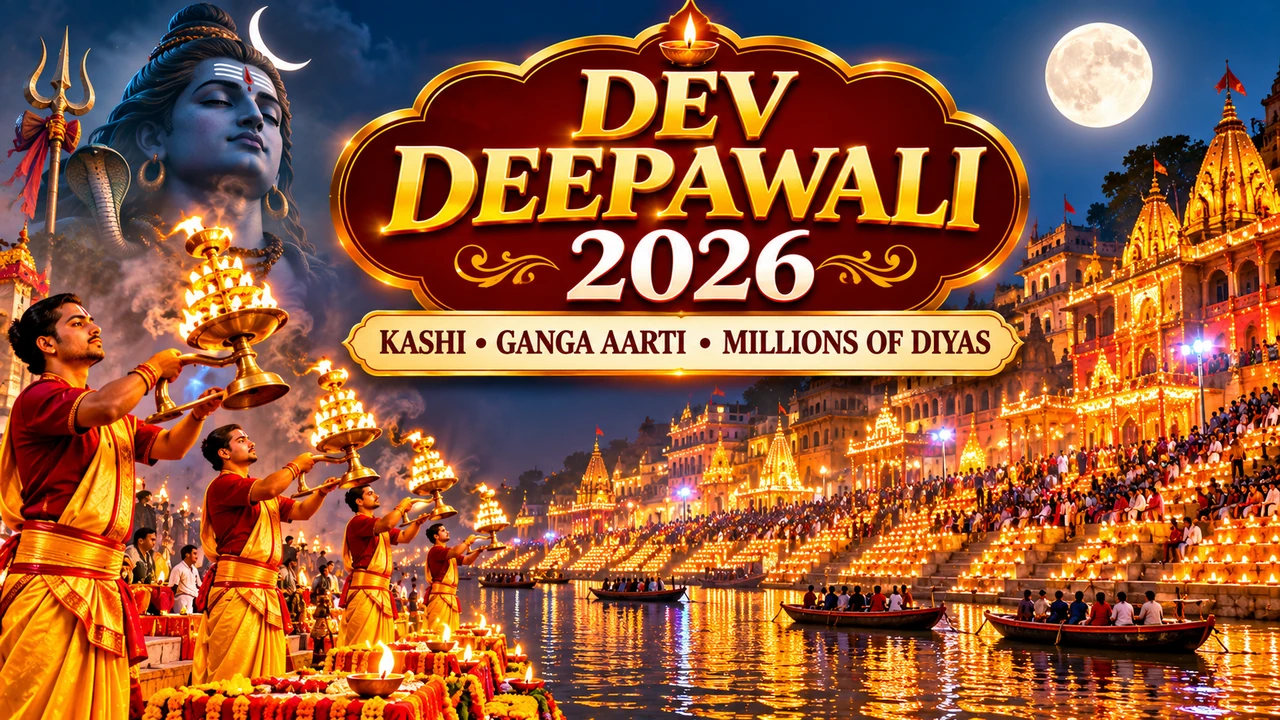
Dev Deepawali, popularly known as the Diwali of the Gods, is one of the most magnificent spiritual celebrations in India. Every year, on Kartik Purnima, the sacred city of Varanasi transforms into a breathtaking spectacle of light. Thousands of devotees and visitors gather along the banks of the Ganga as the historic ghats, temples and riverfront are illuminated with countless earthen lamps. The festival celebrates the victory of Lord Shiva over the demon Tripurasura and symbolises the triumph of good over evil. Dev Deepawali 2026 will be celebrated on Tuesday, 24 November, in Kashi.
Dev Deepawali 2026: Date and Shubh Muhurat
Date: Tuesday, 24 November 2026
Location: Varanasi (Kashi), Uttar Pradesh
Hindu Tithi: Kartik Shukla Purnima
Purnima Tithi Begins: 11:42 PM, 23 November
Purnima Tithi Ends: 8:23 PM, 24 November
Sunset in Varanasi: 5:08 PM
Pradosh Deep Daan Muhurat: 5:08 PM to 7:47 PM
Dev Deepawali is celebrated on Kartik Purnima. The traditional Deep Daan takes place during the evening Pradosh period, when lamps are offered along the riverfront and at temples.
The timings above are calculated for Varanasi. People observing the festival in other cities should follow their local Panchang for sunrise, sunset and ritual timings.
What Is Dev Deepawali?
Dev Deepawali literally means the Diwali of the Gods. It is a sacred festival observed on the full moon day of Kartik, approximately fifteen days after the widely celebrated Diwali festival.
While Diwali is associated with several traditions, including the return of Lord Rama to Ayodhya and the worship of Goddess Lakshmi, Dev Deepawali in Varanasi is particularly associated with Lord Shiva's victory over Tripurasura.
According to religious belief, the gods celebrate this divine victory by descending to the sacred city of Kashi and lighting lamps along the banks of the Ganga.
The festival is marked by Deep Daan, holy bathing, prayers, devotional music and the illumination of Varanasi's historic riverfront.
Why Is Dev Deepawali Celebrated? The Story of Tripurasura Vadh
The religious significance of Dev Deepawali is connected with the story of Tripurasura and Lord Shiva, who is worshipped as Tripurantaka or Tripurari after destroying the three cities of the demon.
The rise of Tripurasura
According to traditional Hindu accounts, three powerful asura brothers obtained a divine boon that enabled them to establish three extraordinary cities, commonly known as Tripura. These cities were made of gold, silver and iron and could move through the heavens, atmosphere and earth.
The three cities became associated with the brothers' growing power and arrogance. Their actions disturbed the balance of the universe, and the gods became concerned about the threat they posed.
The gods seek Lord Shiva's help
Unable to overcome the growing power of Tripurasura, the gods approached Lord Shiva and prayed for his intervention.
Lord Shiva agreed to destroy the three cities and restore cosmic balance. According to the traditional narrative, the destruction could be accomplished only when the three cities aligned in a particular celestial position.
Lord Shiva destroys Tripura
When the three cities came into alignment, Lord Shiva released his divine arrow and destroyed Tripura in a single act. This victory is remembered as Tripurasura Vadh or Tripura Samhara.
Lord Shiva came to be revered as Tripurantaka, the destroyer of Tripura. The event symbolises the victory of righteousness over arrogance, ignorance and destructive power.
Why do the gods celebrate in Kashi?
Popular religious belief holds that the gods celebrate Lord Shiva's victory on Kartik Purnima by lighting lamps along the sacred Ganga in Kashi.
This divine celebration is remembered through Dev Deepawali, when the ghats of Varanasi shine with countless lamps and devotees offer prayers to Lord Shiva and Mother Ganga.
Why Is Varanasi the Centre of Dev Deepawali Celebrations?
Varanasi, also known as Kashi and Banaras, is one of the most sacred cities in Hindu tradition. It is closely associated with Lord Shiva and is believed by devotees to be a place of extraordinary spiritual significance.
The city stands along the western bank of the Ganga, with a remarkable series of historic ghats, temples, narrow lanes and traditional neighbourhoods.
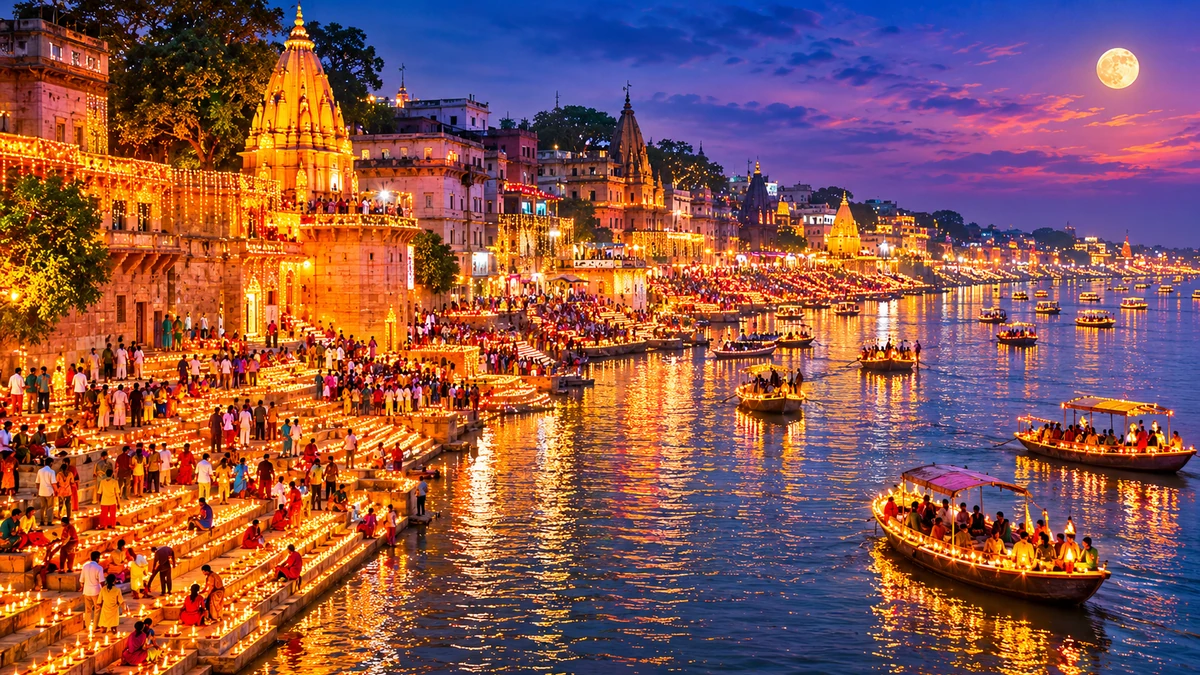
Dev Deepawali brings these elements together in a spectacular celebration. The riverfront becomes a vast illuminated landscape, with rows of lamps decorating the steps, temples and buildings overlooking the river.
The combination of religious ceremonies, traditional music, the sacred river and the architecture of Kashi makes the celebration unique.
Dev Deepawali 2026: What Happens on the Festival Day?
The festival is observed through several religious and cultural activities throughout the day.
1. Kartik Snan – Holy Bath in the Ganga
Many devotees take a holy dip in the Ganga on Kartik Purnima. The early morning hours are especially important for religious bathing and prayers.
Devotees believe that bathing in the sacred river on this day brings spiritual merit and helps purify the mind and soul.
2. Worship of Lord Shiva
Devotees visit Shiva temples and offer prayers, flowers, water and other customary offerings. Special worship is performed in Kashi because of the city's close association with Lord Shiva.
3. Deep Daan – Offering of Earthen Lamps
Deep Daan is the most recognisable ritual of Dev Deepawali. Earthen lamps are lit and offered at the ghats, temples and riverfront.
The lamps represent light, devotion, hope and the removal of darkness. The sight of thousands of diyas glowing together creates the festival's unforgettable atmosphere.
4. Ganga Aarti
The evening Ganga Aarti is one of the most important attractions for devotees and visitors. Priests perform elaborate worship of Mother Ganga with lamps, incense, bells and devotional chants.
The riverfront becomes filled with the sound of conch shells, bells, prayers and devotional music.
5. Cultural Programmes
Dev Deepawali is also associated with cultural celebrations. Classical music, traditional dance, devotional performances and folk art programmes reflect the cultural heritage of Kashi.
Most Famous Ghats to Experience Dev Deepawali in Varanasi
Varanasi has a long and distinctive riverfront. Many of its ghats become part of the Dev Deepawali celebration. Visitors should remember that the entire riverfront cannot be explored comfortably in a short time, especially during large gatherings.
Dashashwamedh Ghat
Dashashwamedh Ghat is among the most famous ghats of Varanasi. It is widely known for its evening Ganga Aarti, which attracts devotees and visitors throughout the year.
During Dev Deepawali, the surrounding riverfront becomes particularly vibrant with lamps, prayers and festive activity.
Assi Ghat
Located towards the southern end of the main ghat stretch, Assi Ghat is an important spiritual and cultural centre. It is known for morning religious activities, Ganga worship and its lively atmosphere.
It is also a popular location for visitors who want to experience the riverfront beyond the busiest central ghats.
Manikarnika Ghat
Manikarnika Ghat is one of the most significant cremation ghats in Varanasi. It is closely connected with Hindu beliefs about death, liberation and the cycle of life.
Visitors should approach this sacred space with sensitivity and respect. Photography of funeral rituals or grieving families should be avoided.
Harishchandra Ghat
Harishchandra Ghat is another important cremation ghat. It has a strong place in the religious and cultural landscape of Kashi and should be visited respectfully.
Raj Ghat and the Northern Riverfront
The northern stretch of the riverfront offers a different perspective on the historic ghats and the illuminated city. Visitors may explore the area according to local access arrangements and crowd conditions.
Other Important Ghats
Scindia Ghat, Kedar Ghat, Chet Singh Ghat, Panchganga Ghat and several other riverfront locations are also part of the wider cultural landscape of Varanasi.
Lighting arrangements and public access can vary each year. Visitors should follow official local arrangements rather than assuming that every ghat has identical facilities or access.
Dev Deepawali from a Boat: A Memorable View of Kashi
One of the most memorable ways to experience Dev Deepawali is from a boat on the Ganga.
From the river, visitors can see the illuminated ghats stretching along the riverfront. The lamps, temples, historic buildings and reflections on the water create a panoramic view that is difficult to experience from a single ghat.
However, boat rides become extremely popular on the festival evening. Visitors should use authorised operators, confirm prices and safety arrangements before boarding, and follow instructions issued by the authorities.
Life jackets and safe boarding arrangements are important. Avoid overcrowded boats and do not stand or lean dangerously while taking photographs.
How to Reach Varanasi for Dev Deepawali 2026
Varanasi is well connected by air, rail and road. Visitors travelling for Dev Deepawali should plan their journey early because the festival attracts large numbers of pilgrims and tourists.
By Air
Lal Bahadur Shastri International Airport serves Varanasi. It has air connections with several major Indian cities. From the airport, visitors can use authorised taxis and other local transport to reach the city.
By Train
Varanasi is served by major railway stations, including Varanasi Junction and Banaras railway station. Travellers should check their ticket details carefully because different trains use different stations.
By Road
Varanasi is connected to nearby cities and regional highways. Road travel is possible from Lucknow, Prayagraj, Gorakhpur, Patna and other locations, but traffic restrictions may affect access to the old city during major festival celebrations.
Travel Tips for Dev Deepawali 2026
If you are planning to visit Kashi for Dev Deepawali, the following practical suggestions can help make your experience more comfortable.
- Book accommodation early: Hotels and guesthouses near the ghats may become difficult to find as the festival approaches.
- Arrive before festival day: Reaching Varanasi a day or two early can help you explore the city without rushing.
- Plan your ghat visit: Choose a viewing area in advance and allow plenty of time to reach it.
- Check traffic restrictions: Local authorities may introduce special traffic arrangements, vehicle restrictions and pedestrian routes.
- Use authorised boat operators: Confirm safety equipment, passenger capacity and pricing before boarding.
- Carry essential items: Keep drinking water, necessary medicines, a charged phone and some cash with you.
- Wear comfortable footwear: The steps and lanes around the ghats can be crowded and uneven.
- Respect religious spaces: Follow instructions at temples and ghats, particularly at cremation locations.
- Protect your belongings: Keep valuables secure in crowded areas.
- Follow official announcements: Check the latest local administration advisories for access, safety and transport arrangements.
Best Time to Witness Dev Deepawali
The most visually striking period is around sunset and the evening Deep Daan. In Varanasi, sunset on 24 November 2026 is approximately 5:08 PM.
The published Pradosh Deepawali window runs from 5:08 PM to 7:47 PM. Visitors should reach their chosen location well before sunset because popular viewing areas can become crowded.
For photography, the transition from daylight to twilight offers an opportunity to capture the lamps as they begin to glow against the evening sky. The later evening provides beautiful reflections of the lights on the river.
Dev Deepawali and Kartik Purnima: What Is the Difference?
Dev Deepawali and Kartik Purnima are closely connected, but they are not exactly interchangeable terms.
Kartik Purnima is the full moon day of the Hindu month of Kartik and is observed across India through holy bathing, worship, charity and other religious practices.
Dev Deepawali is the special celebration associated particularly with Varanasi on Kartik Purnima. It is marked by Deep Daan and the spectacular illumination of the city's riverfront.
Thus, Kartik Purnima is the wider religious observance, while Dev Deepawali is the celebrated festival of lights in Kashi associated with that sacred date.
Environmental Responsibility During Dev Deepawali
The beauty of Dev Deepawali is closely connected with the sacred Ganga and its riverfront. Preserving the cleanliness of the river and ghats is therefore an important responsibility for everyone.
- Use earthen lamps and biodegradable materials wherever possible.
- Do not throw plastic, packaging or other waste into the Ganga.
- Dispose of used lamps and offerings responsibly.
- Avoid using chemical colours or materials that can pollute the river.
- Do not obstruct public access or emergency routes while taking photographs.
- Respect the riverfront, local residents and religious practices.
- Participate in cleanliness initiatives where available.
A festival celebrating light and devotion should also inspire us to protect the natural environment that gives Kashi its sacred identity.
Dev Deepawali 2026: Frequently Asked Questions
1. When is Dev Deepawali in Varanasi in 2026?
Dev Deepawali will be celebrated on Tuesday, 24 November 2026, on Kartik Purnima.
2. What is the Dev Deepawali muhurat in Varanasi?
The published Pradosh Deep Daan period is 5:08 PM to 7:47 PM on 24 November 2026.
3. Why is Dev Deepawali celebrated?
It celebrates the traditional belief that the gods descend to Kashi to celebrate Lord Shiva's victory over Tripurasura.
4. What is Tripurasura Vadh?
Tripurasura Vadh refers to Lord Shiva's destruction of the three cities associated with the demon Tripurasura. Lord Shiva is therefore also worshipped as Tripurantaka or Tripurari.
5. Why are millions of lamps lit on Dev Deepawali?
Deep Daan is a central ritual of the festival. Lamps are offered to the sacred Ganga and illuminated along the ghats as an expression of devotion, gratitude and celebration.
6. Which ghat is best for Dev Deepawali in Varanasi?
Dashashwamedh Ghat is famous for Ganga Aarti, while Assi Ghat and other riverfront locations offer different viewing experiences. The best location depends on crowd conditions, access arrangements and personal preference.
7. Can visitors watch Dev Deepawali from a boat?
Yes. Boat rides are a popular way to view the illuminated ghats from the river. Visitors should use authorised operators, confirm safety arrangements and follow local instructions.
8. Is Dev Deepawali the same as Diwali?
No. Diwali is observed on Kartik Amavasya, while Dev Deepawali is celebrated on Kartik Purnima, approximately fifteen days later.
9. What is the difference between Kartik Purnima and Dev Deepawali?
Kartik Purnima is the full moon observance celebrated across India. Dev Deepawali is the special festival of lights associated particularly with Varanasi on that day.
10. Is it necessary to take a holy dip in the Ganga?
No. Devotees may participate through prayers, Deep Daan and other forms of worship. Any river bathing should be undertaken only at safe, designated locations and according to local instructions.
Conclusion: When Kashi Becomes a City of Light
Dev Deepawali is one of the most extraordinary celebrations of India's spiritual and cultural heritage. On Kartik Purnima, Varanasi becomes a magnificent landscape of glowing lamps, sacred chants, devotional music and timeless traditions.
The festival's deeper message is not limited to its visual splendour. The story of Lord Shiva and Tripurasura reminds us that arrogance and ignorance must give way to wisdom and righteousness.
As thousands of lamps illuminate the banks of the Ganga, Dev Deepawali offers a powerful reminder of faith, unity, gratitude and the eternal victory of light over darkness.
Whether you witness the celebration from a ghat, a boat or your home through devotional prayers, the spirit of Kashi's Dev Deepawali is an invitation to bring light into our own lives.
जय माँ गंगे!
काशी की देव दीपावली की हार्दिक शुभकामनाएँ।
References and Further Reading
- Incredible India – Uttar Pradesh Tourism: Dev Deepawali and the cultural heritage of Kashi.
- Drik Panchang – Dev Deepawali 2026 date, Pradosh muhurat and Kartik Purnima timings for Varanasi.
- Varanasi Panchang – Local sunrise, sunset and Purnima details.
- Traditional Hindu accounts of Tripurasura Vadh and Lord Shiva as Tripurantaka.
Editorial note: The festival date and Pradosh Deep Daan timings are based on the Varanasi-specific Panchang reference. Actual event schedules, ghat access, boat services, traffic restrictions and cultural programmes may be announced separately by local authorities. Visitors should check current official advisories before travelling.
Author: Arvind Kumar Sinha
Website: Explore With Arvind
