
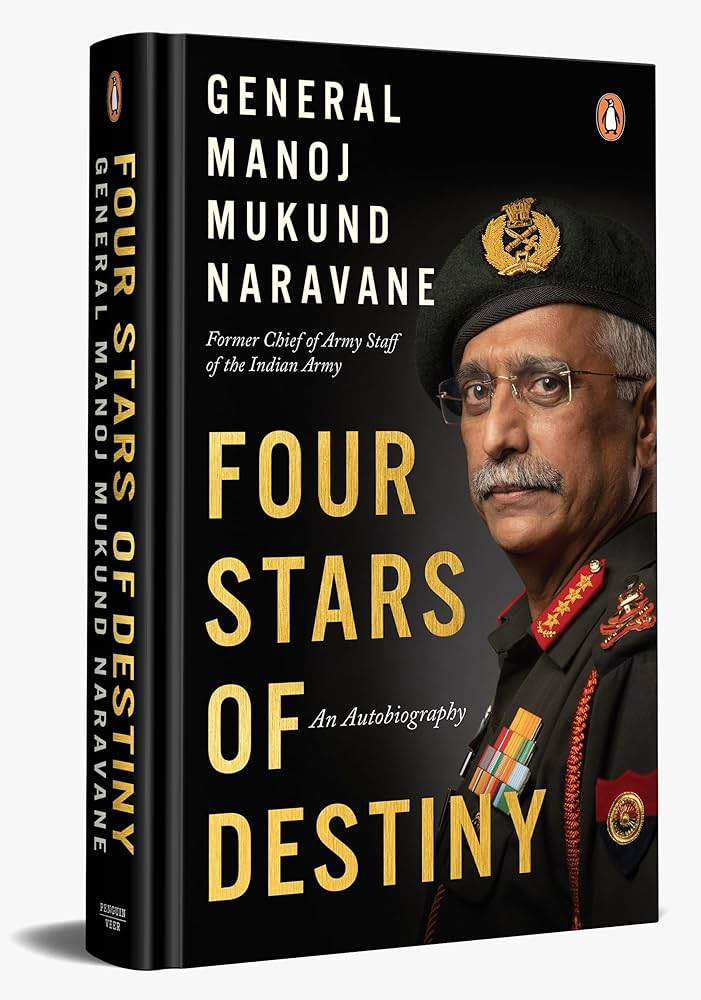
General Manoj Mukund (MM) Naravane served as the Chief of the Army Staff (COAS) of the Indian Army from December 31, 2019, to April 30, 2022. He was the army chief during the significant 2020 India-China border standoff in eastern Ladakh, including the deadly Galwan Valley clash on June 15-16, 2020, where 20 Indian soldiers were killed. The main controversy surrounding him in recent times (particularly in 2025-2026) revolves around his unpublished memoir titled Four Stars of Destiny.
This book has become a major political flashpoint, especially after excerpts were published or leaked (notably in The Caravan magazine), leading to debates in Parliament.
Key Elements of the Controversy
Delayed Publication and Government Clearance —Books by retired senior military officers in India typically require clearance from the Ministry of Defence (MoD) to ensure no classified or sensitive information is disclosed. Naravane’s memoir was scheduled for release around April 2024 (published by Penguin Random House), but it has remained stuck in review for over a year (as of February 2026). General Naravane himself has commented that the book is “maturing like aged wine” and that the responsibility for clearance lies with the publisher and MoD.Content Related to Sensitive Issues —The excerpts reportedly discuss:
The 2020 Ladakh standoff, including the Galwan clash and a tense night on August 31, 2020, when Chinese tanks advanced toward Rechin La (a strategic pass). Naravane describes seeking clear orders from political leadership (including Defence Minister Rajnath Singh) but receiving vague responses like “do whatever you deem appropriate.” He felt handed a “hot potato” in a high-stress situation. Protocol restrictions on opening fire without top-level approval.
The Agnipath scheme (short-term recruitment for soldiers), where the final government version reportedly differed from the Army’s original proposal. These details have been interpreted by some as critiquing the government’s handling of the border crisis and military policies.
Other Potential Controversies
During his tenure, there were discussions around the handling of the Galwan incident and territorial changes (though Naravane publicly stated no Indian territory was lost post-clash). There was no major “supersession” controversy (being overlooked for a higher post) associated with him in available records—his tenure ended normally, and General Manoj Pande succeeded him. Overall, Naravane is respected for his service, but the memoir has politicized events from his time as COAS, turning it into a battle over narratives on national security, the China border issue, and civil-military relations. The book remains unpublished as of February
Details of the Galwan Valley Clash
The Galwan Valley Clash (also known as the Galwan Valley incident or Battle of Galwan) was a major violent confrontation between Indian and Chinese troops on the night of June 15-16, 2020, during the broader 2020–2021 China–India border standoff along the Line of Actual Control (LAC) in eastern Ladakh. This clash marked the deadliest military encounter between the two nuclear-armed neighbors since 1975 and escalated tensions significantly. It occurred in the Galwan River Valley, a remote, high-altitude area (around 14,000 feet) near the disputed border, where the terrain is rugged, with fast-flowing rivers, steep ridges, and extreme cold.
Background and Causes Tensions along the LAC had been building since early May 2020, triggered by mutual accusations of incursions and aggressive patrolling.
Key factors included: India’s construction of roads and infrastructure (including a new road in the Galwan Valley leading toward a high-altitude airbase), which China viewed as provocative and a threat to its claims (including over Aksai Chin). China’s objections to these developments and its own rapid buildup of troops and infrastructure along the border.
A series of earlier face-offs starting May 5, 2020, near Pangong Tso and other points, involving physical scuffles but no fatalities initially. Agreements for disengagement reached in commander-level talks (notably on June 6, 2020), but implementation faltered. The immediate trigger was a patrol on June 15, 2020, where Indian troops, led by Colonel B. Santosh Babu of the 16th Bihar Regiment, went to verify Chinese compliance with disengagement. Chinese forces were accused of violating the consensus by attempting to unilaterally change the status quo, including setting up structures (tents and observation posts) on the Indian side.
What Happened During the Clash
The confrontation erupted into a brutal hand-to-hand melee (no firearms were used, per bilateral agreements to avoid escalation at the LAC). Soldiers fought with clubs, sticks, iron rods, stones, and improvised weapons (some reports mention nail-studded rods used by Chinese troops). The fight occurred in pitch darkness, sub-zero temperatures, and treacherous terrain near the fast-flowing Galwan River. Many casualties resulted from blunt-force trauma, falls from ridges, drowning in the river (especially when soldiers lost footing or were pushed in), and hypothermia/exposure.Indian troops reportedly pushed back the Chinese advance, but at a heavy cost.
Casualties
India: Officially 20 soldiers killed (initially reported as 3, later updated as 17 more succumbed to injuries). This included Colonel B. Santosh Babu (posthumously awarded Maha Vir Chakra) and others. Several were seriously injured.
China: Officially admitted 4 soldiers killed (in February 2021, naming them for the first time). Independent estimates (including from Russian agency TASS and other reports) suggested higher Chinese losses, ranging from 35–45, with some claims of troops drowning in the river during retreat.Some Indian soldiers were briefly captured and later released.
Aftermath and Official Accounts
India accused China of provoking the clash and departing from agreed disengagement. China blamed India for crossing the LAC and initiating violence. The Indian Army emphasized that its troops defended their positions valiantly, with no territory lost post-clash (though broader standoff led to buffer zones and de-escalation in some areas). The incident led to widespread mourning in India, calls for boycotts of Chinese goods, and heightened military deployments along the LAC. It fueled diplomatic and military talks, with partial disengagements over the following months/years, culminating in a patrolling agreement in late 2024.
Connection to General Naravane’s Memoir
As the Chief of the Army Staff during the standoff, General Manoj Mukund Naravane was directly involved in decision-making. His unpublished memoir, Four Stars of Destiny, reportedly discusses the Galwan events (along with the broader Ladakh crisis), including his interactions with political leadership. Excerpts (published in outlets like The Caravan) focus more on later incidents, such as the tense night of August 31, 2020 (Chinese tank movements toward Rechin La), where he sought clear orders but felt handed a “hot potato. The book mentions his role in handling the Galwan fallout, but the Galwan clash itself is framed within his overall account of dealing with Chinese forces “when he was Chief.”
The memoir remains unpublished due to pending Ministry of Defence clearance for sensitive content, contributing to the ongoing political controversy. General Naravane has publicly maintained that no Indian territory was lost after the clash and highlighted the bravery of troops. The Galwan incident remains a symbol of sacrifice for Indian soldiers and a reminder of the fragile state of India-China border relations.