
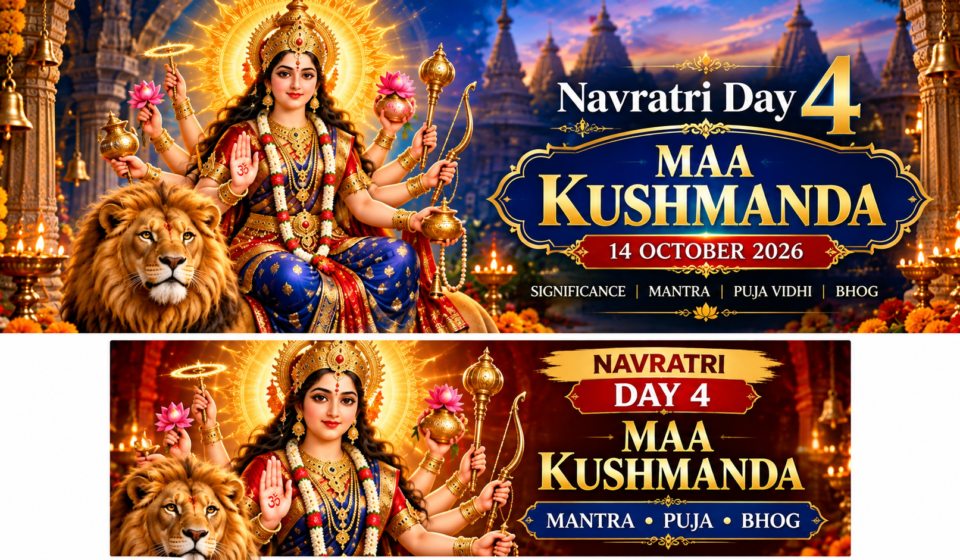
Navratri Day 4 2026: Maa Kushmanda Puja Vidhi, Mantra & Bhog

Discover Maa Kushmanda's significance, Navratri Day 4 puja vidhi, mantra, traditional bhog, vrat katha and the spiritual meaning of her divine form.
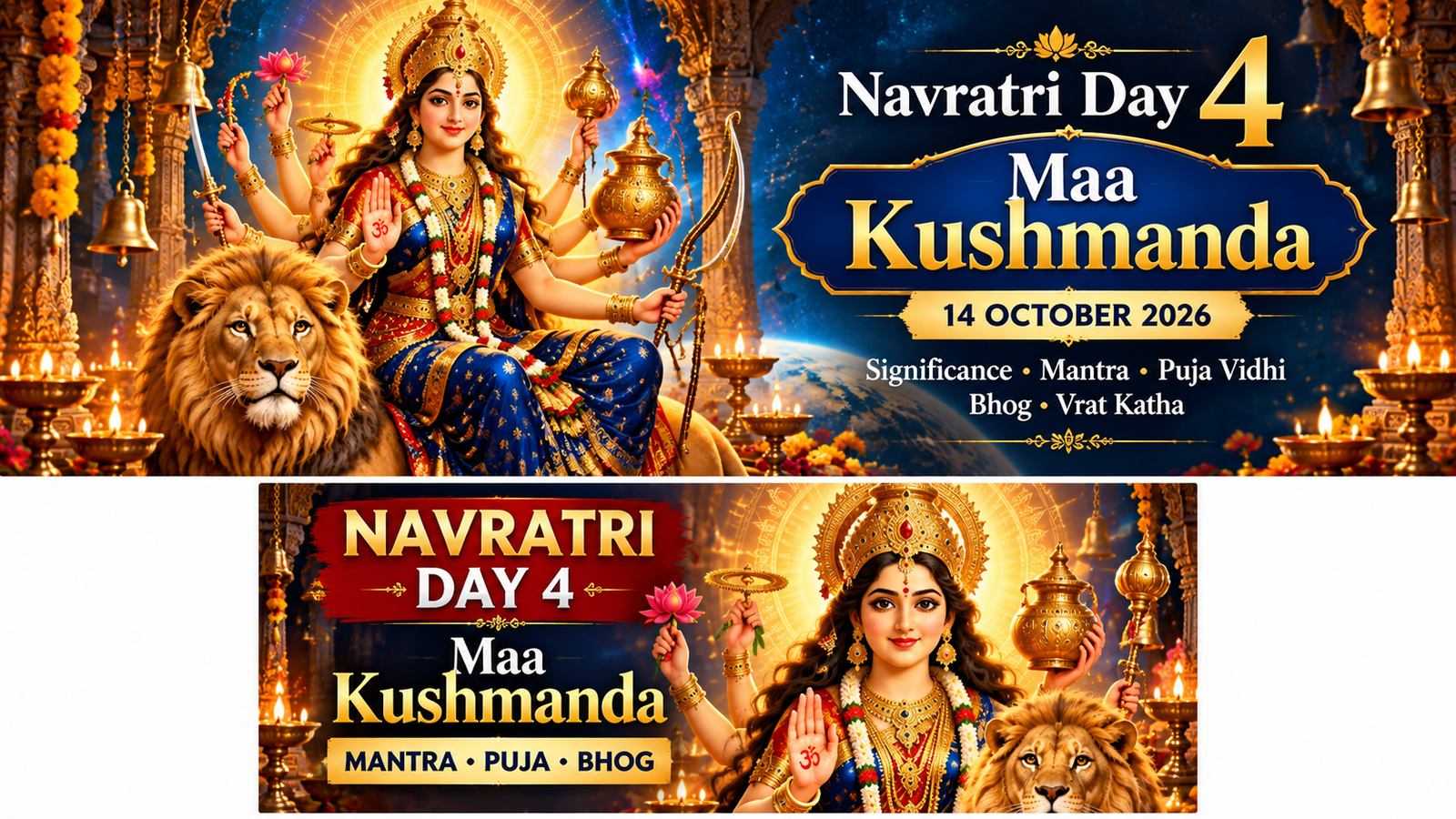
Navratri Day 4, Wednesday, 14 October 2026, is dedicated to Maa Kushmanda, the fourth manifestation of Goddess Durga. Revered as the Divine Mother associated with cosmic creation, light and life-giving energy, Maa Kushmanda reminds devotees that even the greatest transformations can begin with a small spark of positive energy.
On this sacred day of Shardiya Navratri, devotees worship the Goddess with prayers, flowers, traditional offerings and mantra chanting. If you are looking for the significance of Maa Kushmanda, her mantra, puja vidhi, traditional bhog, vrat katha and the spiritual message of her divine form, this guide will help you understand the fourth day of Navratri.
Table of Contents
ToggleNavratri Day 4: Quick Facts
- Date: Wednesday, 14 October 2026
- Goddess: Maa Kushmanda
- Navdurga Form: Fourth manifestation of Maa Durga
- Popularly Associated Colour: Royal blue
- Traditional Offering: Malpua, with offerings varying by family and region
- Main Mantra: ॐ देवी कूष्माण्डायै नमः॥
- Central Spiritual Theme: Creation, radiance, vitality and divine energy
Note: Navratri colours and food offerings are customary rather than universal. Follow your family tradition or local temple practice where it differs.
Who Is Maa Kushmanda?
Maa Kushmanda is worshipped as the fourth form of Navdurga during the nine sacred days of Navratri. In popular Hindu devotional tradition, she is associated with the creation of the universe through her divine smile. Her form represents the creative power of the Divine Mother and the radiance that sustains life.
The name Kushmanda is commonly explained in devotional literature through its association with the cosmic egg, or Brahmanda. This symbolism connects the Goddess with the emergence of the universe from an original state of darkness into a realm of light, movement and life.
Her worship encourages devotees to reflect on the power of creation, optimism, courage and the energy required to nurture something meaningful. She is revered by people seeking spiritual strength, well-being and a more positive outlook on life.
Why Is Maa Kushmanda Worshipped on Navratri Day 4?
Each day of Navratri is traditionally associated with one of the nine forms of Goddess Durga. The fourth day honours Maa Kushmanda and invites devotees to reflect on the divine power behind creation and renewal.
The preceding days focus on the Goddess's forms associated with strength, discipline and courage. Maa Kushmanda's place in the Navdurga sequence offers a reminder that spiritual growth is not only about overcoming obstacles; it is also about developing the energy and clarity to build a better life.
For devotees, the day can be an opportunity to begin a constructive habit, restore a neglected practice of prayer, bring more kindness into family life or approach a difficult responsibility with renewed determination.
The Divine Form of Maa Kushmanda and Its Symbolism
Maa Kushmanda is commonly depicted with eight arms and is therefore associated with the name Ashtabhuja Devi. Traditional images show her holding various divine objects and seated upon or accompanied by a lion. Details can vary between artistic depictions and regional traditions.
1. The Radiant Goddess
Her luminous appearance symbolises the light of creation and the presence of divine energy. It encourages devotees to move beyond negativity and cultivate hope, clarity and awareness.
2. The Eight-Armed Form
Her multiple arms represent divine capacity and the ability to perform many functions. In a spiritual interpretation, they remind us that life requires balance, courage, wisdom and the willingness to take responsible action.
3. The Lion
The lion is associated with courage, strength and fearlessness. Its presence in traditional depictions reminds devotees to face challenges with confidence while keeping their actions guided by wisdom.
4. The Cosmic Symbolism
Maa Kushmanda's association with the cosmic egg represents the mystery and wonder of creation. Her worship can inspire gratitude for life and greater respect for the natural world.
Maa Kushmanda Mantra for Navratri Day 4
One of the commonly recited mantras dedicated to Maa Kushmanda is:
ॐ देवी कूष्माण्डायै नमः॥
Om Devi Kushmandayai Namah
Meaning: Salutations to Goddess Kushmanda, the Divine Mother.
Devotees may chant this mantra during their daily puja, meditation or prayer. Some traditions recommend chanting it 108 times using a mala, but the number is not a requirement for everyone. Sincere devotion and attentive recitation are central to personal worship.
A Simple Way to Chant the Mantra
- Sit comfortably in a clean and peaceful place.
- Take a few calm breaths and bring your attention to the Goddess.
- Recite the mantra slowly and respectfully.
- If you wish, repeat it 11, 21 or 108 times according to your practice.
- Conclude with a short prayer for wisdom, courage, well-being and the welfare of all.
You may also recite the Durga Chalisa or other prayers followed in your family tradition.
Maa Kushmanda Puja Vidhi: Step-by-Step Guide
The following is a simple home-worship routine. Rituals differ by region, family tradition and temple practice, so use the procedure that is customary in your household.
Step 1: Prepare for Puja
Bathe and wear clean clothes. If you follow the popular colour tradition for Navratri Day 4, you may choose royal blue. This colour association is customary and may differ in local calendars.
Step 2: Prepare the Puja Space
Clean the place of worship and arrange an image or idol of Maa Kushmanda. Keep flowers, water, incense, a diya and suitable offerings ready. If you have already established a kalash for Navratri, continue caring for it according to your family's tradition.
Step 3: Light the Diya
Light a diya safely and offer your prayers. Never leave an open flame unattended, particularly near curtains, flowers or other combustible materials.
Step 4: Offer Flowers and Traditional Items
Offer fresh flowers, water, roli or kumkum, and akshat if these are part of your family's practice. Red and yellow flowers are used in many devotional settings, but there is no need to delay worship if a particular flower is unavailable.
Step 5: Offer Bhog
Present a suitable food offering to the Goddess. Malpua is traditionally associated with Maa Kushmanda in many popular Navratri guides. Fruit or another simple, freshly prepared offering may also be used according to family custom.
Step 6: Chant the Mantra
Recite “ॐ देवी कूष्माण्डायै नमः॥” with devotion. You may follow this with a stuti, Durga Chalisa or other familiar prayer.
Step 7: Perform Aarti
Conclude with the aarti followed in your home or temple. Offer a final prayer for peace, good health, wisdom and the well-being of your family and community.
What Bhog Is Offered to Maa Kushmanda?
Malpua is a traditional sweet offering associated with Maa Kushmanda in many contemporary Navratri observances. Depending on regional and family practice, devotees may also offer fruit, sweets or other suitable vegetarian foods.
Malpua as a Traditional Offering
Malpua is a sweet pancake prepared in different ways across India. Recipes vary, with ingredients and methods depending on local custom. If preparing it as bhog, use clean utensils and freshly prepared ingredients, and follow any dietary rules observed during your family's worship.
Other Possible Offerings
- Fresh seasonal fruit
- Homemade vegetarian sweets
- Water and other customary puja offerings
- Foods permitted by the family's Navratri fasting tradition
There is no need to prepare an elaborate spread. A modest offering made with cleanliness and devotion is appropriate for a simple home puja.
Navratri Day 4 Colour 2026: Why Royal Blue?
Royal blue is listed as the colour for the fourth day of Navratri in several popular 2026 colour guides. Devotees who follow this custom may wear royal blue clothing or use the colour in their festive decorations.
Blue is often interpreted symbolically as a colour of depth, steadiness and confidence. In a personal devotional setting, it can serve as a reminder to approach daily responsibilities with composure and a constructive mindset.
Important: Navratri colour lists are not identical across all communities and calendars. Treat royal blue as a popular customary association, not a universal religious requirement.
Maa Kushmanda Vrat Katha: The Spiritual Message
Devotional tradition associates Maa Kushmanda with the creation of the universe through her divine smile. This imagery offers a powerful way to reflect on the relationship between light, life and creative energy.
Rather than treating every modern retelling as a verbatim scriptural passage, it is helpful to distinguish the central devotional belief from the many versions and explanations circulated in popular accounts. For a formal religious reading, devotees may consult the scriptures, prayer books or kathas followed in their own tradition.
A Reflection for Devotees
Imagine a world waiting for light and movement. The divine smile of Maa Kushmanda is remembered as an image of creation emerging from darkness. The symbolism invites us to consider how a small act of kindness, one thoughtful decision or a renewed commitment can begin a meaningful transformation.
On Navratri Day 4, devotees can reflect on a simple question: What positive thing can I create or nurture in my life today? The answer may be a stronger family bond, a healthier routine, a commitment to learning or an effort to help someone in need.
Spiritual Lessons from Maa Kushmanda
1. Begin with Positivity
The symbolism of the Goddess's smile encourages us to approach life with hope. Positivity does not mean ignoring difficulties; it means facing them without surrendering to despair.
2. Use Your Energy Wisely
Creative energy becomes meaningful when it is directed towards useful action. Dedicate time to the people, responsibilities and goals that deserve your attention.
3. Bring Light into Other Lives
A sincere prayer can be accompanied by practical compassion. Offer help to a neighbour, support a family member, feed someone in need or simply listen patiently to a person who is struggling.
4. Be Grateful for Life
The creation symbolism associated with Maa Kushmanda encourages gratitude for the natural world, the people around us and the opportunities we often take for granted.
Can You Observe a Fast on Navratri Day 4?
Many devotees observe a Navratri fast according to their personal, family or regional tradition. Practices differ: some people consume fruit and permitted foods, while others follow a more limited fast. Others worship without fasting.
Fasting is a personal religious practice, not a measure of devotion. Choose an approach that is suitable for your circumstances. Anyone whose health or medication schedule may be affected by fasting should seek appropriate medical advice before making dietary changes.
Frequently Asked Questions About Maa Kushmanda
1. When is Navratri Day 4 in 2026?
Navratri Day 4 is observed on Wednesday, 14 October 2026, in the commonly published day-by-day Navratri calendar.
2. Which Goddess is worshipped on the fourth day of Navratri?
Maa Kushmanda, the fourth form of Navdurga, is worshipped on the fourth day.
3. What is the mantra of Maa Kushmanda?
A commonly recited mantra is “ॐ देवी कूष्माण्डायै नमः॥”, transliterated as “Om Devi Kushmandayai Namah.”
4. What is the bhog for Maa Kushmanda?
Malpua is a traditional offering associated with Maa Kushmanda in many popular Navratri observances. Offerings may vary by region and family.
5. What is the colour for Navratri Day 4 in 2026?
Royal blue is listed in several popular Navratri colour guides for 14 October 2026. Colour customs are not universal, so local traditions may differ.
6. Why is Maa Kushmanda associated with creation?
In devotional tradition, Maa Kushmanda is associated with the creation of the universe through her divine smile. This symbolism represents creative energy, radiance and the emergence of life.
7. How should I perform Maa Kushmanda puja at home?
Clean the worship area, light a diya safely, offer flowers and suitable bhog, recite the Goddess's mantra and conclude with your customary prayer or aarti. Follow your family tradition where it differs.
Conclusion: Welcome New Beginnings with Maa Kushmanda
Navratri Day 4 is an opportunity to honour Maa Kushmanda and reflect on the divine energy associated with creation, light and vitality. Her devotional symbolism reminds us that meaningful change begins when hope is joined with intention and action.
On Wednesday, 14 October 2026, take a few moments for prayer, chant the Maa Kushmanda mantra and bring a little more kindness, courage and gratitude into your daily life. Whether your observance includes fasting, a traditional bhog or a simple home puja, let it be guided by sincerity and respect.
Jai Maa Kushmanda! Jai Mata Di!
Further Reading and Sources
- AstroSage Panchang: Maa Kushmanda, Mantra and Traditional Worship
- Drik Panchang: Shardiya Navratri Dates for Lucknow, 2026
- The Economic Times: Navratri Day 4 2026 — Maa Kushmanda Puja and Significance
Editorial note: Religious practices, food offerings, colours and ritual details may vary across communities. This article presents general devotional information and is not a substitute for the guidance of your family priest or local tradition.
Related
