Navratri Day 3 2026: Maa Chandraghanta Puja Vidhi, Mantra, Bhog & Vrat Katha

Discover Maa Chandraghanta's significance, Navratri Day 3 puja vidhi, mantra, traditional bhog, vrat katha and the spiritual meaning of her divine form.
SHARDIYA NAVRATRI 2026 | DAY 3 | DEVOTION & SPIRITUALITY
Table of Contents
ToggleMaa Chandraghanta: Significance, Mantra, Puja Vidhi and the Divine Power of Navratri Day 3
As the sacred celebrations of Shardiya Navratri continue, devotees turn their prayers towards Maa Chandraghanta, the third manifestation of Goddess Durga. Her divine form beautifully combines serenity with extraordinary courage, reminding devotees that true strength does not require abandoning compassion or inner peace.
On Tuesday, 13 October 2026, devotees observing the traditional day-by-day Navdurga sequence will worship Maa Chandraghanta on the third day of Navratri.
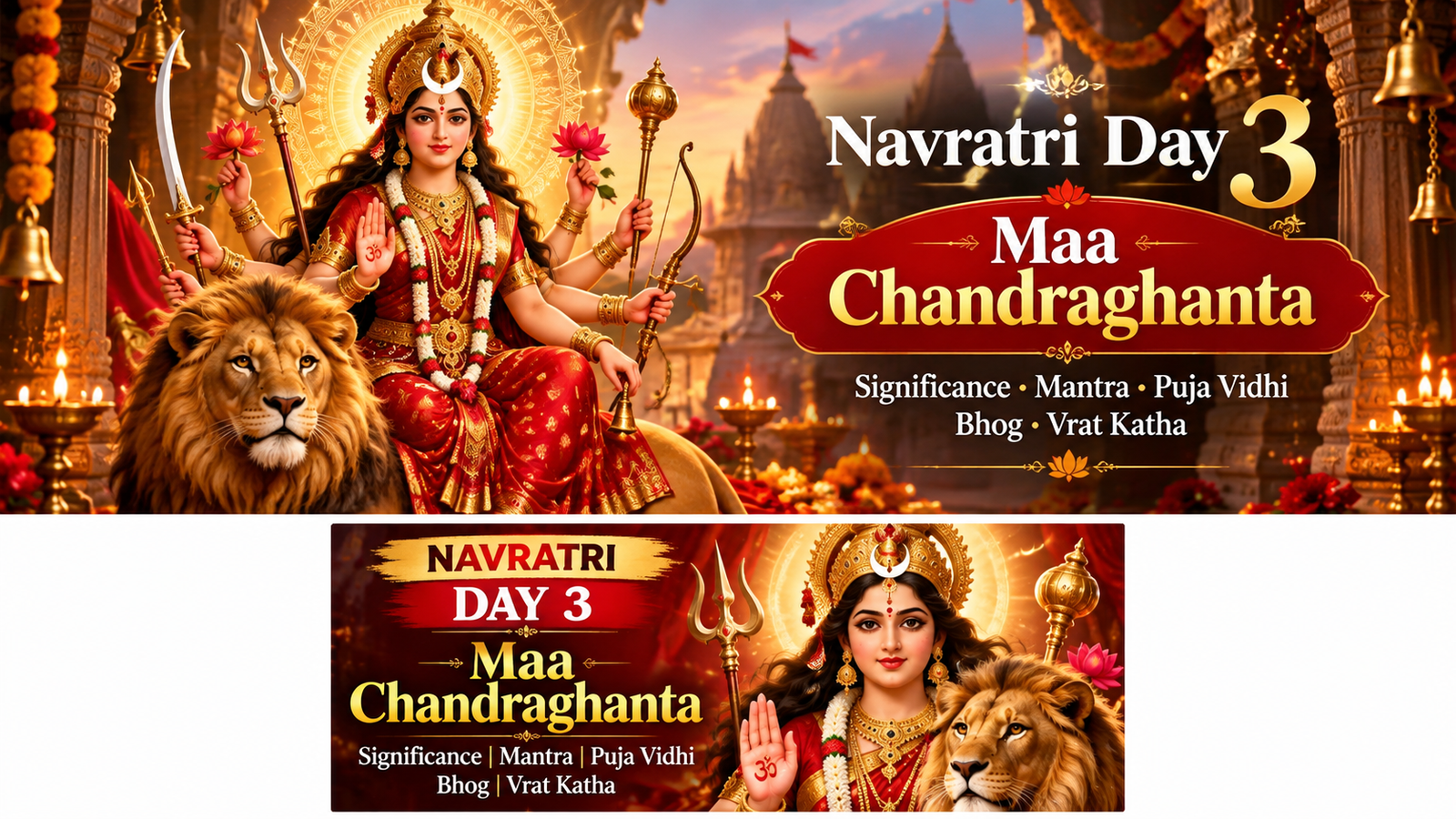
Her name comes from the crescent-shaped bell associated with her forehead. Her magnificent appearance, riding a tiger or lion in traditional depictions and carrying divine weapons, represents readiness to protect righteousness and confront evil.
In this guide, we explore Maa Chandraghanta's significance, traditional puja vidhi, mantra, offerings, vrat katha and the spiritual lessons her worship offers for everyday life.
1. Who Is Maa Chandraghanta?
Maa Chandraghanta is worshipped as the third form of Navdurga, the nine manifestations of the Divine Mother honoured during Navratri.
Her name combines two ideas: Chandra, meaning moon, and Ghanta, meaning bell. The crescent associated with her forehead resembles a bell, giving the Goddess her distinctive name.
She represents the transformation of spiritual discipline into confident action. In the traditional Navdurga sequence, the first forms emphasise the foundations of devotion and perseverance. Maa Chandraghanta brings a further dimension: the courage to stand firm when faced with adversity.
Devotees pray to her for strength, peace of mind and the ability to face difficult circumstances without surrendering to fear.
2. The Spiritual Significance of Maa Chandraghanta
Maa Chandraghanta's symbolism brings together two qualities that are sometimes mistakenly considered opposites: peacefulness and fearlessness.
Her serene expression conveys composure, while her formidable appearance and divine weapons represent the strength needed to protect righteousness.
Courage in the face of adversity
Life inevitably brings difficult decisions, uncertainty and unexpected challenges. The Goddess's form reminds devotees that courage is not the absence of fear; it is the determination to act wisely despite fear.
Peace with strength
Maa Chandraghanta's appearance teaches that gentleness need not mean weakness. A person can remain compassionate while establishing boundaries, defending others and standing against injustice.
Protection and righteousness
Her warrior-like form is traditionally associated with the protection of devotees and the destruction of negative forces. Spiritually, this can be understood as an invitation to confront dishonesty, anger, harmful habits and injustice with wisdom and determination.
Inner discipline
Regular prayer, reflection and mindful action can help devotees develop patience and emotional balance. Worship of Maa Chandraghanta offers an opportunity to renew these commitments.
3. Maa Chandraghanta's Divine Appearance and Symbolism
Traditional depictions portray Maa Chandraghanta with a radiant golden complexion, a crescent-shaped bell on her forehead and multiple arms carrying divine attributes. She is commonly shown riding a tiger or lion.
The crescent-shaped bell
The bell-like crescent gives the Goddess her name. The sound of a bell is also associated in Hindu worship with attention, auspiciousness and the beginning of a sacred ritual.
The divine weapons
The weapons in her hands symbolise readiness to confront destructive forces. They are reminders of divine protection and the importance of using strength responsibly.
The lion or tiger
Her mount represents courage, power and the ability to face formidable challenges. It reinforces the image of a Goddess who is both protective and fearless.
Her serene expression
Despite her powerful warrior form, Maa Chandraghanta is depicted with divine composure. This combination symbolises the ideal of strength guided by wisdom rather than uncontrolled aggression.
4. Navratri Day 3 in 2026: Date and Colour
According to the published Shardiya Navratri calendar, Maa Chandraghanta Puja falls on Tuesday, 13 October 2026. The day is associated with Tritiya and the colour red.
Navratri Day 3 at a glance
- Date: Tuesday, 13 October 2026
- Goddess: Maa Chandraghanta
- Traditional tithi: Tritiya
- Colour of the day: Red
- Spiritual themes: Courage, protection, composure and strength
Red is commonly associated with energy, strength and auspiciousness in Hindu devotional traditions. Devotees may choose red clothing, flowers or decorative elements according to their family customs.
The colour is a festive tradition rather than a requirement for worship. Devotion can be expressed sincerely regardless of clothing or the availability of particular flowers.
For location-specific tithi details and festival observances, consult the 2026 Shardiya Navratri calendar from Drik Panchang .
5. Maa Chandraghanta Puja Vidhi at Home
Devotees may worship Maa Chandraghanta through a simple daily puja or follow the more elaborate customs observed in their household or temple.
Common puja samagri
- A clean puja area and an image or idol of Maa Chandraghanta.
- A diya with ghee or oil and cotton wicks.
- Fresh flowers and a garland.
- Kumkum, roli, akshat and other customary puja items.
- Incense or dhoop, used safely.
- Fruits, sweets or suitable prasad.
- A puja thali and a prayer book, if desired.
Step-by-step worship
- Prepare the puja space: Clean the area and arrange the Goddess's image or idol respectfully.
- Begin with prayer: Sit calmly and offer a prayer according to your household tradition.
- Light a diya: Light the lamp safely in the designated puja area.
- Offer flowers: Offer fresh flowers, kumkum and akshat as customary.
- Chant the mantra: Recite the Maa Chandraghanta mantra with concentration.
- Offer bhog: Present fruit, sweets or another suitable offering.
- Perform aarti: Conclude with aarti or a familiar Devi prayer.
- Reflect on her teachings: Spend a moment resolving to act with courage, compassion and wisdom.
These are general devotional practices. Specific ritual procedures may differ between regions and traditions, so follow your family's customary method where applicable.
6. Maa Chandraghanta Mantra and Its Meaning
Mantra chanting is an important part of Navratri worship for many devotees. It provides a focus for prayer and an opportunity to cultivate calmness and devotion.
ॐ देवी चन्द्रघण्टायै नमः॥
Transliteration:
Om Devi Chandraghantayai Namah.
Meaning:
Salutations to Goddess Chandraghanta.
Devotees may chant the mantra quietly or aloud according to their preference. Some follow a set number of repetitions, while others offer a simple prayer with sincere concentration.
There is no need to treat a particular repetition count as compulsory for every household. Follow the practice customary in your family or spiritual tradition.
7. What Bhog Is Traditionally Offered to Maa Chandraghanta?
Offering bhog is a devotional expression of gratitude. Traditions concerning specific offerings vary across regions and households.
Commonly mentioned offerings for Maa Chandraghanta include milk-based sweets, kheer and other foods prepared according to the family's customary devotional practice.
Ideas for a simple offering
- Fresh fruit.
- Kheer or another traditional milk-based sweet.
- Homemade sweets prepared according to household customs.
- Other suitable prasad accepted in your family's tradition.
Offerings need not be elaborate. A simple preparation made with cleanliness, care and devotion can be meaningful.
After the offering, prasad may be shared with family members and other devotees. Follow any dietary or fasting rules observed in your household.
8. Maa Chandraghanta Vrat Katha: A Devotional Reflection
The nine forms of Maa Durga are worshipped through a rich tradition of stories, prayers and devotional literature. The details of Chandraghanta-specific vrat kathas can vary by region and source.
Rather than presenting a modern retelling as a verbatim scriptural account, the following reflection draws on the traditional symbolism of Maa Chandraghanta's powerful and peaceful form.
The courage that protects peace
In devotional understanding, the Divine Mother protects the world when destructive forces threaten righteousness. Her fierce forms remind devotees that compassion must sometimes be accompanied by decisive action.
Maa Chandraghanta embodies this message. Her divine weapons represent readiness to confront evil, while her serene expression reflects a mind that is not controlled by anger or fear.
Her worship encourages devotees to develop the courage to stand against wrongdoing, the wisdom to distinguish right from wrong and the patience to respond to challenges thoughtfully.
The spiritual message is simple: strength is most meaningful when it protects others, and courage is most admirable when guided by compassion.
Devotees who wish to follow a traditional vrat katha should consult a recognised devotional text or the version followed in their family or temple.
9. Five Life Lessons from Maa Chandraghanta
1. Be courageous without becoming harsh
Stand firm when facing injustice, but avoid allowing anger to control your decisions.
2. Protect peace through responsible action
Inner peace is not passive acceptance of everything. Sometimes it requires setting healthy boundaries and acting with conviction.
3. Keep your mind steady during difficulties
A calm mind helps us examine problems clearly and choose a more thoughtful response.
4. Use strength to help others
Strength becomes meaningful when it is used to protect, support and uplift others rather than to dominate them.
5. Combine devotion with good actions
Prayer can inspire positive intentions, but those intentions gain meaning when reflected in our behaviour and everyday choices.
10. Frequently Asked Questions About Maa Chandraghanta
When is Maa Chandraghanta Puja in 2026?
Maa Chandraghanta Puja falls on Tuesday, 13 October 2026, the third day in the published Shardiya Navratri calendar.
Which colour is associated with Navratri Day 3 in 2026?
Red is the colour listed for Day 3 in the 2026 Shardiya Navratri calendar.
What is the mantra of Maa Chandraghanta?
A commonly recited mantra is: ॐ देवी चन्द्रघण्टायै नमः॥ (Om Devi Chandraghantayai Namah).
What does Maa Chandraghanta symbolise?
She is associated with courage, protection, serenity and the strength to confront destructive forces while remaining composed.
What bhog can be offered to Maa Chandraghanta?
Milk-based sweets, kheer, fruit and other suitable traditional offerings are used by devotees. Customs vary between households and regions.
How should Maa Chandraghanta be worshipped at home?
Devotees may clean the puja area, light a diya, offer flowers and prasad, chant the Goddess's mantra and perform aarti according to their family tradition.
What is the main spiritual lesson of Maa Chandraghanta?
Her form reminds devotees to combine courage with compassion, protect righteousness and maintain inner composure when facing difficult situations.
Conclusion: May Maa Chandraghanta Bless You with Courage and Peace
Maa Chandraghanta represents the powerful union of fearlessness and serenity. Her divine form reminds us that genuine strength is not measured by anger or aggression, but by our willingness to protect what is right while keeping our minds steady.
As we worship her on the third day of Shardiya Navratri, may we find the courage to overcome our fears, the wisdom to make thoughtful decisions and the compassion to support those around us.
May the Divine Mother fill every home with strength, happiness, harmony and devotion.
जय माँ चंद्रघंटा! जय माता दी!
Share your devotion: What quality of Maa Chandraghanta inspires you the most—courage, peace or protection? Share your thoughts and Navratri wishes in the comments.
Sources and Further Reading
Related