Navratri Day 8 2026: Maa Mahagauri Puja Vidhi, Mantra & Bhog

Discover Navratri Day 8 2026 significance, Maa Mahagauri mantra, puja vidhi, traditional bhog, vrat katha and Durga Ashtami rituals.
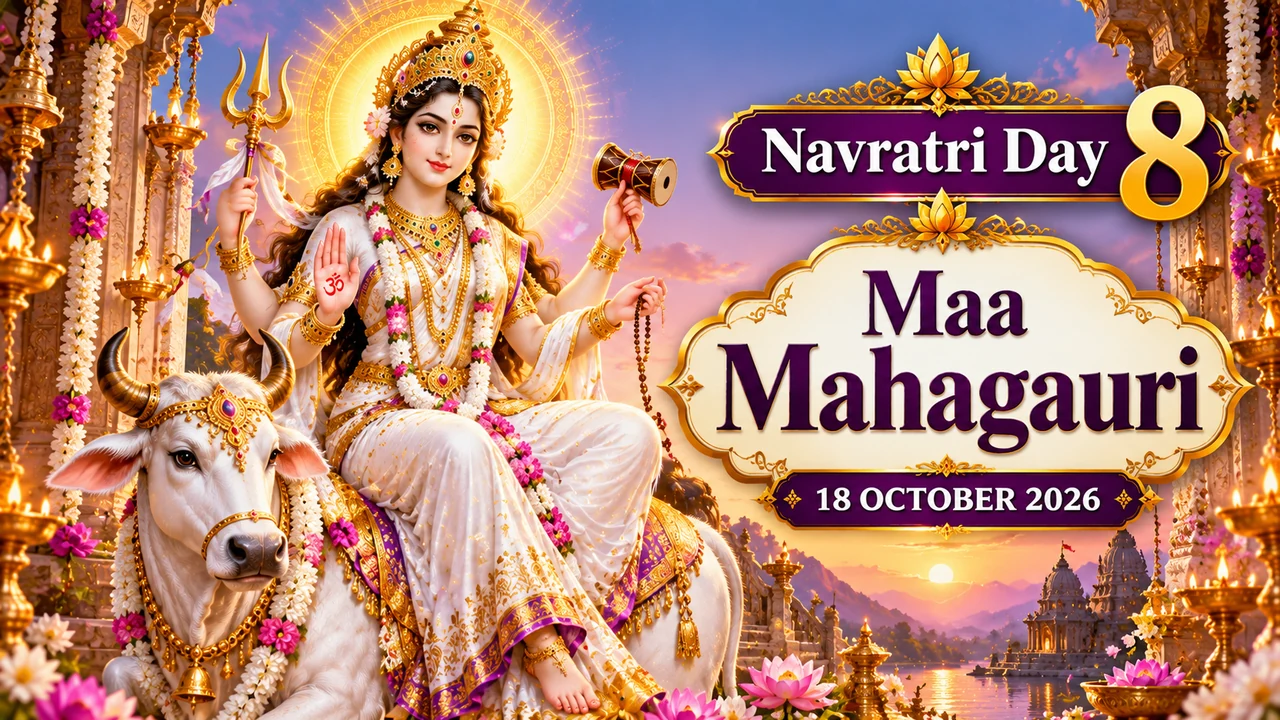
Table of Contents
ToggleMaa Mahagauri: Significance, Mantra, Puja Vidhi, Bhog and Vrat Katha
Navratri Day 8 | Sunday, 18 October 2026
As Shardiya Navratri approaches its final days, devotees turn their attention to Maa Mahagauri, the eighth manifestation of Goddess Durga in the Navdurga tradition. Revered for her radiant appearance, purity and compassionate nature, Maa Mahagauri represents peace, grace and the possibility of spiritual renewal.
Her worship is an invitation to move beyond anger, resentment and negativity, and to cultivate clarity, kindness and inner strength. Whether you observe Navratri through fasting, daily puja, devotional singing or quiet prayer, the story of Maa Mahagauri offers a meaningful opportunity for reflection.
Navratri Day 8 2026: Quick Facts
| Detail | Information |
|---|---|
| Festival | Shardiya Navratri 2026 |
| Eighth day in the Navdurga sequence | Sunday, 18 October 2026 |
| Goddess worshipped | Maa Mahagauri |
| Traditional form | Eighth manifestation of Goddess Durga |
| Traditional vahana | White bull |
| Commonly associated colour | Purple in some 2026 colour charts; white is traditionally associated with the Goddess |
| Commonly mentioned offering | Coconut, sweets and other traditional prasad |
| Popular mantra | Om Devi Mahagauryai Namah |
| Spiritual theme | Purity, peace, compassion and renewal |
Who Is Maa Mahagauri?
Maa Mahagauri is the eighth form of Goddess Durga worshipped during Navratri. Her name combines the Sanskrit words "Maha," meaning great, and "Gauri," associated with brightness, radiance and purity. The name is commonly understood as "the greatly radiant one."
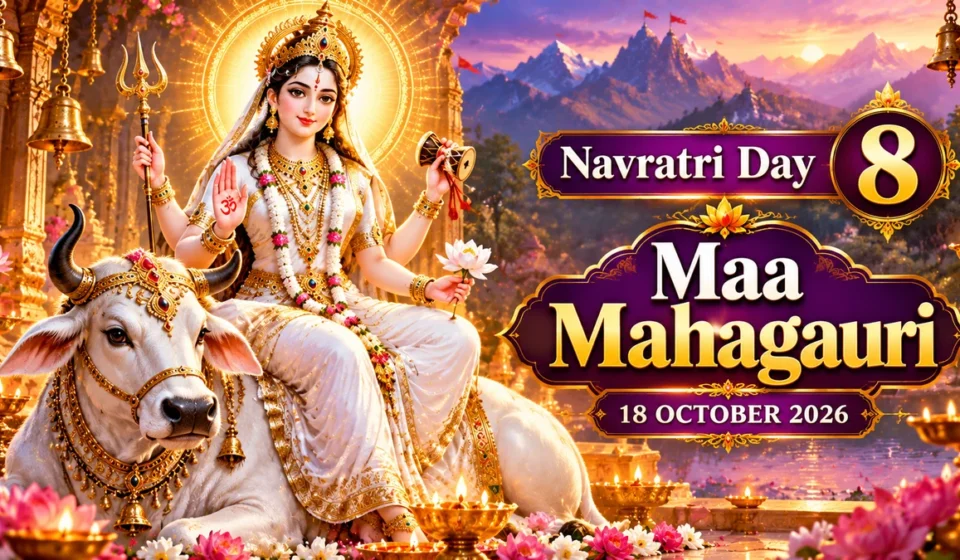
In traditional Hindu imagery, Maa Mahagauri is depicted with a luminous complexion, wearing white garments and riding a white bull. She is commonly represented with four arms, holding a trident and damaru, while her other hands display protective and blessing gestures. Details may vary between artistic and regional traditions.
The white imagery associated with the Goddess is often interpreted as a symbol of tranquillity, clarity and spiritual purity. Her serene expression reflects the compassionate dimension of divine feminine power.
Devotees worship Maa Mahagauri with the hope of finding peace, overcoming inner turmoil and renewing their commitment to a life guided by goodness and wisdom.
Religious and Spiritual Significance of Maa Mahagauri
1. A Symbol of Purity
Maa Mahagauri's radiant appearance and white attire are traditionally associated with purity. On a personal level, this symbolism can inspire people to act honestly, speak thoughtfully and examine their intentions.
2. Peace and Serenity
Her calm appearance represents tranquillity. Devotees may use the occasion to pause, pray and reflect rather than allowing everyday pressures to dominate their thoughts.
3. Renewal and Transformation
The Goddess is associated in devotional narratives with a transformation from a darkened appearance to radiant brightness. This story is often interpreted as a metaphor for renewal, perseverance and the possibility of moving towards a more positive way of living.
4. Compassion and Forgiveness
The worship of Maa Mahagauri can serve as a reminder to let go of unnecessary resentment, forgive where appropriate and treat others with dignity. Forgiveness does not mean accepting harmful behaviour; it can also involve setting healthy boundaries.
5. Devotion and Spiritual Discipline
Navratri encourages devotees to maintain a regular practice of prayer, self-reflection and disciplined living. Maa Mahagauri's worship adds a theme of calmness and inner refinement to this spiritual journey.
Maa Mahagauri Mantra and Its Meaning
One of the most commonly recited mantras for Maa Mahagauri is:
Maa Mahagauri Mantra
ॐ देवी महागौर्यै नमः॥
Transliteration: Om Devi Mahagauryai Namah
Simple meaning: Salutations to Goddess Mahagauri, the radiant Divine Mother associated with purity, peace and grace.
Traditional Dhyana Shloka
श्वेते वृषे समारूढा श्वेताम्बरधरा शुचिः।
महागौरी शुभं दद्यान्महादेवप्रमोददा॥
Transliteration:
Shwete Vrishesamarudha Shwetambaradhara Shuchih,
Mahagauri Shubham Dadyanmahadeva Pramodada.
Simple meaning: May Maa Mahagauri, who rides a white bull and wears white garments, bestow auspiciousness and blessings.
How to Chant the Mantra
- Choose a clean and peaceful place for prayer.
- Place an image or idol of Maa Mahagauri at your altar.
- Sit comfortably and take a few moments to settle your attention.
- Chant the mantra slowly and respectfully.
- You may repeat it 11, 21 or 108 times according to your preference and tradition.
- Conclude with a prayer for peace, wisdom, compassion and the well-being of your family.
These repetition counts are common devotional choices, not a universal requirement. Sincerity and respectful attention are central to a simple home prayer.
Maa Mahagauri Puja Vidhi for Navratri Day 8
Devotees can worship Maa Mahagauri at home using a simple arrangement. Ritual details differ across communities, so this general guide should be adapted to your family's established customs.
Step 1: Prepare the Puja Area
Clean the worship area and arrange the image or idol of Maa Mahagauri. Bathe and wear clean clothes before beginning the puja, according to your usual practice.
Step 2: Light a Diya
Light a diya safely and offer a moment of prayer. Keep lamps away from curtains, loose fabric and other flammable materials. Never leave an open flame unattended.
Step 3: Offer Flowers and Basic Puja Items
Offer fresh flowers, water, roli, akshat and other items customary in your family. White flowers are often associated with the serene imagery of Maa Mahagauri, although practices vary.
Step 4: Recite the Mantra
Recite "Om Devi Mahagauryai Namah" with devotion. You may also read the dhyana shloka, Durga Chalisa or another devotional text that you regularly follow.
Step 5: Offer Bhog
Offer coconut, sweets, fruit or other traditional prasad. The precise offering depends on regional custom and family tradition.
Step 6: Perform Aarti
Conclude the puja with aarti and a prayer for peace, compassion, harmony and strength. Distribute prasad respectfully among family members.
Maa Mahagauri Bhog: What Should You Offer?
Coconut is a commonly mentioned offering associated with Maa Mahagauri in several Navdurga worship guides. Devotees may also offer sweets, fresh fruit and other prasad according to their regional and family traditions.
Traditional Offering Ideas
- Coconut or coconut-based sweets
- Fresh seasonal fruit
- Milk-based sweets, where customary
- Other prasad prepared according to family tradition
Prepare offerings hygienically and consider any dietary needs of the people who will consume them. Fasting rules and permitted ingredients differ, so follow your family's observance.
The offering is an expression of devotion and gratitude. No particular food should be presented as a guaranteed means of obtaining wealth, health or any other worldly outcome.
Navratri Day 8 Colour 2026: Purple or White?
Some popular Navratri colour charts associate purple with the eighth day of Navratri in 2026. White, meanwhile, is traditionally associated with Maa Mahagauri's serene appearance and symbolism of purity.
These are two different kinds of associations: a yearly festival colour chart and the traditional iconography of the Goddess. They should not be confused with a universal religious rule.
If you wish to follow the popular 2026 colour sequence, you may choose purple clothing or accessories. If you prefer to reflect Maa Mahagauri's traditional white imagery, white clothing is also a meaningful choice. Neither colour is a requirement for worship.
Maa Mahagauri Vrat Katha: The Story of Divine Transformation
A popular devotional narrative connects Maa Mahagauri with the intense spiritual austerities of Goddess Parvati. According to this traditional account, Parvati undertakes severe penance to attain Lord Shiva as her divine consort.
Her prolonged austerities are described as leaving her appearance darkened. Pleased by her devotion, Lord Shiva is said in the narrative to bathe her with the sacred waters of the Ganga. Her complexion then becomes radiant and luminous, giving rise to the name Mahagauri.
The story is remembered as a celebration of steadfast devotion, perseverance and divine grace. The Goddess's transformation is also interpreted symbolically: even after difficult experiences, renewal and inner clarity remain possible.
Devotees worship Maa Mahagauri during Navratri to express their faith in the power of sincere devotion and to seek peace, wisdom and a positive direction in life.
Note: This is a popular devotional retelling rather than a verbatim translation of one specific scripture. Details can vary among religious narratives and regional traditions.
Kanya Pujan and Durga Ashtami 2026
Kanya Pujan, also known as Kanjak Puja in some regions, is an important Navratri tradition observed by many Hindu families. Young girls are honoured as symbolic representations of the Divine Feminine. Families may offer a meal, prasad, gifts or other tokens of respect.
Kanya Pujan is commonly performed on Ashtami or Navami, depending on family custom and the calendar followed. In 2026, the Ashtami Tithi extends from the morning of 18 October into the morning of 19 October. Drik Panchang lists Maha Ashtami on 19 October in its cited regional calendar.
How Is Kanya Pujan Commonly Observed?
- Prepare a clean space for the ritual.
- Welcome the girls respectfully and with their guardians' consent.
- Offer a traditional meal or prasad according to family custom.
- Give gifts or tokens of affection if desired.
- Treat every child with dignity, comfort and respect.
There is no need to pressure a child to participate. Families should respect children's comfort, dietary needs and personal boundaries.
Five Spiritual Lessons from Maa Mahagauri
1. Inner Purity Begins with Honest Reflection
Spiritual growth begins when we examine our own thoughts and behaviour honestly. The symbolism of Maa Mahagauri encourages us to cultivate sincerity rather than merely maintain appearances.
2. Peace Is Worth Protecting
A calm mind can help us respond thoughtfully to difficult situations. Prayer and reflection may provide a valuable pause before we make important decisions.
3. Transformation Takes Perseverance
The Goddess's story highlights devotion and determination. In everyday life, meaningful improvement often requires patience, consistent effort and a willingness to learn from mistakes.
4. Compassion Makes Relationships Stronger
Kindness, empathy and respectful communication help build stronger relationships. Maa Mahagauri's serene imagery can inspire us to treat others with greater understanding.
5. Renewal Is Always Possible
Past difficulties do not have to define the future. With reflection, support and constructive action, people can learn, change and begin again.
Frequently Asked Questions About Maa Mahagauri
1. When is Navratri Day 8 in 2026?
The eighth day in the Navdurga sequence falls on Sunday, 18 October 2026. However, Ashtami Tithi continues into 19 October, and many Panchang-based calendars observe Maha Ashtami on Monday, 19 October.
2. Which Goddess is worshipped on Navratri Day 8?
Maa Mahagauri, the eighth form of Goddess Durga in the Navdurga tradition, is worshipped on the eighth day.
3. What is the mantra of Maa Mahagauri?
A commonly recited mantra is "ॐ देवी महागौर्यै नमः॥", transliterated as "Om Devi Mahagauryai Namah".
4. What bhog is offered to Maa Mahagauri?
Coconut is a commonly mentioned offering. Devotees may also offer fruit, sweets and other prasad according to their regional and family traditions.
5. Which colour should be worn on Navratri Day 8 in 2026?
Purple appears in some popular colour charts for the eighth day in 2026. White is traditionally associated with Maa Mahagauri's appearance. Neither colour is a universal religious requirement.
6. Why is Maa Mahagauri associated with purity?
Her radiant appearance and white garments are traditionally interpreted as symbols of purity, serenity and spiritual clarity.
7. Can Maa Mahagauri be worshipped at home?
Yes. Devotees can perform a simple home puja with a clean worship area, a diya, flowers, a mantra and a traditional offering. Follow your family's customary practices and observe fire safety.
8. Is fasting compulsory on Navratri Day 8?
No single fasting practice applies to everyone. Some devotees fast, while others worship without fasting. Consider your health and follow your family's tradition or trusted religious guidance.
9. When is Kanya Pujan in 2026?
Kanya Pujan is commonly performed on Ashtami or Navami, depending on regional and family tradition. In 2026, Ashtami Tithi spans 18–19 October. Consult a local Panchang to determine the appropriate observance and timing for your location.
Conclusion: Welcome Peace and Renewal with Maa Mahagauri
Maa Mahagauri represents purity, grace, compassion and the possibility of transformation. Her worship on the eighth day of Navratri invites devotees to look inward, release unnecessary resentment and renew their commitment to a peaceful and thoughtful life.
As you observe Navratri in 2026, take a moment to reflect on the qualities you wish to nurture: kindness in your relationships, honesty in your actions and calmness in the face of uncertainty. These values can give the festival meaning beyond its rituals.
Whether you perform a traditional puja, chant the Goddess's mantra or offer a simple prayer at home, let your devotion inspire positive action in everyday life.
जय माँ महागौरी!
May Maa Mahagauri inspire peace, purity, compassion and wisdom in every home.
Share this article: Send this guide to family and friends observing Navratri, and share your favourite Maa Mahagauri mantra or devotional tradition in the comments.
Further Reading and References
Editorial note: This article describes commonly followed Hindu devotional traditions and interpretations. Rituals, offerings, colours and fasting practices may vary by region and family. For exact puja timings, consult a trusted local Panchang or priest.
Related