Vijayadashami 2026: Date, Puja Vidhi, Muhurat & Dussehra

Discover Vijayadashami 2026 date, Dussehra significance, Lucknow Vijay Muhurat, puja vidhi, Ravana Dahan traditions and the victory of good over evil.
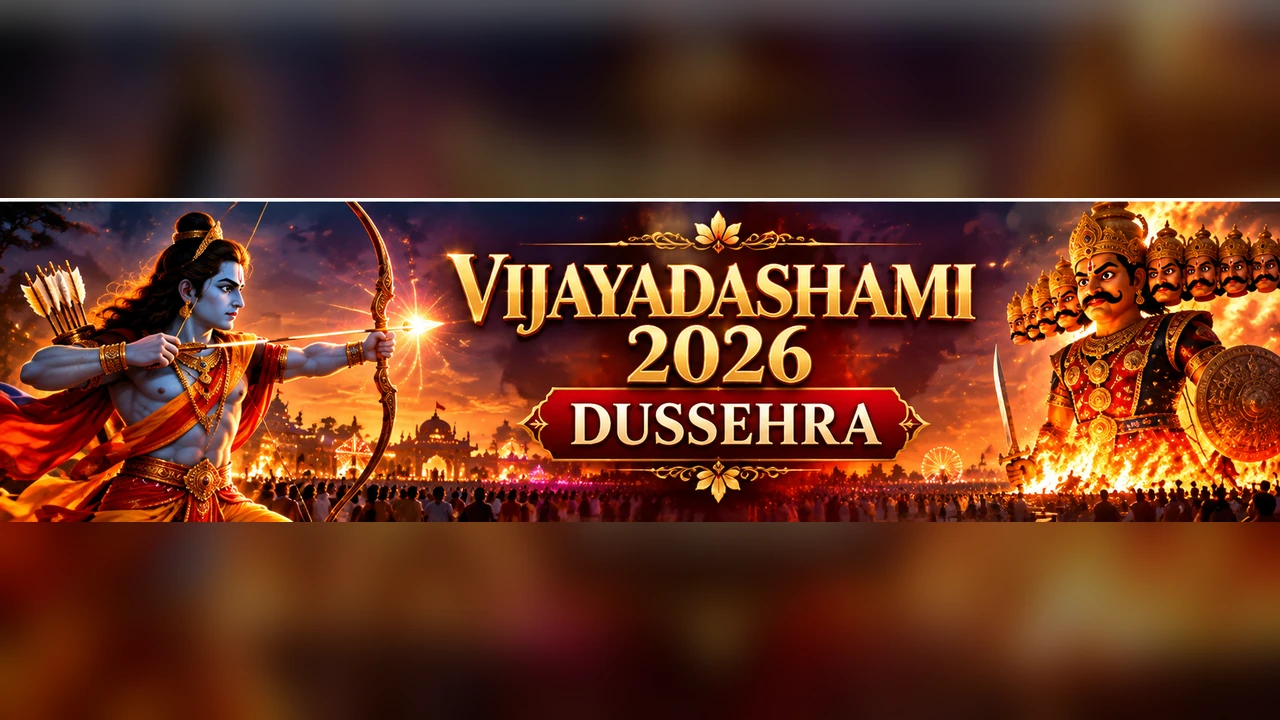
Vijayadashami, popularly known as Dussehra, is one of India's most significant Hindu festivals. It celebrates the triumph of righteousness over wrongdoing, truth over falsehood, and courage over fear. In 2026, Vijayadashami will be observed on Tuesday, October 20, across much of India. The festival concludes the Sharadiya Navratri celebrations and inspires devotees to embrace truth, discipline, and moral courage in everyday life.
From the traditional burning of Ravana's effigy to the worship of Goddess Durga, Vijayadashami brings together devotion, cultural celebrations, family traditions, and a timeless spiritual message.
Table of Contents
ToggleVijayadashami 2026: Date and Important Timings
| Festival | Vijayadashami / Dussehra |
|---|---|
| Date in most of India | Tuesday, October 20, 2026 |
| Dashami Tithi begins | October 20, at approximately 12:50 PM IST |
| Dashami Tithi ends | October 21, at approximately 2:11 PM IST |
| Vijay Muhurat in Lucknow | Approximately 1:45 PM to 2:31 PM IST |
| Ravana Dahan | Usually after sunset; the local event schedule determines the exact time |
For the Lucknow calendar and local Vijay Muhurat, consult the Drik Panchang Vijayadashami guide for Lucknow.
What Is Vijayadashami?
The word Vijayadashami combines “Vijaya,” meaning victory, and “Dashami,” referring to the tenth lunar day. The festival is associated with two celebrated victories in Hindu tradition: Lord Rama's victory over Ravana in the Ramayana and Goddess Durga's victory over Mahishasura.
These traditions give Dussehra its enduring message. Power alone does not make a person righteous; wisdom, self-control, responsibility, and respect for dharma matter just as much.
Religious and Spiritual Significance of Dussehra
1. Lord Rama's victory over Ravana
In the Ramayana tradition, Ravana abducts Sita, leading to a conflict between his forces and Lord Rama's army. With the help of Lakshmana, Hanuman, and the Vanara army, Rama confronts Ravana and ultimately defeats him. Dussehra commemorates this victory and reminds devotees that arrogance and injustice cannot ultimately replace righteousness.
2. Goddess Durga's victory over Mahishasura
Another major tradition celebrates Goddess Durga's defeat of Mahishasura, a powerful demon who threatened the divine order. Her victory represents the strength of divine feminine energy and the restoration of balance when destructive forces become overwhelming.
3. The victory of good over evil within ourselves
The festival also invites personal reflection. Anger, greed, dishonesty, jealousy, ego, and cruelty can damage relationships and communities. Vijayadashami encourages people to recognise these tendencies and make conscious efforts to overcome them.
Vijayadashami Puja Vidhi: Step-by-Step Rituals
Rituals differ across households and regions. The following is a general worship guide; follow your family's customs or the guidance of your local priest where traditions differ.
- Clean the puja area: Prepare a clean space at home or in your prayer room. Decorate it with flowers, rangoli, and traditional festive items if desired.
- Prepare the altar: Place images or idols of the deities you worship, especially Lord Rama, Goddess Durga, or Goddess Aparajita according to your tradition.
- Begin with prayer: Light a diya and incense where safe, and offer a prayer for wisdom, courage, peace, and righteous conduct.
- Make offerings: Offer flowers, fruits, sweets, and other customary items according to your family tradition.
- Perform the puja: Recite familiar prayers, mantras, or devotional verses. Some traditions include Aparajita Puja during the prescribed afternoon period.
- Perform Shami Puja where customary: Worship of the Shami tree is practised in some regions and is associated with victory and auspicious beginnings.
- Seek blessings: Pray for the well-being of family members and commit to acting with honesty, compassion, and courage.
Ravana Dahan 2026: Why Are Ravana's Effigies Burned?
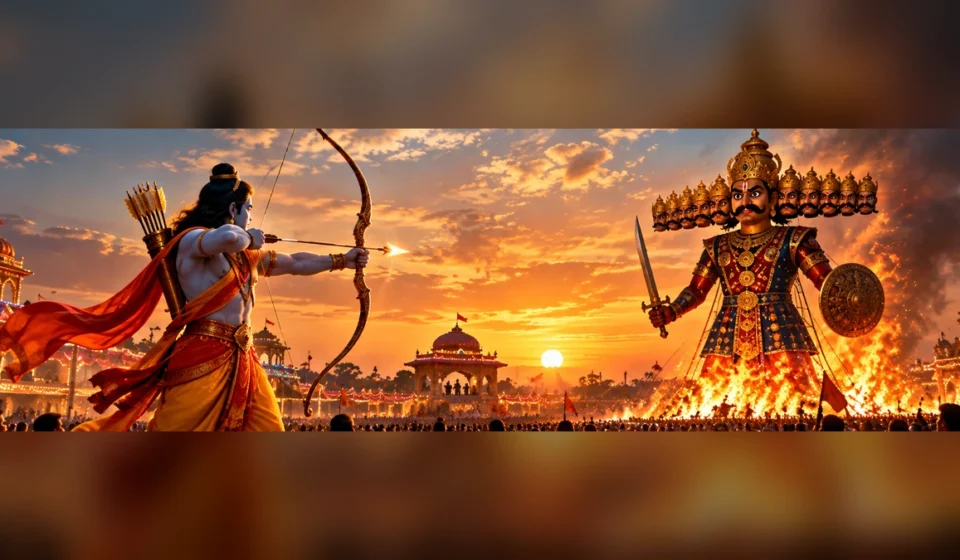
Ravana Dahan is among the most recognisable Dussehra traditions in many parts of northern India. Large effigies of Ravana are erected at public grounds and burned during organised celebrations, often alongside effigies representing Meghnad and Kumbhakarna.
The spectacle recalls the victory of Lord Rama described in the Ramayana. For many families, attending a local Ramlila performance and watching Ravana Dahan is an important annual tradition.
In Lucknow and other cities, event timings, venues, traffic restrictions, and security arrangements are announced locally. Check official municipal notices or the organisers' announcements before travelling. Do not assume every venue follows the same schedule.
The symbolic meaning of Ravana's ten heads
In popular cultural interpretations, Ravana's ten heads are often used to discuss human weaknesses and the dangers of uncontrolled desire, pride, anger, greed, and ego. Interpretations vary, and this symbolism should not be treated as a single universally prescribed scriptural list.
The central lesson remains clear: knowledge and ability are most valuable when guided by humility, wisdom, and ethical responsibility.
Vijayadashami Traditions Across India
North India: Ramlila and Ravana Dahan
Many communities stage Ramlila performances that narrate episodes from the Ramayana. Dussehra celebrations frequently culminate in the burning of Ravana's effigy, accompanied by devotional gatherings and family outings.
West Bengal: Durga Puja and Bijoya Dashami
Vijaya Dashami marks the concluding phase of Durga Puja celebrations in Bengal. Devotees bid farewell to Goddess Durga, and communities participate in customary greetings and immersion-related ceremonies. The exact observance follows regional traditions and the local calendar.
Karnataka: Mysuru Dasara
Mysuru Dasara is renowned for its royal heritage, illuminated city landmarks, cultural programmes, and ceremonial processions. It is a major expression of Karnataka's living cultural traditions.
Maharashtra: Shami leaves and auspicious beginnings
In some communities, people exchange Shami leaves or other leaves symbolically associated with gold and prosperity. Families may also use the occasion to begin new work or renew professional and personal commitments.
South India: Ayudha Puja and Vidyarambham traditions
In several southern traditions, the festival period includes worship of tools, books, instruments, vehicles, and equipment used in work and learning. Vidyarambham, the ceremonial introduction of children to learning, is especially associated with Vijayadashami in Kerala and some other communities.
Is Vijayadashami Auspicious for New Beginnings?
Vijayadashami is traditionally considered an auspicious occasion for new beginnings. Families and businesses may choose the day to begin studies, start a project, worship professional tools, or take a meaningful step towards a long-term goal.
The festival is also an opportunity to set intentions that go beyond material success: learning a skill, repairing a relationship, serving the community, or giving up a harmful habit.
For major financial, legal, or business decisions, religious auspiciousness should complement—not replace—practical research and sound judgement.
How to Celebrate Dussehra Meaningfully
- Attend a local Ramlila or a community festival organised with appropriate safety arrangements.
- Read or listen to a passage from the Ramayana and reflect on its ethical lessons.
- Offer prayers to Lord Rama or Goddess Durga according to your family tradition.
- Spend time with family and share festive food with neighbours.
- Donate food, books, clothing, or other useful items to people in need.
- Choose one personal weakness to work on through practical, consistent action.
- Keep public celebrations safe and environmentally responsible; follow local guidance around fireworks and effigy-burning events.
The Message of Vijayadashami for Modern Life
The deeper message of Dussehra extends far beyond the battlefield of the Ramayana. In everyday life, victory may mean choosing honesty when dishonesty seems easier, controlling anger during a disagreement, standing up against unfairness, or admitting a mistake instead of protecting one's ego.
The festival reminds us that success without character is incomplete. Knowledge needs wisdom, strength needs compassion, and ambition needs responsibility.
As Vijayadashami 2026 approaches, let us celebrate the festival not only by watching the symbolic destruction of evil, but also by making a sincere effort to reduce negativity in our own thoughts, words, and actions.
Frequently Asked Questions About Vijayadashami 2026
1. When is Vijayadashami in 2026?
Vijayadashami will be observed on Tuesday, October 20, 2026, across much of India. Some regional traditions, including certain Bengali Durga Puja calendars, observe it on October 21.
2. Why is Dussehra celebrated?
Dussehra celebrates the victory of Lord Rama over Ravana and, in another major Hindu tradition, Goddess Durga's victory over Mahishasura. Both stories represent the triumph of righteousness over destructive forces.
3. What is the Vijay Muhurat in Lucknow in 2026?
The published Lucknow Panchang lists Vijay Muhurat at approximately 1:45 PM to 2:31 PM IST on October 20, 2026. Verify the local Panchang before performing time-sensitive rituals.
4. When will Ravana Dahan take place in 2026?
Ravana Dahan is generally organised after sunset on Dussehra in many northern Indian communities. The precise time varies by venue and local arrangements, so check the announcement for your chosen event.
5. What should devotees do on Vijayadashami?
Depending on regional and family customs, devotees may worship Lord Rama, Goddess Durga, or Goddess Aparajita, perform Shami Puja, attend Ramlila, and pray for prosperity, courage, and well-being.
6. Is Vijayadashami a good day to start something new?
Many Hindu traditions consider Vijayadashami auspicious for new beginnings, including studies, professional work, and new projects. Individual practices and timings vary by region.
7. What is the significance of the ten heads of Ravana?
In popular interpretations, the ten heads symbolise human weaknesses and the dangers of unchecked ego and desire. The specific meanings differ across cultural explanations.
8. Is Dussehra the same as Durga Puja?
They are closely connected within the autumn festival season but are not identical in every regional tradition. Dussehra or Vijayadashami marks the tenth-day observance, while Durga Puja includes a sequence of worship and community celebrations dedicated to Goddess Durga.
9. How can families celebrate Dussehra in an eco-friendly way?
Families can attend responsibly organised events, avoid unsafe fireworks, reduce disposable decorations, use public transport where practical, and support community initiatives that minimise waste.
Conclusion: May Truth and Righteousness Prevail
Vijayadashami 2026 is an opportunity to celebrate India's rich spiritual and cultural heritage while reflecting on the values of courage, humility, justice, and compassion. Whether through prayers, Ramlila, Durga Puja traditions, or time spent with loved ones, the festival encourages us to choose what is right even when it is difficult.
May this Dussehra bring peace to your home, strength to your resolve, and wisdom to your decisions. Let the victory of good over evil begin with the choices we make every day.
Happy Vijayadashami 2026! Shubh Dussehra!
References and Further Reading
- Drik Panchang: Vijayadashami 2026 for Lucknow — local date and muhurat reference.
- Drik Panchang: Vijayadashami date and puja timings — general festival calendar reference.
- Incredible India — official tourism resource for India's cultural traditions and destinations.
Disclaimer: This article provides general cultural and religious information, not a substitute for a location-specific Panchang or guidance from your family priest. Timings and observances can vary by city, tradition, and calendar convention. Check local announcements for public celebrations.
Related