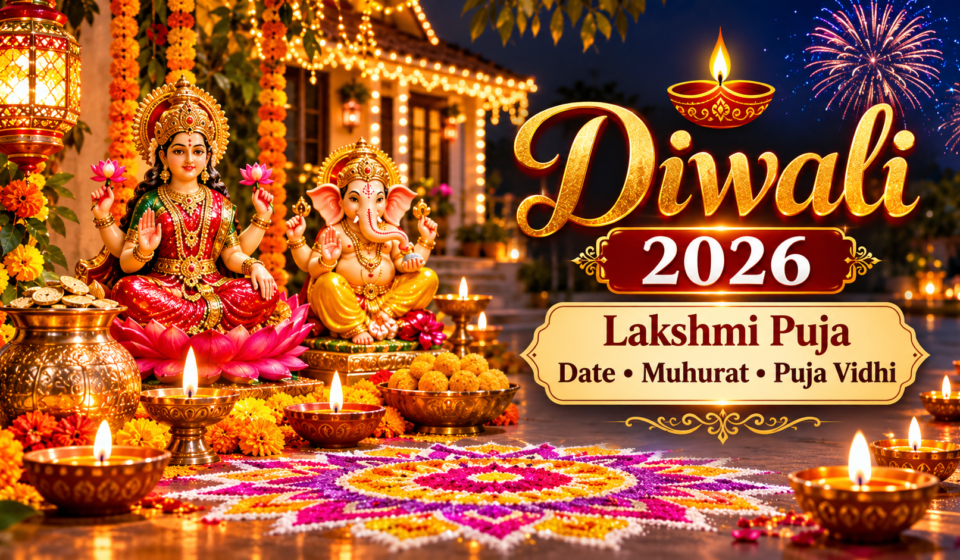
Diwali 2026: Date, Lakshmi Puja Muhurat, Puja Vidhi & Significance

Diwali 2026 falls on November 8. Discover Lakshmi Puja muhurat, date, significance, puja vidhi, rituals, Diwali traditions and celebration ideas.
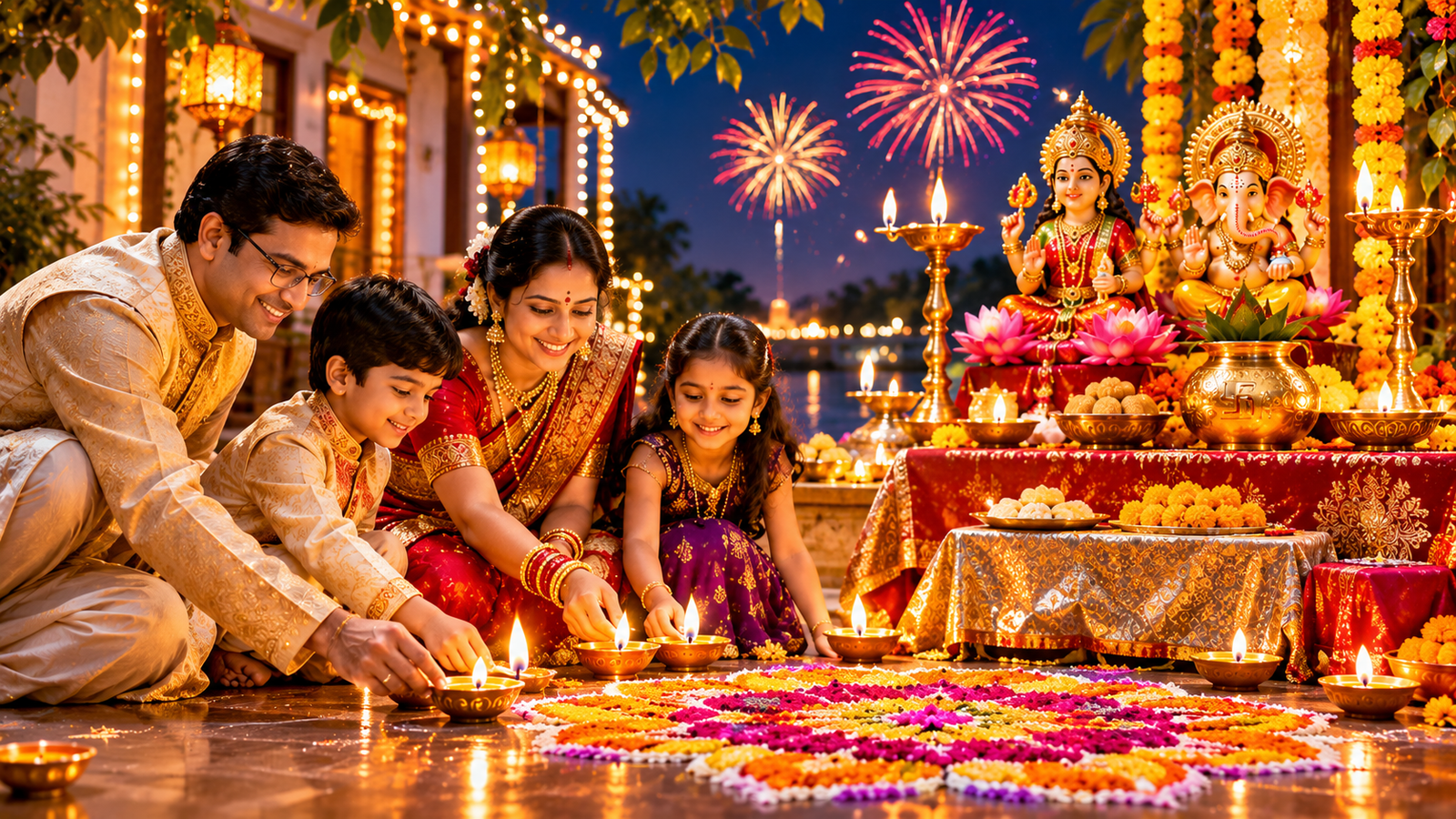
Table of Contents
ToggleDiwali 2026: Date, Lakshmi Puja Muhurat, Significance, Rituals and Celebrations
Diwali, the magnificent festival of lights, is one of India's most celebrated festivals. Every year, millions of people illuminate their homes with diyas, decorate entrances with colourful rangoli, exchange sweets and gifts, worship Goddess Lakshmi and Lord Ganesha, and celebrate the triumph of light over darkness.
Diwali is much more than a festival of lights. It represents the victory of good over evil, knowledge over ignorance and hope over despair. Across India, the festival brings families together through prayers, traditions, celebrations and acts of generosity.
Diwali 2026 will be celebrated on Sunday, 8 November 2026. The main Lakshmi Puja is traditionally performed during the evening Pradosh period. In Lucknow, the published Lakshmi Puja muhurat is approximately 5:42 PM to 7:39 PM.
In this complete guide, discover the Diwali 2026 date, Lakshmi Puja timings, religious significance, puja samagri, step-by-step rituals, traditional stories and meaningful ways to celebrate the festival.
- Date: Sunday, 8 November 2026
- Festival: Diwali / Deepavali
- Tithi: Kartik Amavasya
- Lucknow Lakshmi Puja muhurat: Approximately 5:42 PM–7:39 PM
- Lucknow sunset: Approximately 5:19 PM
- Main deities: Goddess Lakshmi and Lord Ganesha
- Other observances: Saraswati Puja, Chopda Puja, Deep Daan and family celebrations
- Festival message: The victory of light over darkness and good over evil
Timings are specific to Lucknow and may differ slightly between Panchang sources. Always verify your city's local puja muhurat.
1. When Is Diwali in 2026?
Diwali 2026 falls on Sunday, 8 November 2026. The main festival is observed on Kartik Amavasya, the new-moon day of the Hindu lunar calendar.
Diwali is also known as Deepavali, a name derived from the Sanskrit expression meaning a row or series of lamps. The festival is celebrated across India and by Indian communities around the world.
The date of Diwali is determined by the lunar calendar rather than a fixed Gregorian date. It generally falls in October or November.
The central evening celebration includes Lakshmi Puja, lighting diyas, decorating homes, sharing sweets and spending time with family and friends.
2. Diwali 2026 Lakshmi Puja Muhurat and Timings
Lakshmi Puja is the most important religious observance for many households on Diwali. It is traditionally performed during Pradosh Kaal, the period following sunset, when the Amavasya Tithi is prevailing.
For Lucknow, Drik Panchang gives the following reference timings:
| Event | Lucknow timing |
|---|---|
| Diwali date | Sunday, 8 November 2026 |
| Amavasya Tithi begins | 11:27 AM, 8 November |
| Amavasya Tithi ends | 12:31 PM, 9 November |
| Sunset | Approximately 5:19 PM |
| Pradosh Kaal | 5:19 PM–7:56 PM |
| Lakshmi Puja Muhurat | 5:42 PM–7:39 PM |
| Vrishabha Kaal | 5:42 PM–7:39 PM |
Important: The above timings are for Lucknow, Uttar Pradesh. Other cities have different sunset times and muhurats. Some Panchang sources may differ by a few minutes because of calculation methods. Follow the local calendar or your family priest's guidance.
Why is Pradosh Kaal important?
Pradosh Kaal is the period after sunset traditionally considered suitable for evening worship. Lakshmi Puja is generally performed during this period while Amavasya is prevailing. Some Panchang traditions also consider the fixed Vrishabha Lagna when determining the preferred puja window.
3. Why Is Diwali Celebrated? The Spiritual Significance
Diwali represents the victory of righteousness, hope and knowledge. Its spiritual meaning is expressed through the lighting of lamps in homes, temples and public spaces.
Victory of good over evil
Diwali reminds people that truth and righteousness ultimately prevail over wrongdoing. It encourages individuals to overcome negative thoughts, selfishness and ignorance.
Light over darkness
The lighting of diyas symbolises the removal of darkness from our surroundings and our inner lives. It represents wisdom, positivity and the hope of a better tomorrow.
Prosperity and new beginnings
Goddess Lakshmi is worshipped for prosperity and abundance. Many businesses begin new financial accounts, worship their books of accounts and seek blessings for a successful year.
Family unity and generosity
Diwali encourages families to reconnect, share meals, exchange gifts and extend kindness to others. Charity, hospitality and helping people in need are meaningful expressions of the festival's spirit.
4. Stories and Legends Associated with Diwali
Lord Rama's return to Ayodhya
One of the best-known Diwali traditions is associated with the return of Lord Rama to Ayodhya after fourteen years of exile and his victory over Ravana.
According to the Ramayana tradition, the people of Ayodhya welcomed Rama, Sita and Lakshmana by lighting rows of lamps. The city was illuminated in celebration of the return of righteousness and the restoration of dharma.
This story is particularly significant in North India, where Diwali celebrations often include references to Lord Rama and the Ramayana.
Goddess Lakshmi and the churning of the ocean
Another important tradition associates Goddess Lakshmi with the Samudra Manthan, the mythological churning of the cosmic ocean. According to Hindu mythology, Goddess Lakshmi emerged from the ocean during this divine event.
Her appearance symbolises prosperity, beauty, abundance and auspiciousness. This is one reason Lakshmi Puja is central to Diwali celebrations.
Lord Krishna and Narakasura
In several regional traditions, Diwali is connected with Lord Krishna's victory over the demon Narakasura. This story is particularly associated with Naraka Chaturdashi, also known as Choti Diwali.
The victory represents freedom from oppression and the triumph of righteousness.
King Bali and Vamana
Some regional traditions connect the Diwali period with the story of King Bali and Lord Vishnu's Vamana avatar. The observance and its interpretation vary across communities.
These stories reflect the rich diversity of India's religious and cultural traditions.
5. Gods and Goddesses Worshipped on Diwali
Goddess Lakshmi
Goddess Lakshmi is the principal deity worshipped during Diwali in many Hindu households. She represents wealth, prosperity, good fortune and abundance.
Lord Ganesha
Lord Ganesha is worshipped for wisdom, auspicious beginnings and the removal of obstacles. Lakshmi and Ganesha are commonly worshipped together during Diwali.
Goddess Saraswati
Some families and communities also worship Goddess Saraswati, who represents knowledge, learning, music and wisdom.
Lord Kubera
Lord Kubera is traditionally associated with wealth and the divine treasury. Certain communities include Kubera worship as part of their Diwali rituals.
6. Diwali Lakshmi Puja Samagri List
Preparing the puja items in advance makes the evening worship easier and more organised.
- Images or idols of Goddess Lakshmi and Lord Ganesha
- Goddess Saraswati image, if included in the family tradition
- Clean puja chowki and red or yellow cloth
- Diya, cotton wicks, ghee or oil
- Roli, kumkum, haldi and akshat
- Flowers and garlands
- Incense sticks and dhoop
- Fruits and traditional sweets
- Betel leaves and betel nuts, where customary
- Coins and currency notes for symbolic worship
- Kalash and water
- Lotus flowers, where available
- Puja thali and bell
- Traditional sweets and prasad
- New account books for business worship, where applicable
Individual rituals differ by region and family tradition. Prepare the items according to the puja method you follow.
7. Diwali 2026 Lakshmi Ganesha Puja Vidhi
Step 1: Clean and prepare the home
Clean the home, entrance and puja area before the evening. Decorate the doorway with rangoli, flowers and traditional torans.
Step 2: Prepare the puja chowki
Place a clean cloth on the chowki and arrange the idols or images of Goddess Lakshmi and Lord Ganesha. Keep the other puja items ready.
Step 3: Light the diya
Light a diya and begin the worship with prayers to Lord Ganesha. Offer flowers, rice and other traditional items according to your family custom.
Step 4: Worship Goddess Lakshmi
Offer flowers, sweets, fruits and prayers to Goddess Lakshmi. Devotees seek blessings for prosperity, peace, happiness and financial stability.
Step 5: Worship Lord Ganesha
Offer prayers to Lord Ganesha for wisdom, success and the removal of obstacles. Some households worship Lakshmi and Ganesha together throughout the puja.
Step 6: Worship account books and wealth
Business families and traders may perform Chopda Puja, worshipping their account books and seeking blessings for a prosperous financial year.
Step 7: Perform Lakshmi Aarti
Conclude the main worship with Lakshmi Aarti and devotional prayers. Family members may participate together.
Step 8: Distribute prasad and light diyas
Distribute prasad and illuminate the home with diyas. Place lamps safely and supervise children around flames.
8. Important Diwali Mantras
Goddess Lakshmi Mantra
ॐ श्रीं महालक्ष्म्यै नमः॥
This mantra is traditionally recited for prosperity and auspiciousness.
Lord Ganesha Mantra
ॐ गं गणपतये नमः॥
Devotees recite this mantra seeking wisdom and the removal of obstacles.
Diya Lighting Prayer
शुभं करोति कल्याणम् आरोग्यं धनसम्पदा।
शत्रुबुद्धिविनाशाय दीपज्योतिर्नमोऽस्तु ते॥
This traditional prayer is associated with the lighting of lamps and invokes auspiciousness, health and well-being.
9. How to Decorate Your Home for Diwali
Diwali decorations create a joyful atmosphere and make the festival special for family members and guests.
Traditional diyas
Clay diyas remain among the most beautiful symbols of Diwali. Arrange them safely around entrances, balconies and puja spaces.
Rangoli designs
Create colourful rangoli patterns at the entrance using traditional designs, flowers or coloured powders.
Flowers and torans
Decorate doorways with marigold flowers, mango leaves and traditional torans.
Lighting and lanterns
Use energy-efficient decorative lights and lanterns to create a festive atmosphere. Ensure electrical connections are safe and protected from moisture.
Traditional puja decoration
Decorate the puja area with flowers, clean fabrics, diyas and traditional decorative items. Keep the idols and offerings arranged neatly.
10. Traditional Diwali Sweets and Foods
Food is an essential part of Diwali celebrations. Families prepare sweets and savoury dishes, exchange homemade delicacies and welcome guests.
Popular Diwali sweets
- Gulab Jamun
- Kaju Katli
- Motichoor Laddu
- Besan Laddu
- Rasgulla
- Soan Papdi
- Gujiya
- Barfi
Popular savoury snacks
- Namkeen mixtures
- Mathri
- Chakli
- Shakkarpare
- Namakpare
- Chivda
Many families prepare traditional recipes at home, while others purchase sweets from local shops. Sharing food is a beautiful way to express affection and hospitality.
11. How Different Regions of India Celebrate Diwali
North India
In North India, Diwali is strongly associated with Lord Rama's return to Ayodhya. Homes are decorated with diyas, rangoli and lights, and families perform Lakshmi-Ganesha Puja.
Uttar Pradesh and Ayodhya
Ayodhya has a special association with Diwali because of the traditional story of Lord Rama's return. The city is known for large-scale Deepotsav celebrations, with illuminated ghats, temples and rows of lamps.
West Bengal
In West Bengal and several eastern regions, Kali Puja is an important observance on the Amavasya night. Devotees worship Goddess Kali through traditional rituals.
Gujarat
Diwali is associated with Lakshmi Puja, business worship and the beginning of a new financial year in many Gujarati communities. Chopda Puja is an important tradition among traders.
Maharashtra
The Diwali celebrations include several days of rituals, family gatherings, traditional foods and the observance of Naraka Chaturdashi.
South India
In many South Indian communities, Naraka Chaturdashi and the early-morning oil bath are especially significant. The festival also includes prayers, sweets and family celebrations.
12. Diwali Festival Calendar 2026
The Diwali celebration is traditionally spread across several days. The dates and observances can vary depending on the regional calendar and the prevailing tithi.
| Festival | Date in 2026 |
|---|---|
| Dhanteras | Friday, 6 November |
| Naraka Chaturdashi / Choti Diwali | Sunday, 8 November |
| Diwali / Lakshmi Puja | Sunday, 8 November |
| Govardhan Puja / Annakut | Tuesday, 10 November |
| Bhai Dooj | Wednesday, 11 November |
Calendar note: In 2026, some tithi overlaps affect the sequence of observances. Naraka Chaturdashi and Lakshmi Puja fall on the same civil date in Lucknow, while Govardhan Puja and Bhai Dooj follow on 10 and 11 November. Confirm regional observances with a local Panchang.
13. How to Celebrate an Eco-Friendly Diwali
Diwali can be celebrated beautifully while caring for the environment, animals and people around us.
- Choose traditional clay diyas and reusable decorations.
- Prefer energy-efficient LED lights.
- Avoid excessive firecrackers and loud noise.
- Protect children, senior citizens and pets from smoke and noise.
- Dispose of festive waste responsibly.
- Use reusable gift packaging where possible.
- Support local artisans and small businesses.
- Donate food, clothes or essential items to people in need.
A thoughtful celebration can preserve the joy of Diwali while reducing unnecessary pollution and waste.
14. Diwali Safety Tips
- Keep diyas and candles away from curtains and combustible materials.
- Never leave burning lamps unattended.
- Keep children away from open flames and fireworks.
- Use electrical decorations according to safety instructions.
- Keep a bucket of water or suitable fire extinguisher accessible where appropriate.
- Avoid indoor fireworks and never hold lit firecrackers in your hands.
- Follow local rules regarding fireworks and noise.
15. Frequently Asked Questions About Diwali 2026
Q1. When is Diwali in 2026?
Diwali will be celebrated on Sunday, 8 November 2026.
Q2. What is the Lakshmi Puja muhurat in Lucknow?
Drik Panchang lists the Lucknow Lakshmi Puja muhurat as approximately 5:42 PM to 7:39 PM on 8 November 2026.
Q3. Why is Diwali celebrated?
Diwali celebrates the victory of good over evil and light over darkness. In North Indian tradition, it is associated with Lord Rama's return to Ayodhya.
Q4. Which gods are worshipped on Diwali?
Goddess Lakshmi and Lord Ganesha are the principal deities worshipped during Diwali in many households. Some traditions also include Goddess Saraswati and Lord Kubera.
Q5. What is the significance of lighting diyas?
Diyas symbolise light, knowledge, hope and the removal of darkness. They are among the most recognisable symbols of Diwali.
Q6. What is Lakshmi Puja?
Lakshmi Puja is the worship of Goddess Lakshmi for prosperity, abundance, peace and good fortune.
Q7. What is the meaning of Deepavali?
Deepavali means a row or series of lamps and refers to the traditional illumination of homes and public spaces during the festival.
Q8. Is Diwali a five-day festival?
Diwali is traditionally associated with a five-day festive sequence in many North Indian traditions, although regional observances and calendar dates vary.
Q9. Why is Lakshmi Puja performed in the evening?
Lakshmi Puja is traditionally performed during the evening Pradosh period when Amavasya is prevailing, according to the applicable local Panchang.
Q10. How can we celebrate an eco-friendly Diwali?
Use traditional diyas, energy-efficient lights, reusable decorations and environmentally responsible practices. Avoid excessive noise and fireworks.
Conclusion: Welcome Diwali 2026 with Light, Love and Positivity
Diwali 2026 will be celebrated on Sunday, 8 November. It is a festival that brings together devotion, family traditions, cultural diversity and the timeless message of hope.
From worshipping Goddess Lakshmi and Lord Ganesha to lighting diyas, sharing sweets and helping those in need, every tradition offers an opportunity to celebrate goodness and positivity.
May this Diwali illuminate every home with happiness, bless every family with prosperity and inspire everyone to choose kindness, wisdom and righteousness.
Wishing you and your family a very Happy and Prosperous Diwali 2026!
References and Further Reading
- Drik Panchang – Diwali 2026 Lakshmi Puja timings for Lucknow
- MyPanchang – Diwali 2026 calendar for Lucknow
- Incredible India – Official tourism information
- Ministry of Culture, Government of India
Editorial note: Festival dates and timings are based on published Panchang calculations. Regional customs and local timings may differ. Verify the final muhurat for your city before performing the puja.
Related